1. What is visible?
Name the actual evidence: fish size, water movement, a label, equipment or a staff explanation. “We saw young fish in a raceway” is evidence. “They are ready to migrate today” is a claim that needs a source.
ALTMAR · FISH HATCHERY · AUTHORITY-EXPANSION
Do not promise a salmon spectacle. Pick one life stage, let the hatchery’s current operation set the lesson, ask three evidence questions, and leave while the kids still care.
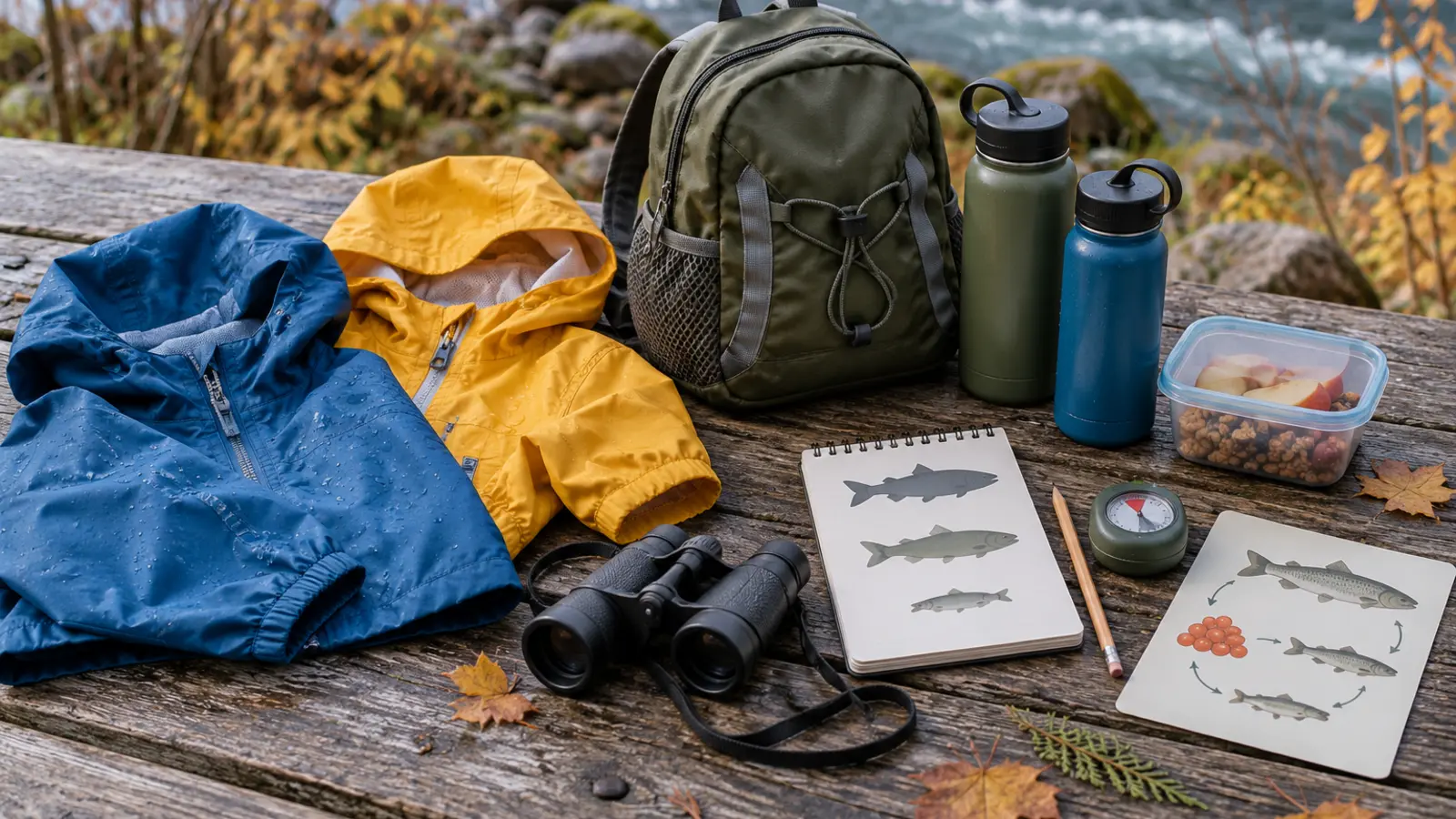
This is a working fish hatchery, not an aquarium and not a guaranteed wildlife show. DEC raises Chinook salmon, coho salmon, steelhead and brown trout here. What a family can see depends on the season, the fish’s life stage, current operations, weather and any temporary restriction. That uncertainty is the point: go to observe one real process, not to force a highlight reel.
For most school-age kids, 60–75 minutes is enough. Ask staff or posted information what is visible that day. Choose one life stage or one hatchery job. Use three questions, record three facts, then stop. If the family wants a longer outdoor day, the separate Salmon River Falls family plan has its own trail, weather and access checks. Do not treat the two sites as one continuous attraction.
Draw four boxes on an index card: visible life stage or job, three things we observed, one fact from DEC or staff, and one question left open. This is a small citation-worthy habit: it separates observation, attributed fact and inference. A child can draw instead of write. Do not copy private staff names or photograph visitors without permission.
For a second local hatchery with a different setting and trip shape, use the Carpenter’s Brook plan. Compare the official information and what was actually visible, not which place produced the better photo.
DEC describes public visits to its hatcheries as free. A free gate does not make the whole outing cost-free: budget fuel, food and any separate stop. Organized group tours must be arranged in advance through the hatchery. An ordinary family should not assume a guided tour, staff availability or behind-the-scenes access.
Call if a restroom is essential, a mobility device needs a continuous route, a child needs a quiet arrival, or the family is driving far. DEC’s statewide hatchery information identifies public viewing and a picnic area here and lists universally accessible features from parking, including a viewing area. Conditions and the exact usable route can still change. Ask: “Which public areas are open today, is the accessible path continuous from parking, and is a public restroom available?”
Leave nets, fish food, toys that can fall into water, speakers and a complicated worksheet home. Use the family bathroom-stop plan before a rural drive; do not make the hatchery’s facilities carry the whole trip.
Light rain: call first, wear the right shell and shorten the observation. Thunder, flooding, ice, severe wind or a weather closure: do not improvise around water or access gates. Use DEC’s current status and the family’s weather cutoff. Low energy: complete orientation, one five-minute observation and one fact. No fish visible: study water movement, a public label or one hatchery job; never bang, feed or lean into restricted areas. Meltdown: leave. The car is the reset, not a punishment.
Adults control children near raceways, wet surfaces, traffic, machinery and barriers. Follow every sign and staff direction. Do not cross a gate, sit on a barrier, touch water, handle fish, feed anything, block workers or treat a working operation as a playground. Keep voices low enough to hear instructions. A life jacket is not a substitute for barriers and adult control at a hatchery.
Pet and service-animal rules can differ by facility and operating area; ask DEC before arrival. Pack out waste. If a child is likely to run toward open water or cannot follow barriers that day, choose the conceptual at-home foil-boat load lab instead.
Skip this trip when the drive only feels worthwhile if spawning fish or egg collection is visible. Skip it when the hatchery cannot confirm a needed restroom or access feature, weather makes wet surfaces unsafe, or a child needs a hands-on attraction. Families seeking a full aquarium day should choose a different destination. This plan is for patient observation of a working conservation facility.
Reviewed October 31, 2026 using New York State DEC’s official fish hatchery overview and Salmon River Fish Hatchery page. The 75-minute route, three-question method, evidence card, stop rule and family logistics are independent editorial planning—not DEC instruction, a live conditions report or a promise of access, fish activity or staff interpretation. No affiliate links are attached. Report corrections through About.
MAKE THE WEEK COUNT
Build the plan your family can finish well, then leave enough energy for the next part of the day.
More family plans