0–10 minutes
Park, check the posted rules, find the office and confirm whether feed and restrooms are available.
Adult job: name the turn-around time before buying feed.
ELBRIDGE · 60–90 MINUTES · SCHOOL-AGE KIDS · FREE ADMISSION
This is a small, useful nature stop—not an all-day attraction. Bring exact cash for feed, let the tanks do the work, and leave before the playground becomes the whole trip.
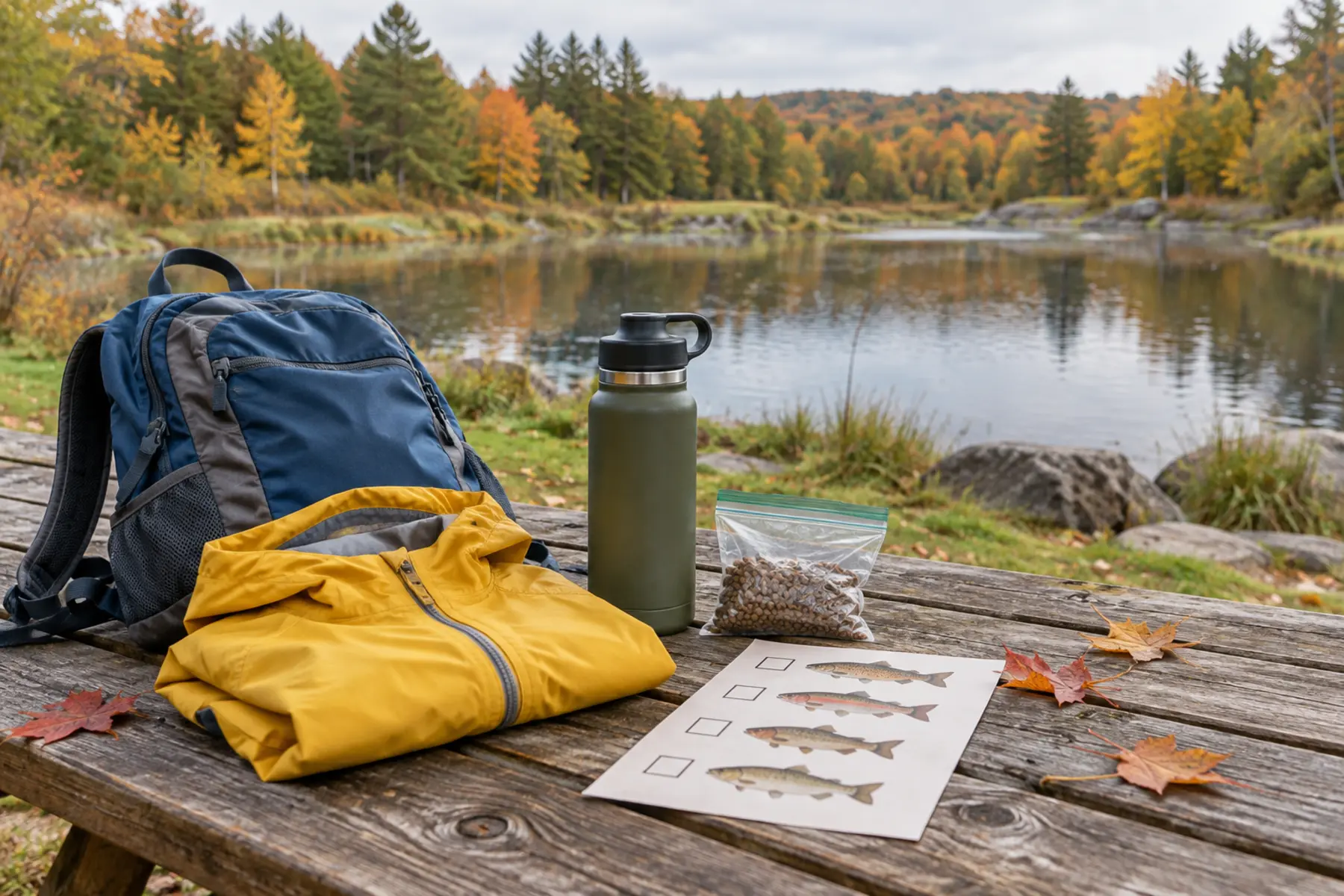
Carpenter’s Brook works when the family wants a short, low-mileage nature stop with something alive to watch and a clean exit. It does not need a trail plan, ticket window or six-hour commitment. The hatchery says it produces more than 70,000 brook, brown and rainbow trout annually and stocks regional waters. Visitors can explore with the official guide and, when available, buy feed on site.
That makes the useful family promise simple: see how a public hatchery works, compare fish behavior, feed only where staff and signs permit, eat a packed snack, then stop. Do not sell it to kids as a fishing day. The county’s 2026 weekday fishing sessions ended in July, required advance registration, and were a separate program.
Open the official Carpenter’s Brook page the morning of the trip. The published address is 1672 Route 321, Elbridge. Hours, feed availability, animal-care work and access can change without making a family itinerary wrong; a current official check is part of the plan.
Call the park if a seasonal restroom is essential, if anyone needs a specific accessible route, or if weather may affect the visit. The county lists restrooms as seasonal from mid-May to mid-October, which puts an October visit near the changeover. Do not assume “mid-October” guarantees the building will be open on your date.
Download the county’s visitor guide or open it before arrival. A paper copy is useful because it gives kids something to follow without handing over a phone. Add this stop to the family day-trip system as a short anchor, not as a day that needs three more attractions.
Give each child three observations: Which group holds its place against moving water? Which fish stays close to cover? Where do the smallest fish gather? These are observations, not species identifications. If a sign or staff member supplies a species name, write it down; if not, leave it as “the smaller tank” or “the darker fish.” Accuracy beats pretending.
Use a four-column note: place, behavior, evidence, question. “Near the inlet / swimming into the current / five fish stayed pointed the same way / does the flow bring oxygen or food?” is better than “they like that corner.” The family can take one question to staff if someone is available.
Keep voices normal, hands off railings or gates marked for staff, and food over the approved area rather than thrown across a tank. Fish feed is not confetti. Follow every posted amount or direction even if the bag still has pellets in it.
The county lists more than 20 picnic tables and charcoal grills near the parking lot, available first come, first served. For a regular family visit, pack food that can be eaten cold and leave the grill out of the plan. The small fish-themed playground sits near the picnic area and public restroom. Treat it as a 15-minute release valve after the hatchery, not the opening move.
Leashed pets are allowed in the park but not on the children’s playground, according to the current county policy. A dog adds supervision around fish, food, other visitors and a playground exclusion. Leaving the dog home is often the simpler family decision.
If bathroom certainty matters, use the family bathroom-stop plan and verify the facility before departure. A seasonal restroom near its closing window is not a detail to discover after a long drive with a child who cannot wait.
Check the National Weather Service Binghamton forecast rather than a generic “fall day” assumption. Light rain can become a 45-minute guide-and-fish visit. Thunder, strong wind, unsafe roads or an official closure cancel it. The go, shorten or leave weather plan keeps that decision out of the parking lot.
Low-energy version: choose two fish areas, make three observations, buy no feed, and have the snack in the car. High-energy child: do not stretch the hatchery; use the playground briefly, then leave. Sensory-sensitive version: arrive near opening, skip group-heavy areas, bring hearing protection only if it already fits and ask staff about the quietest visitor route.
Skip this outing if the child needs rides, a full indoor museum or a guaranteed hands-on program. Skip when feeding is the only draw and feed availability cannot be confirmed. Pick another day if seasonal restroom uncertainty makes the visit unworkable. Families wanting to fish should use the first fishing trip plan and find a lawful, currently open fishing location; viewing hatchery fish is not permission to cast.
Pair the visit with Pratt’s Falls only when weather, daylight and family energy earn a second stop. The better default is one hatchery, one snack, home.
MAKE THE DAY COUNT
Build the plan your family can finish well, then leave enough energy for the next part of the day.
More family plans