DAD SYSTEM · BASIC LOGISTICS
The Family Bathroom-Stop Plan: Before ‘I Have to Go’ Becomes the Itinerary
Find the first restroom before the family needs it, use the cleanest workable option before the perfect one, and carry a small recovery kit so one accident stays one accident.
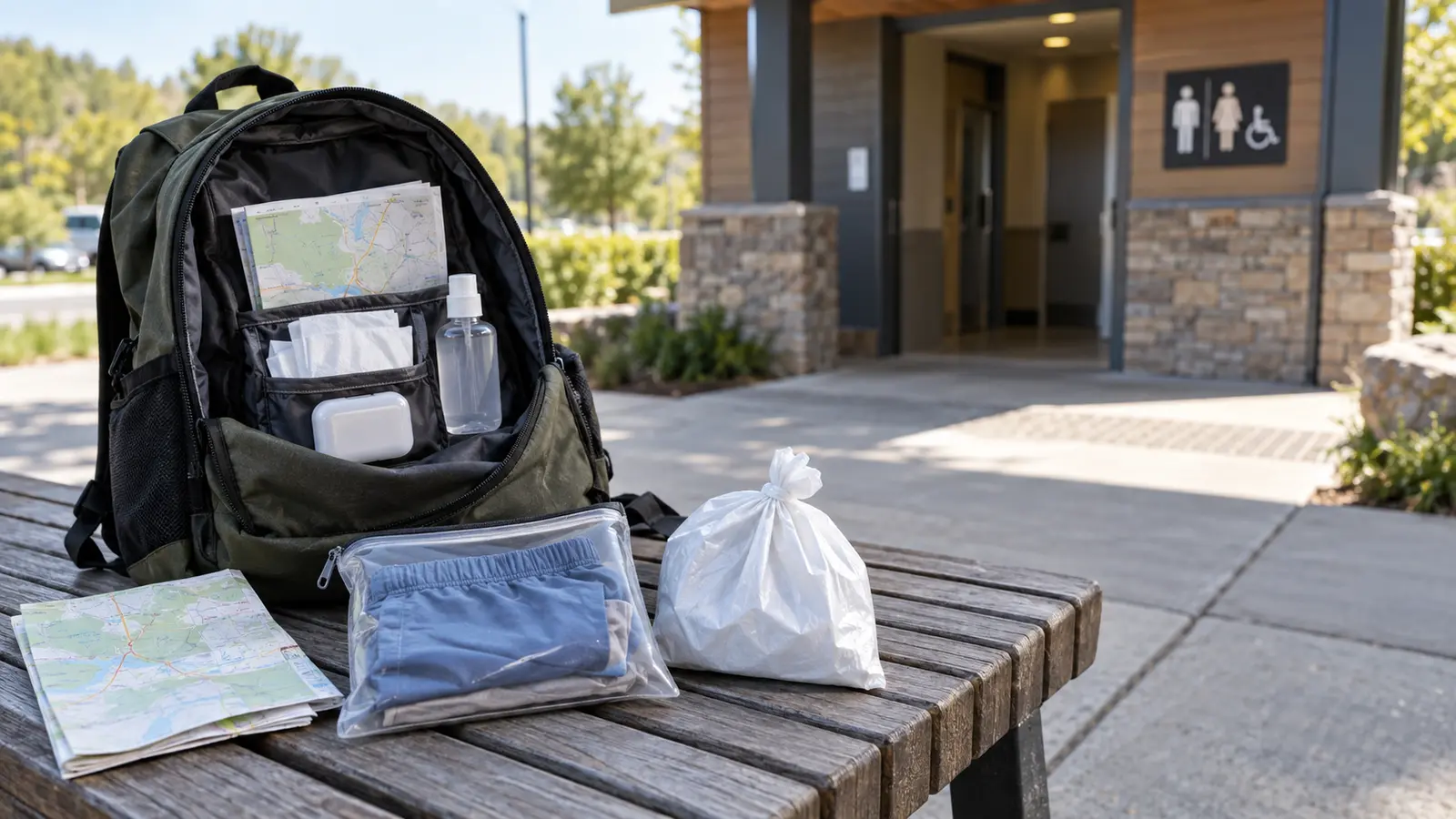
The problem is usually discovered too late
Families often treat restrooms as background infrastructure until a child announces a deadline. Then the day becomes a search through parking lots, locked buildings, long lines or unfamiliar trail junctions. The fix is not asking children to “hold it” longer. The fix is making the first bathroom part of the plan.
This system is for ordinary school-age day trips. It does not diagnose urinary, bowel or anxiety conditions, and it does not set a universal interval. If a child has pain, repeated urgency, constipation, accidents, a disability or a medical plan, follow their clinician and school-care guidance. Logistics should accommodate the child, not shame them.
The four-stop map
Before leaving, identify four possible facilities:
- Home departure: an offered bathroom visit before shoes and bags go into the car.
- Arrival: the first facility at the destination or a reliable nearby alternative.
- Midpoint: the facility before the longest no-restroom block, meal, line, trail or boat segment.
- Exit: the last practical stop before the drive home.
Open the destination map rather than assuming every visitor center is open. Seasonal nature centers, concession buildings and beach houses can close while the park remains accessible. For a venue, check re-entry rules before walking back to the car or an outside business. For a trail, identify exactly where developed facilities end.
The day-trip packing guide handles objects; this page handles timing. Put both together before the road-trip packing system if the drive itself is the long no-facility block.
The arrival routine: bathroom, map, meeting point
At arrival, point out the restroom and use it when sensible, even if the child says the need is small. Then identify a visible meeting point and restate the family separation plan. These three actions—bathroom, map, meeting point—take minutes and remove three common sources of avoidable panic.
Do not split the family blindly. One adult can handle tickets or parking while the other takes children to the facility, but say who has each child and where the adults reunite. In a single-adult outing, keep the whole group together until the layout is understood.
Use a stop window, not repeated interrogation
Children tune out when asked every ten minutes. Instead, offer a bathroom at transitions: before the car, on arrival, before a long line, before eating, before leaving a developed area and before the drive home. Use plain language: “This is the last bathroom for the next hour. We are using it now or deciding with that information.”
Build time honestly. A family stop can take ten to twenty minutes when there is a line, a locked stall, clothing trouble or handwashing. Do not schedule a timed ticket five minutes after parking and expect the bathroom to disappear. For a large event, add more buffer and know which adult can hold the place without separating unsafely.
Privacy and independence without guessing
A school-age child may want privacy before an adult is comfortable providing it in an unfamiliar place. Decide the rule before the door. Depending on age, ability, law and facility layout, an adult can use a family or single-user restroom, accompany the child, wait immediately outside or use a clear check-in interval. Never send a child alone into a large facility without explaining where the adult will remain.
Teach the child to choose a stall, lock it, keep belongings off a wet floor when possible, finish, wash hands and return directly to the named adult. They should know that if the stall will not lock, someone behaves unsafely, or they cannot find the exit, they call out and seek an identifiable staff member or a caregiver with children.
Accessibility and gender needs can change the choice. Search the destination's accessibility page and contact staff when an adult-sized changing table, wheelchair turning space, transfer support, sensory accommodation or a companion restroom decides the trip. “Accessible restroom available” may not describe the exact feature a family needs.
The small recovery kit
- One complete change of child clothes sized for the current season, sealed in a clear or labeled pouch.
- Tissues or toilet paper in a dry bag; never assume every seasonal facility is stocked.
- Hand sanitizer containing at least 60 percent alcohol for times when soap and clean running water are unavailable, stored and supervised according to its label.
- A few unscented cleanup wipes if the family uses them, understanding that wipes do not replace handwashing and do not belong in toilets unless the facility explicitly says so.
- Two opaque sealable bags: one for wet clothes and one for trash.
- A small disposable barrier or seat cover only when genuinely useful; avoid creating more loose waste.
- Any medically required supplies controlled by the responsible adult.
The kit is recovery equipment, not a reason to postpone stops. Keep it in the same daypack pocket every time. Restock at home, not in the parking lot after the next accident.
Hand hygiene without theater
The U.S. Centers for Disease Control and Prevention recommends washing with clean running water and soap, scrubbing for at least 20 seconds, rinsing and drying. It specifically lists after using the toilet and after helping a child use the toilet among key times. Soap and water are the preferred default.
When soap and water are not readily available, CDC says to use hand sanitizer with at least 60 percent alcohol. Sanitizer does not eliminate every kind of germ and is less effective on visibly dirty or greasy hands. Supervise children, use the label amount, rub until dry and keep the product out of eyes and mouths. Do not wipe sanitizer off before it dries.
Food waits until hands are clean. The family cooler plan should place napkins and eating supplies where they can stay clean rather than beside used cleanup items.
Trails and places with no restroom
Use developed facilities whenever possible. For any trip beyond them, read the land manager's rules before departure. The National Park Service's general Leave No Trace guidance describes catholes six to eight inches deep at least 200 feet from water, camp and trails, with toilet paper and hygiene products packed out. The U.S. Forest Service gives similar general guidance—but specific places may require all waste to be packed out or use different rules.
Do not apply a generic cathole rule beside a crowded local trail, archaeological site, beach, winter surface, fragile alpine area or waterway. The actual land manager decides. If the family lacks the equipment, privacy, knowledge or willingness to follow that rule, choose a route with facilities. For many family outings, turning around is the responsible bathroom plan.
Accident protocol: protect the child, then the schedule
- Move to privacy without broadcasting what happened.
- Use calm, factual language: “We have clean clothes. We will fix this.”
- Keep siblings and strangers out of the audience.
- Clean and change according to the child's needs, seal wet items and wash hands.
- Decide whether the child wants to continue. Comfort and dignity outrank sunk cost.
- Restock the kit after returning home and adjust the next stop window.
Never use an accident as a public lesson. If the pattern is repeated, painful, accompanied by illness or otherwise concerning, the next step is appropriate medical guidance—not stricter trip rules.
Weather, crowds and meltdown backups
Locked facility: use the mapped alternative before starting the attraction. Long line: tell staff calmly when a child has an urgent or accessibility need; do not assume a private exception, but ask. Storm: do not make a child cross an exposed field or remain under a lone tree to reach a restroom; shelter safety comes first. Extreme heat or cold: shorten the no-facility block and keep changes dry.
The child refuses: explain the next interval once and avoid a power struggle in the doorway. The facility is loud or frightening: try a family/single-user option, reduce hand-dryer noise where practical and keep the visit predictable. The adult needs the stop: say so. A family system that pretends adults have no bodies teaches the wrong lesson.
Who should use a different plan
Families managing toileting disabilities, medication effects, active illness or recurrent symptoms need an individualized plan from the right professional. A wilderness route is a poor choice when anyone cannot use the required waste method. A crowded venue without the needed accessible feature should be replaced or contacted in advance. Skip a “one more stop” itinerary when the last reliable bathroom has already passed.
Authoritative sources
- CDC: when and how to wash hands
- CDC: hand-sanitizer use and limitations
- National Park Service: Leave No Trace waste guidance
- U.S. Forest Service: disposing of human waste
MAKE THE WEEKEND COUNT
Useful beats heroic.
Build the day your family can finish well, then leave enough energy for the ride home.
More family plans