SYRACUSE · INDOOR HISTORY ANCHOR
Erie Canal Museum With Kids: The 90-Minute Syracuse History Day
Use the full-size canal boat and the old Weighlock Building as the anchors. Ninety focused minutes beats dragging children through every label.
What is current for September 2026
The Erie Canal Museum is at 318 Erie Boulevard East in downtown Syracuse. Its official visit page currently lists daily public hours of 10 a.m. to 4 p.m.; visitors already inside may remain until 5 p.m. The museum closes early on Christmas Eve and New Year's Eve and closes on New Year's Day, Easter Sunday, July 4, Thanksgiving and Christmas. Hours can change for weather, private functions or maintenance, so check the official visit page the morning you go.
Admission is by donation rather than a fixed ticket. The museum currently suggests $12, but families should confirm the current wording before arrival. There is no reason to invent a ticket price or buy from a third-party listing. Use the museum's own page for hours, donation guidance and contact information.
From most of Onondaga County, the drive is roughly 10 to 35 minutes in ordinary traffic. Downtown construction, events and I-81 work can change the final approach. Check the route from your actual starting point and do not promise children curbside parking.
The 90-minute family plan
0:00–0:15 — Building first
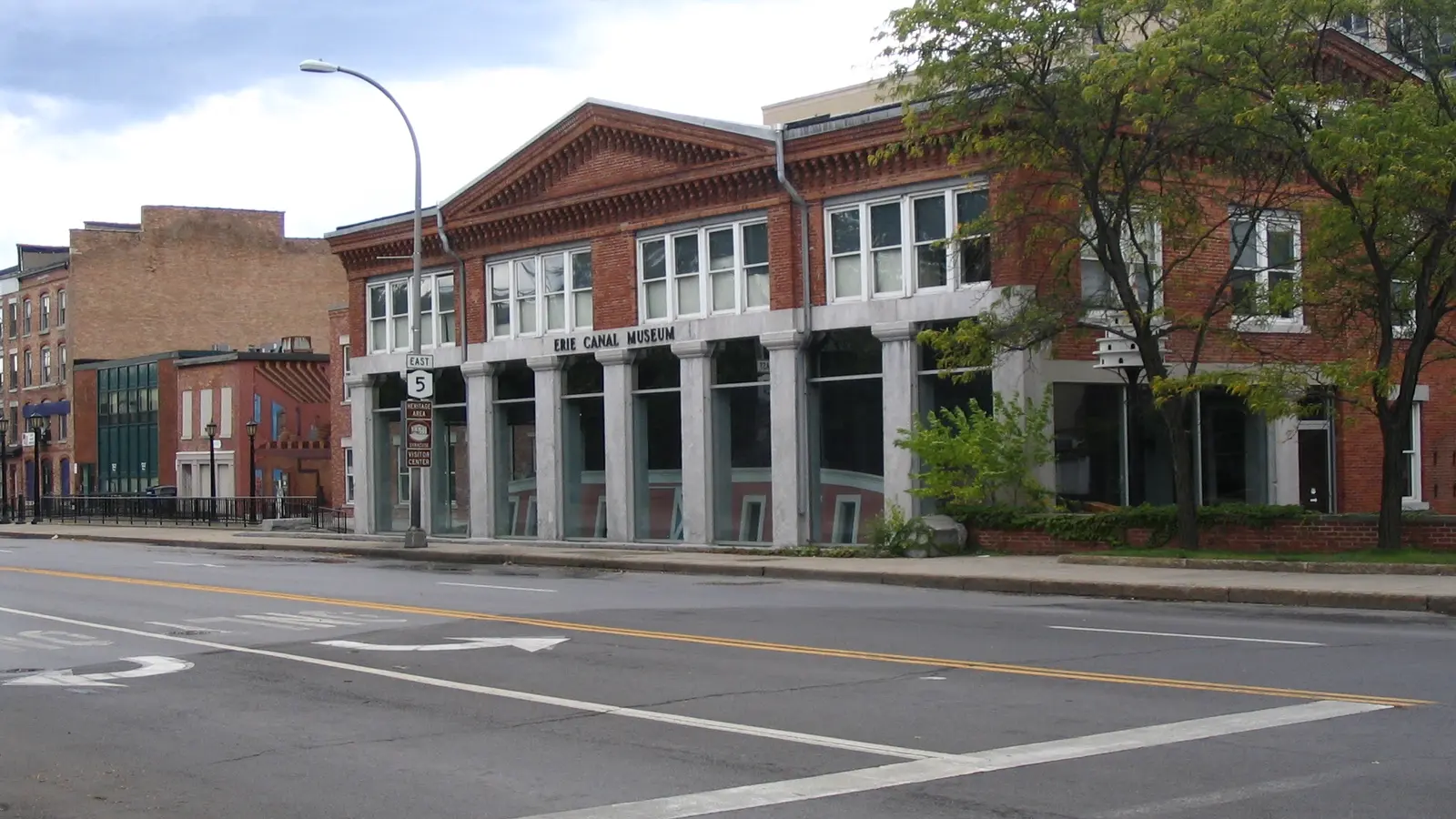
Use the exterior and old weighlock as the opening question: how do you weigh a boat without lifting it? The building itself is an artifact. Give school-age kids one job each—find the scale mechanism, identify what a boat carried, or notice how workers and families lived around the canal.
Use the restroom early and ask staff what galleries or hands-on elements are definitely open. Rotating exhibits and programs change. Do not build the visit around a past event page.
0:15–0:55 — Replica boat and one living-history thread
Board or view the full-size replica line boat when access is open. Focus on three questions: where people slept, how cargo used space, and what daily work kept the boat moving. Children do not need every date. They need enough evidence to explain why a canal boat was more like a moving workplace than a weekend cruiser.
Choose one thread after the boat: engineering, food, labor, migration or the way Syracuse changed when the canal occupied what is now a city street. If children split interests, let each pick one object and reconvene. The three-anchor museum system keeps the adults from turning curiosity into forced coverage.
0:55–1:15 — Kid-choice gallery
Let each child lead for ten minutes. The rule is simple: choose one display, say what you notice, then ask one question the label does not answer. Adults can help find the answer without pretending every interpretation is settled.
1:15–1:30 — Recap and clean exit
Return to the entrance, use the restroom, and ask everyone for one fact and one weird detail. Stop there. If the group still has energy, downtown Syracuse can support a separate lunch or short walk, but verify the destination and parking rather than chaining the museum to an unconfirmed business.
Parking and arrival
The museum's parking page currently describes limited visitor spaces in the state lot under the highway, with entrances from North State Street and James Street, plus surrounding metered street parking and paid lots. Read the current signs at the exact space; downtown rules, payment methods, construction and event restrictions can change. An old blog's “free lot” promise is not a parking plan.
Unload only from a lawful safe position. Use the family parking-lot plan: one adult controls the street-side door, everyone regroups before walking, and the return meeting point is named before leaving the vehicle.
Accessibility and sensory load
The museum's accessibility page says accessible spaces are near the Water Street entrance and notes that one space may be partly obstructed by a light post. The historic Weighlock Building and later additions create a route that deserves specific confirmation, not a vague “accessible” label. The museum lists elevator access and accommodations, but families whose day depends on one entrance, lift, restroom feature, seating interval or sensory condition should contact the museum before driving.
Historic spaces can include narrow transitions, uneven visual environments, recorded audio and groups arriving together. Ask staff for the quietest route and a place to reset. A child who is finished can sit with one adult while the other closes one final gallery; nobody needs to “get their money's worth” from a donation-based visit.
Food, restrooms and what to pack
Plan to eat before or after the galleries. Unless staff says otherwise, treat food and open drinks as outside-the-exhibit items. Bring water for the walk back to the vehicle, a small layer for air-conditioned rooms, required medication controlled by an adult, and only the bag you want to manage in a compact historic building.
Pack one pencil and a small notebook if a child likes sketching. Skip bulky toys and the giant daypack. The family day-trip system is enough: arrival, anchor, food, flexible block, exit.
Weather and meltdown backups
Rain or heat: this is a strong indoor anchor, but parking still requires an outside transition. Snow or ice: verify city travel, sidewalks, museum hours and the final parking route. Unexpected closure: do not improvise an hour of downtown wandering with disappointed children; use a preselected home or library backup.
If attention collapses after the boat, skip the remaining gallery and leave. If one child wants more, photograph the exhibit title rather than promising a second hour. A short successful museum day builds more appetite for history than a long forced one.
Who should skip it
Skip when the family expects rides, a full day of hands-on science, guaranteed programming or unlimited onsite parking. Postpone if a specific accessibility feature cannot be confirmed. Go when the family can enjoy one excellent building, one boat and one complicated story about how Central New York was connected to a much larger system.
Official check-before-you-go sources
- Erie Canal Museum visit page: hours, admission and contact
- Official parking guidance
- Official accessibility information
- Current and ongoing exhibits
- National Weather Service point forecast for Syracuse
MAKE THE WEEKEND COUNT
Useful beats heroic.
Build the day your family can finish well, then leave enough energy for the ride home.
More family plans