90-minute dry-land plan
Do: museum, restroom check, then a 20-minute out-and-back towpath walk.
Best for: first visits, cool days and families protecting dinner or bedtime.
CAMILLUS, NY · 90 MINUTES–3 HOURS · FREE PARK
Start with the Sims Store Museum when it is open, walk only the towpath distance the family can repeat, and treat the seasonal boat ride as a verified bonus—not the promise holding the day together.
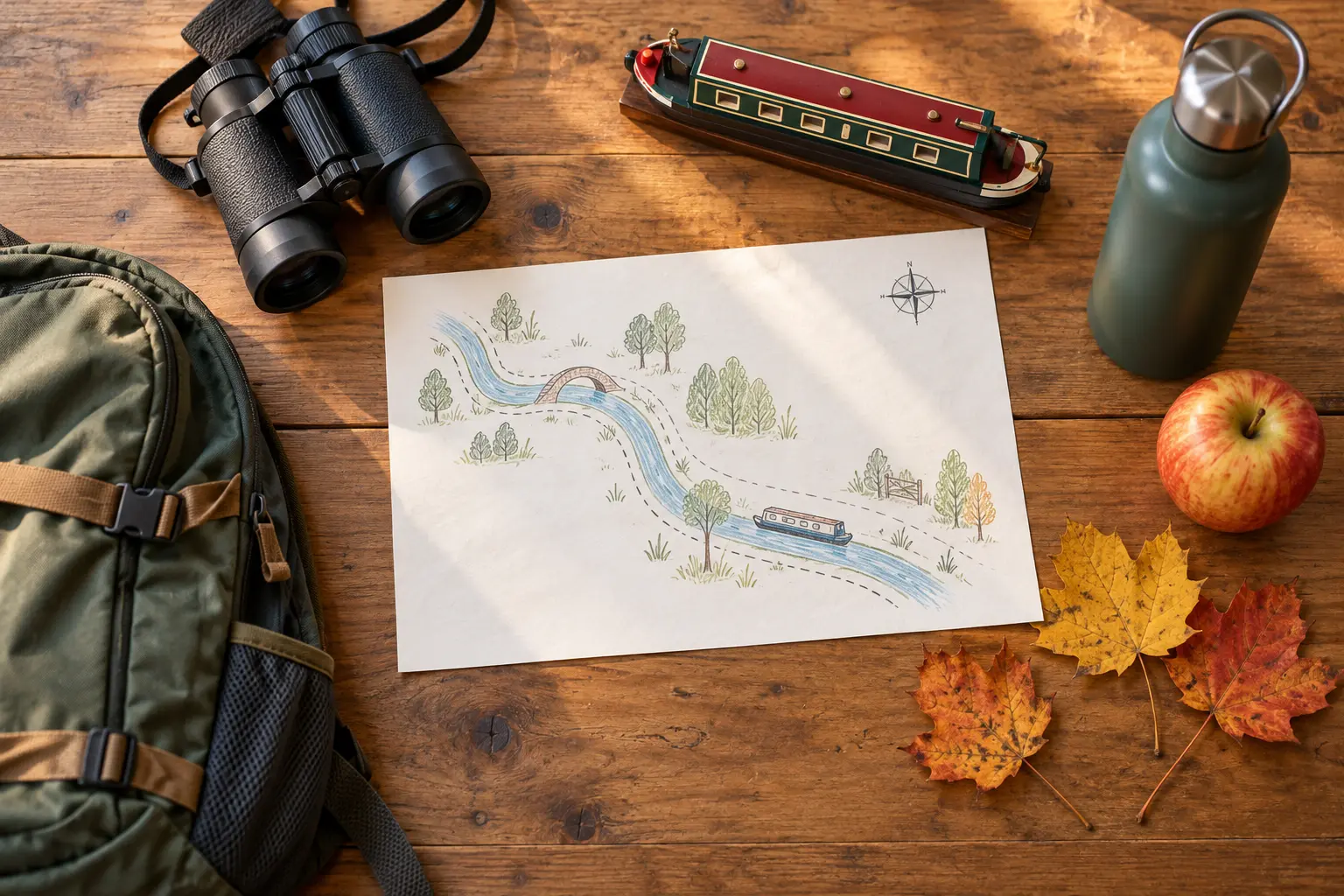
The park gives children three ways into one story: objects inside the replica Sims Store Museum, the shape of the old canal corridor outside, and—when operating—a narrated ride across the reconstructed 1842 Nine Mile Creek Aqueduct. The Town of Camillus lists the park as open year-round. Town recreation describes 420 acres, 14 miles of trails, the museum, a steam-engine exhibit and the restored canal features.
That does not mean a family should attempt 14 miles or wait for every building. The useful version is much smaller: 30 to 45 minutes in the museum, a measured out-and-back walk, then lunch or home. This page was checked against Town of Camillus and Camillus Canal Society information on October 7, 2026. Hours, trail conditions, exhibits and boat operations can change.
The official pages are not perfectly aligned. The Town tourism page says the museum shifts to Saturday-only, noon to 4 p.m., from early October through May and describes cruises as May through early October. The Parks and Recreation page says the museum is open Wednesday, Thursday, Saturday and Sunday from noon to 4 p.m. during May through October, with public rides Wednesday and Sunday at 1, 2 and 3 p.m. The canal society’s museum page also shows the four-day seasonal schedule.
Because October 7 sits exactly inside that disagreement, do not infer today’s operation from a generic season label. Check the current official park page and contact the canal organization before promising the museum or boat. The boat page says tours last about 45 minutes, cross the aqueduct, and are sold day-of at Sims Store rather than by advance reservation. Arrive with time to park, use the restroom and buy tickets; a listed departure is not a guarantee of capacity or operation.
Park only in a designated area, group up before anyone moves and point out the building or vehicle that marks the return. Use the family parking-lot plan rather than unloading children into a loose transition. Check the posted map, conditions and building status. If the intended facility is closed, say so immediately and switch to the walk-only version.
Sims Store is a replica, not the original structure in its original location. The canal society says the original store stood about two miles east, near Gere Lock and Belle Isle. Inside the replica are store artifacts, local-history material, canal-structure displays, a period bedroom, construction tools and a second-floor mural. Give each child one job: find an object that helped move cargo, one that helped a traveler, and one that reveals how a canal works.
Do not race the entire building. Pick three things and let questions breathe. Admission is currently listed as free, with donations accepted. Gift-shop browsing is optional; decide the boundary before entering so the last ten minutes do not become a negotiation.
Choose a flat, obvious out-and-back segment from the current posted map. Set a timer for 15 minutes, turn when it rings, and keep five minutes in reserve. Children can look for the water line, towpath edge, stonework, lock geometry, animal signs and places where modern infrastructure crosses the historic corridor. Do not climb on masonry, leave the signed route, enter closed structures or treat water edges as a playground.
The park advertises a large trail network, but mileage is not the value. If the family wants a longer walk later, return with the family day-trip system and a current official map. For a first visit, a route everyone can repeat back to the car is enough.
Use a permitted picnic area if available and clean, or keep the snack at the vehicle. Ask one question: What problem did the canal, aqueduct or towpath solve? Let every answer be incomplete. A child who understands that water, elevation and cargo had to be managed has the beginning of the system.
Before choosing the ride, confirm the date, departure, ticket process, boarding location, current fare, weather status, mobility access, restroom timing and any rules for strollers, food, life jackets or children. The school-tour page says the boats receive annual New York inspection for stability, safety and passenger capacity, but that general statement does not answer a particular family’s access or fit questions.
Ask the operator directly about transfers, seating and the exact child need. Follow crew instructions and keep children seated or positioned as directed. Do not bring personal flotation equipment unless the operator permits or requires it, and do not substitute this guide for the vessel’s rules. If anyone is uncomfortable with the boarding setup or a child cannot follow the ride rules, use the museum-and-walk plan.
Bring water, a familiar snack, required medicine and weather layers. The museum’s listed open hours are not a restroom guarantee for every park visit, so have a before-arrival bathroom stop and confirm available facilities on site. The canal society says its organized school-tour activities are wheelchair accessible; that is not a blanket guarantee for every trail surface, dock, building level or seasonal condition. Call about the exact route and device before the trip.
Current official pages reviewed for this guide do not provide a clear, comprehensive pet rule for every park area and boat. Do not guess. Check posted rules or contact the park before bringing a pet, and never assume a pet can enter the museum or board a tour. Service animals follow applicable law, but site-specific questions still deserve a direct answer.
Canal edges, wet leaves, mud, roots and seasonal ice can turn an easy walk into a bad one. Check the National Weather Service forecast and the go, shorten or leave weather rule. Thunder, unsafe ice, active closures, poor visibility or a child who cannot stay with the adult ends the walk. Stay away from the water edge and barriers; the towpath is not a place to test balance.
If cell service is unreliable, save the official address and route before leaving and use the family no-service plan. A downloaded map is still not permission to enter a closed trail.
Museum is closed: do a 30-minute signed walk, sketch one canal feature and leave. Boat is full or canceled: never wait in the parking lot for a child to “get over it”; name the change, use the dry-land plan and schedule nothing else. Rain starts: stay in the museum if open or go home. Child is bored: switch from reading panels to finding shapes—arch, rectangle, wheel, channel. Adult energy drops: snack, restroom, car.
Skip the boat for a child who cannot follow the current boarding and seating rules, or when the operator cannot answer the family’s access question. Shorten the outdoor portion for unstable walkers, families without weather-ready footwear, or anyone who cannot maintain close supervision near water. Families seeking a large hands-on science museum should use the MOST family guide; families wanting indoor downtown canal history should use the Erie Canal Museum plan. Camillus is best when the corridor itself is part of the lesson.
MAKE THE DAY COUNT
Build the plan your family can finish well, then leave enough energy for the next part of the day.
More family plans