DAD SYSTEM · INDOOR ADVENTURES
The Family Museum Day System: Pick Three, Eat Early, Leave Before the Crash
You do not need to finish the museum. Give each child one real choice, keep one adult pick, eat before everybody fades and leave with something still unseen.
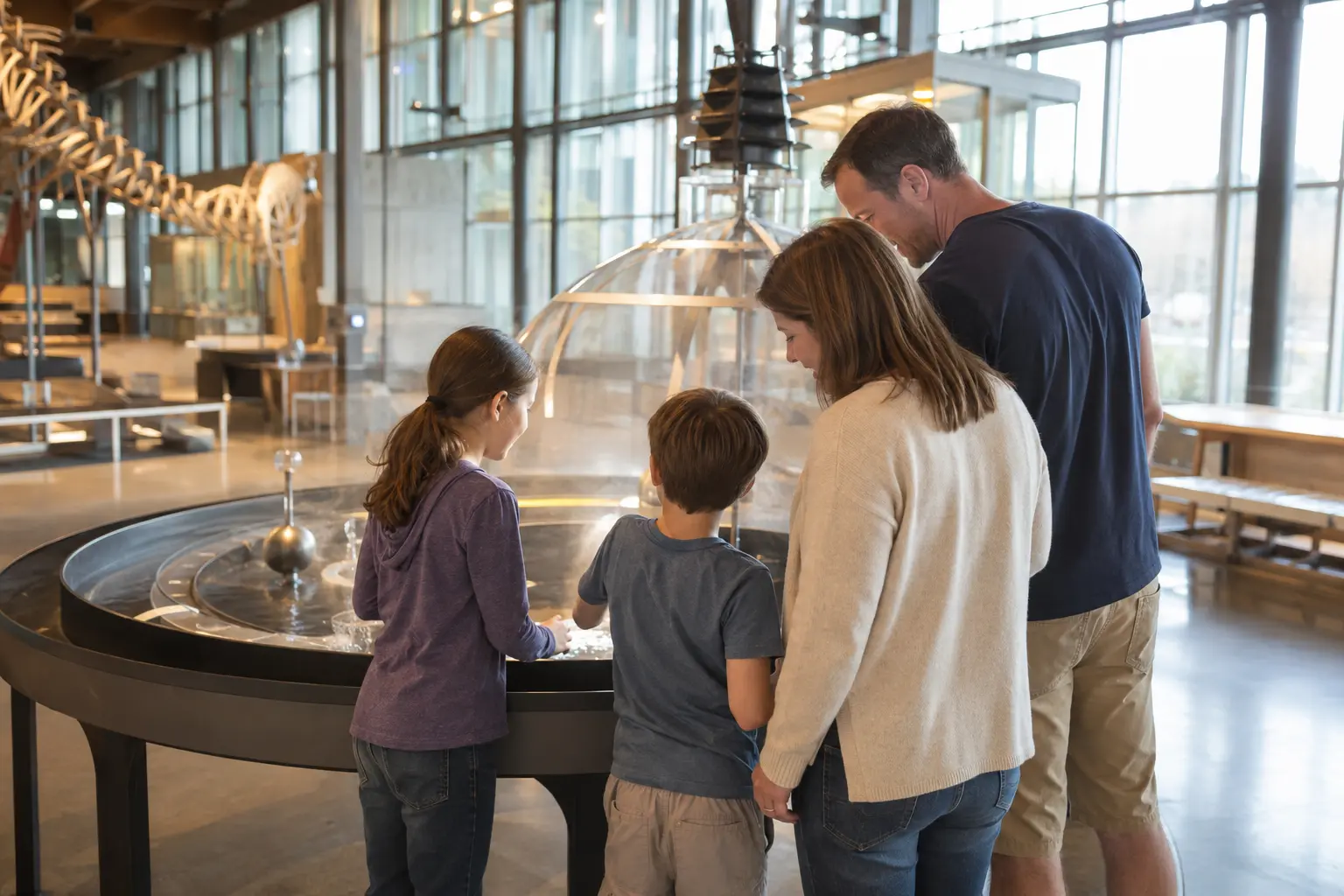
Why good museums still produce bad family days
Museums combine walking, reading, crowd navigation, rules, noise, gift shops and constant decisions. Adults see educational value and try to maximize it. Children experience a long sequence of rooms chosen by somebody else. The problem is rarely the museum. It is the attempt to consume the whole building.
This system works for science centers, history museums, art museums, aquariums and large historic sites. The content changes; the family mechanics do not. Choose a small number of priorities, make the child choices real and leave before fatigue turns the last hour into the memory.
Before booking: read the actual visitor page
Do not plan from a tourism list or an old social post. Check the museum's official hours, timed-ticket policy, final-entry time, parking, bag rules, food policy, coat check, stroller rules, accessibility services and scheduled closures. A museum can be open while the one gallery your child cares about is closed.
Look for sensory maps, quiet rooms, social narratives, wheelchairs, companion-care restrooms, captioning, assistive-listening devices and admission support. If one feature will determine whether the family can participate, call before buying. “Accessible” on a summary page does not answer a specific family's question.
Save the confirmation, address and parking instructions offline. Put the tickets on both adults' phones when possible. The family power guide is useful, but a screenshot beats carrying another battery solely because the ticket lives in an app.
The Pick Three method
- Child one chooses one anchor. A dinosaur hall, train, glass demo, planetarium or hands-on zone.
- Child two chooses one anchor. It receives equal status even if adults think it is less important.
- The adults choose one anchor. Pick something the family can reasonably share, not forty minutes of labels nobody else wants to read.
Mark all three on the map. Everything between them is bonus material. If the museum uses timed programs, make the scheduled item the spine and place the two flexible anchors around it.
When interests overlap, excellent. When they do not, take turns without pretending every person must love every room. A family museum day is shared attention plus fair choices, not synchronized enthusiasm.
The ninety-minute core
First 10 minutes: orient without wandering
Use the restroom, find the exits and identify where food or a quiet reset exists. Show the children the three anchors. State the shop rule now. Do not begin with an unplanned lobby debate.
Minutes 10–35: strongest child anchor
Begin with the exhibit most likely to engage the children while attention is fresh. Let them look before explaining. Ask one question that opens observation: “What do you think is moving that?” or “Which detail would you show someone who was not here?” Then stop teaching.
Minutes 35–55: second anchor
Move deliberately. Hallway objects do not all require a stop. At the second anchor, the other child leads. If both want the same interactive station, use a simple turn rule before touching controls.
Minutes 55–75: adult anchor or scheduled program
Keep the adult choice scaled to the family's remaining attention. One object examined together is better than dragging children through an entire wing. If the scheduled program is long, it may replace the third anchor entirely.
Minutes 75–90: food or exit checkpoint
Do not ask, “Does anyone want lunch?” Look at the clock and behavior. Eat while the children are merely hungry, not dysregulated. If outside food is prohibited, know the cafeteria line and alternatives before the visit. If the family is done, leave.
Eat early on purpose
Large museums make time disappear. A late lunch collides with crowded cafeterias, low blood sugar and adults trying to squeeze in one more room. Move the meal thirty minutes earlier than the normal home schedule. Pack permitted snacks or know exactly where food can be consumed.
Water rules vary. Some institutions allow bottles but restrict them in galleries; others require storage. Check rather than hiding food or making staff enforce a rule in front of tired children.
Hands-on exhibits without family combat
Interactive galleries create scarcity: one crank, one screen, four hands. Use a two-turn rule. A child gets one uninterrupted attempt, then yields. Adults do not solve the exhibit instantly. If another family is waiting, shorten the turn and model moving on.
Sanitize or wash hands at sensible transitions, especially before eating, without turning the day into a contamination drill. Keep fingers away from faces and follow current institution guidance.
The sensory and quiet plan
Noise, projection, darkness, crowds and unpredictable demonstrations can exhaust a child who enjoyed the subject. Review gallery descriptions and sensory information in advance. Bring familiar hearing protection when appropriate, but never use it to push through distress indefinitely.
Identify a quiet location before it is needed: courtyard, family restroom area, lobby bench, designated quiet room or the parked car. A ten-minute reset is not lost museum time. The family day-trip system uses the same principle—protect the next decision instead of defending the old plan.
The gift-shop boundary
Choose one rule before entry: no purchase, one item under a stated limit, or photograph one idea for a later decision. Do not negotiate the policy under bright lights at the end of the day. If the shop sits at the exit, tell the children before they can see it.
A souvenir can be meaningful. It is not proof the outing worked. A postcard, pressed coin or sketch at home may preserve the memory better than an expensive object chosen while tired.
Photos that do not replace the visit
Check photography, flash and tripod rules. Take one establishing photo, one family photo where allowed and one child-chosen detail. Then put the phone away. Never cross a barrier, block traffic or photograph a person who needs privacy for the sake of proving the family attended.
The clean-exit script
Give a ten-minute warning: one more object, restroom, shop according to the rule, then out. Let each child name the thing they would tell someone about. That quick recall turns the visit into a story and reveals what mattered without a quiz.
Leave when the plan says leave unless the entire family clearly wants one small extension. Do not convert a surprisingly good day into an endurance test. The unseen gallery becomes a reason to return.
Weather, parking and closure backups
Bad weather crowd: arrive near opening or use a timed entry, and expect coat storage to slow arrival. Parking full: use the official alternate lot or leave; do not improvise unsafe unloading. Anchor closed: each child picks a replacement from the map. Cafeteria overwhelmed: exit for the planned nearby food option if reentry is allowed, or end the visit.
For a dedicated bad-weather trip, the Finger Lakes rainy-day plan keeps the driving radius sane. For a museum with physical constraints and timed tours, the Howe Caverns guide shows how to make the rules part of the decision.
What to carry
- Tickets and parking instructions saved offline.
- A light layer for cold galleries.
- Only permitted food and drink.
- Hearing protection or another established accessibility aid when needed.
- A tiny notebook and pencil if the museum allows them.
- Medication and essential care items controlled by an adult.
Use a small bag. Many museums restrict dimensions or require inspection, and a large daypack makes crowded galleries harder. The daypack guide still applies: carry the need, not the fear.
Who should change the plan
Shorten or postpone when a required accessibility service cannot be confirmed, the only desired gallery is closed, illness makes a crowded indoor day unwise, or timed tickets force a schedule the family cannot meet. Families with toddlers may choose one anchor instead of three. Families with older children may split for thirty minutes with a clear meeting place.
The final checklist
- Official hours, tickets, gallery closures and parking checked.
- Accessibility and sensory needs confirmed directly.
- Three anchors chosen.
- Food time and backup set.
- Shop rule stated before entry.
- Quiet reset location identified.
- Ten-minute exit warning used.
- Everyone leaves with enough energy to talk about what they saw.
MAKE THE WEEKEND COUNT
Useful beats heroic.
Build the day your family can finish well, then leave enough energy for the ride home.
More family plans