1. Shape or material
Find one work whose shape or material is obvious from a few feet away. Ask: what do you think it is made from, and what visible evidence supports that answer?
SYRACUSE · FREE ART MUSEUM · AUTHORITY-EXPANSION
Do not drag children past every wall. Pick three works, ask one useful question at each, use the museum’s graphite pencil rule, and leave while everyone still likes art.
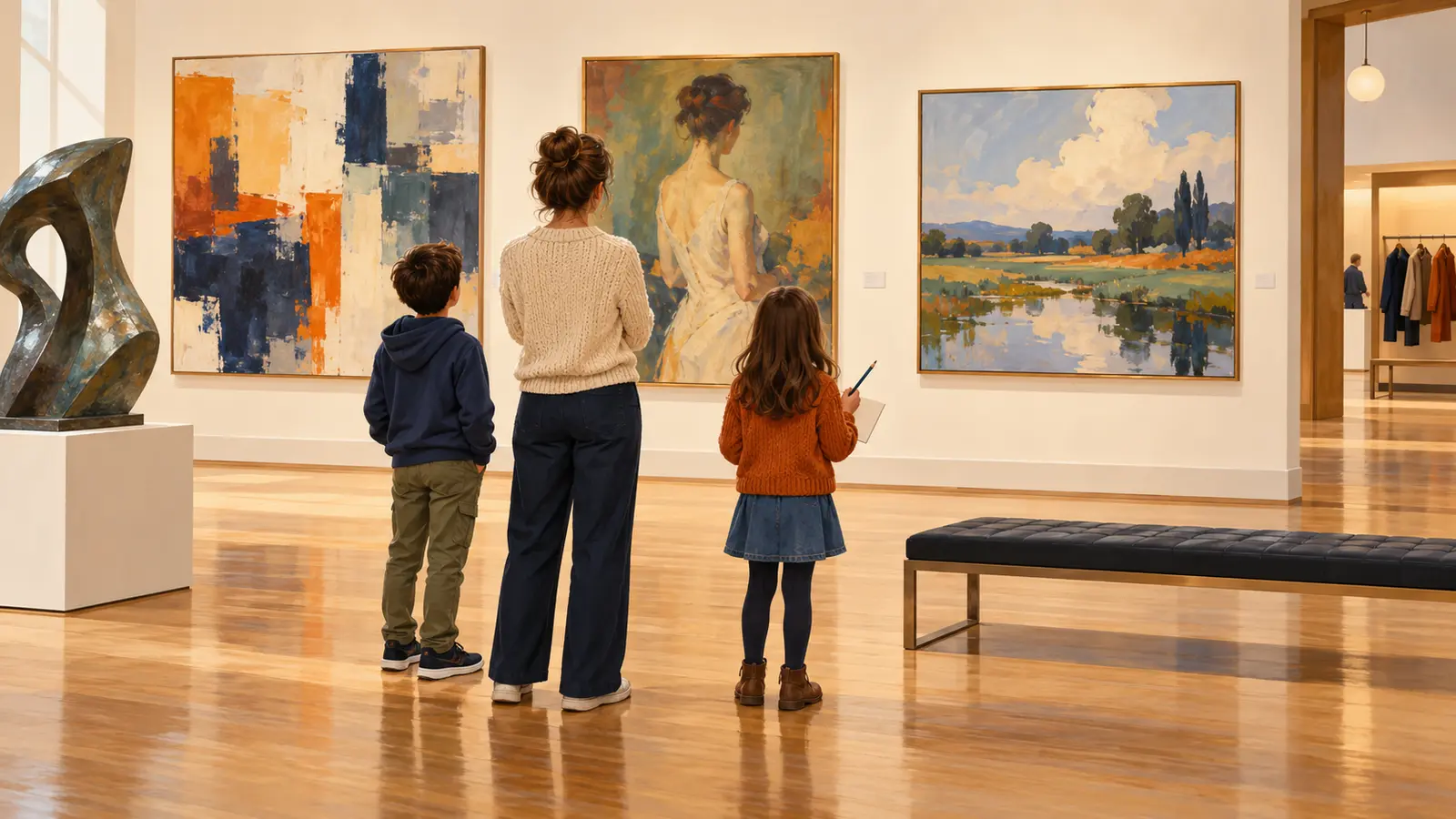
This is a free, compact art visit inside Syracuse University’s Shaffer Art Building—not an all-day children’s attraction. That is the advantage. A family can look closely at three works, make one graphite sketch and leave in about 75 minutes without forcing a gallery marathon.
The museum describes itself as a teaching museum and currently shows several exhibitions at the main-campus galleries. On October 29, 2026, the official exhibition page lists Reclaimed: The Art of Recology and Space and the Sacred: Letterio Calapai’s Prints through December 11, plus longer-running displays. Those dates and gallery assignments are volatile. Use them to choose a possible theme, not to promise a child a particular object before the family checks the live page.
For a larger downtown art museum with a different building and collection, use the Everson Museum plan. For any indoor visit, the three-anchor museum system keeps the day finishable.
Museum admission is currently free, but the trip is not automatically cost-free. Syracuse University lists paid visitor garages, cashless payment and event restrictions. Its current general-pay page lists hourly rates that begin at $6 and rise with time, with all-day and special-event rates; those numbers are volatile. Weekend and evening visitors may find free, space-available parking at College Place Lot by telling the attendant they are visiting the museum, but the museum warns that Stadium events can restrict availability.
Before leaving home, check both the museum parking page and the University’s daily visitor page. Budget 20–30 minutes beyond normal navigation time for a first campus arrival. If a major event makes parking uncertain or expensive, choose another day or the family parking-lot plan before unloading.
The museum is on the first floor of Shaffer Art Building, but that fact alone does not prove the entire trip works for a particular visitor. Call or email ahead about the accessible entrance, route from the intended parking area, door operation, gallery clearances, seating, restroom configuration, mobility devices, service animals and any needed accommodation. University accessible parking has its own permit and placard rules, so do not infer a space from a map.
The galleries may be quiet but can still include crowds, bright or dim zones, large-scale imagery, unfamiliar themes and the pressure to whisper. Ask staff what is busiest and whether one gallery offers a calmer start. The hearing-protection guide is for actual noise exposure; ordinary sensory earmuffs do not create a hearing-protection claim.
Families arriving as an organized group should not treat this individual-family plan as a booking policy. The museum currently asks self-guided groups to request a visit at least one week ahead and guided groups at least two weeks ahead. Use the official group form for school, club or large-family coordination.
Do not plan to snack in the galleries. Food and drink belong outside the museum under current policy. Eat beforehand or identify a lawful campus or off-campus food stop; never promise children a café without verifying it. Ask about restrooms on arrival instead of discovering the need halfway through the route.
Nonflash personal photography is generally permitted except where noted, while flash, video and tripods are not. A loaned work or temporary gallery may have stricter signs. Photograph the child only with consent and without blocking traffic or capturing strangers unnecessarily. Do not touch art, lean on cases or step past barriers for a better angle.
Bring a charged phone, parking payment method, any required medication under the responsible adult’s established plan, a minimal coat-room-ready bag and a small blank card if staff permits it. The museum provides graphite pencils according to its current policy, so do not bring a marker-filled art kit. Leave bulky backpacks, umbrellas, food, drinks and tripods in the car when weather and vehicle security make that sensible, or expect to use the coat room.
Download the parking address and museum hours before leaving. Campus cell service does not replace a written garage name and return route. Children should know the adult’s full name and the meet-back rule; use the lost-child plan before a crowded event day.
Bad weather: this is an indoor destination, but snow, ice, heavy rain or unsafe roads can still cancel the campus trip. Low energy: pick one gallery, two works and a five-minute sketch; 35 minutes is enough. Parking failure: do not circle indefinitely with upset children—use the official alternate lot direction or leave. Gallery overload: move to the bench or lobby, lower demands, then exit. Unexpected closure: use the museum’s digital guide or virtual exhibitions at home instead of inventing access.
Skip today if the family needs hands-on play, a guaranteed café, an unconfirmed accessible route, a large-group visit without notice, or more than 75 minutes of entertainment. Skip when a child cannot stay beside the adult or respect no-touch boundaries. This visit fits school-age kids who can look closely, answer one question and stop before attention runs out.
Reviewed October 29, 2026 using the Syracuse University Art Museum’s official hours, general policies, current exhibitions, location and parking guidance, and the University’s current pay rates. The three-work route, timing and stop rules are independent editorial planning—not museum instructions, access certification or a live operating statement. No affiliate links are attached. Report corrections through About.
MAKE THE WEEK COUNT
Build the plan your family can finish well, then leave enough energy for the next part of the day.
More family plans