90-minute minimum
Do: visitor center film, light map and two nearby tour-road stops selected with a ranger.
Skip: trails and the separate Schuylerville units.
STILLWATER, NY · 2–4 HOURS · FREE ENTRY
Start with the film and light map, choose four battlefield stops before the one-way road, and save the extra park units for a day when the family still has fuel.
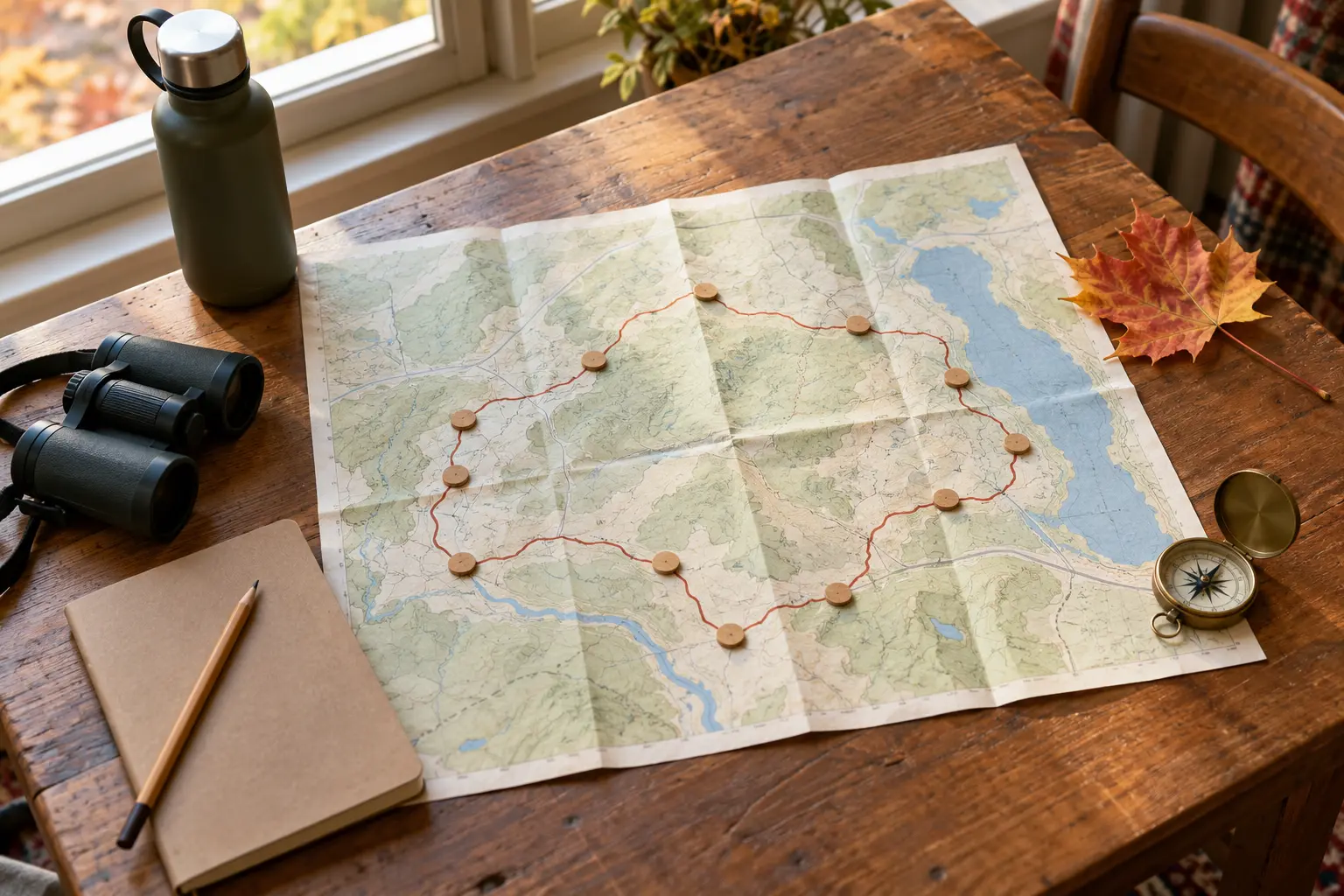
The National Park Service says the Battlefield Tour Road is a one-way drive with ten interpretive stops. Driving it without stopping takes about 30 minutes; a short stop at all ten usually takes about 90 minutes to two hours. That range explains why a family can accidentally turn a promising history day into a long sequence of getting in and out of the car.
The four-stop plan keeps the story coherent without treating every wayside as mandatory. Begin at the Battlefield Visitor Center, watch the 20-minute orientation film, use the 15-minute fiber-optic map, then ask a ranger which four stops best fit the day’s weather, mobility needs and children’s questions. Mark those four on the official park map before entering the one-way road. This page was checked against NPS information on October 6, 2026; hours, weather closures, programs and access conditions can change.
The park currently lists free entry. The Battlefield Visitor Center is listed daily from 9 a.m. to 5 p.m. in the main season, with shorter winter hours and weekday closures from December through February. The tour road is currently listed 9 a.m. to 5 p.m. for motor vehicles from April 1 through November 30, weather permitting. Battlefield grounds are generally open sunrise to sunset. Those are planning references, not a guarantee; check the official operating-hours page and alerts on the morning of the trip.
Several separate sites have narrower seasons. The NPS schedule checked October 6 lists the Neilson House, Schuyler House and Saratoga Monument interiors ending their 2026 season in mid-October, with different days and hours. Do not build a child’s main expectation around a seasonal interior until the current page confirms it is open. The grounds, Victory Woods and Surrender Site have their own schedules.
Use the restroom on arrival. Pick up the official map and Junior Ranger material if it is currently available. Watch the 20-minute film, then use the light map to answer three questions: Who was moving through this landscape? What physical features shaped the battles? Why did the result matter? Children do not need every commander’s name before they can understand terrain, supply and decision-making.
Ask staff for a four-stop sequence that includes one American position, one British position, one clear terrain view and one place that answers the child’s strongest question. That is a framework, not an official route. Use the current park map and ranger guidance; do not navigate from the conceptual hero image or from a saved screenshot of this page.
At each selected stop, give the family one job: find the landscape clue, read one panel, then explain one decision somebody had to make. Cap an ordinary stop at about 12 minutes. If one place earns a longer conversation, shorten the next. The park’s optional audio tour can add context, but download or open the needed material before the loop if cell service or data use is a concern. The family no-service plan is the right backup.
Return to the visitor-center area or another permitted picnic location, eat the food you brought and ask each child for one object, landscape feature or decision they remember. If everyone is still regulated and a separate unit is open, make a new decision. Otherwise leave. Completion is more useful than squeezing a second historical site into the last 40 minutes.
The visitor center currently lists accessible restrooms, a family restroom, wheelchair access and wheelchairs available. NPS information says each tour-road stop has accessible parking spaces and paved walkways, while some visitors may find stops 2, 7 and 10 more difficult. Accessibility varies at the historic structures and separate units; the Saratoga Monument includes stairs, while the half-mile Victory Woods route uses boardwalk and coated gravel designed for accessibility. Contact the park about the family’s exact need rather than assuming one label covers every unit.
The lowest-energy day is the visitor center plus the film, light map and two car-accessible stops recommended by staff. That still delivers a complete beginning, middle and end. If motion sickness makes repeated stop-start driving a bad fit, use the family car-sickness plan and consider keeping the visit to the visitor-center area.
Pack water for every person, a familiar lunch or snack, weather layers, sun or rain protection, required medicine, a pencil and the smallest day bag that can carry those items. The visitor center lists picnic tables, a picnic shelter, snacks and a bottle-filling station among its amenities, but a stocked machine or open shelter should never be the meal plan. Pack out trash and follow posted rules.
Open fields can feel hotter, colder or windier than the parking lot suggests. Check the official park weather page and National Weather Service forecast, then use the go, shorten or leave weather rule. Thunder, poor visibility, heat illness signs or a park closure end the plan. Historical importance does not override present conditions.
The park currently allows pets outdoors on a physical leash no longer than six feet, requires waste removal and excludes pets from park buildings and visitor centers. The pet page also warns that trailhead drinking water is unavailable and park streams are not recommended for pets. A pet therefore splits the family at the visitor center unless another adult can remain outside. Service animals follow different federal rules; ask the park about site-specific access.
Keep the focus on choices, terrain, logistics and consequences. Do not promise cannon fire, reenactors or weapons demonstrations unless the official calendar lists a current program. Do not ask children to play dead, stage attacks near other visitors or climb on resources for a photo. The site preserves real conflict and loss; curiosity and age-appropriate honesty are enough.
Children who liked the decision-making can compare this landscape with the enclosed fort story in the Fort Stanwix family guide. Families building a broader New York history weekend can also use the Women’s Rights National Historical Park plan, but not as a same-day add-on from Saratoga unless the drive and closing times genuinely work.
Child is done after the film: use the light map, choose one outdoor stop and leave. Rain begins: stay with visitor-center exhibits and skip the exposed loop if the road or weather feels wrong. Tour road closes: ask staff what is safely accessible that day; do not drive around a gate or improvise on an unmarked trail. History is not landing: switch to a terrain scavenger hunt—hill, field, river direction, tree line—without collecting anything. Adult energy drops: eat, use the restroom and drive home.
Shorten the day for children who cannot yet tolerate a one-way car loop with repeated exits, families with unresolved motion sickness or anyone whose mobility needs do not match the selected stops. Skip outdoor portions during severe weather, smoke, active closures or conditions beyond the family’s equipment. A child currently distressed by war content may do better with a different history site and a clearer emotional distance.
MAKE THE DAY COUNT
Build the plan your family can finish well, then leave enough energy for the next part of the day.
More family plans