ROME · FREE NATIONAL MONUMENT
Fort Stanwix With Kids: The Free History Day That Fits in Two Hours
Use the fort as one strong history anchor, let the Junior Ranger booklet give kids a job, and leave before every room becomes homework.
What is current for September 2026
Fort Stanwix National Monument is at 112 East Park Street in Rome, New York. From central Syracuse, plan roughly 50 to 70 minutes in ordinary traffic, then verify the route from your actual starting point. The park sits in a city street grid, so arrival is different from pulling into a large state-park lot.
The National Park Service currently lists admission as free and the park grounds as open from sunrise to sunset every day. Indoor hours for the Marinus Willett visitor center, museum and historic-fort contact station vary during the year and are subject to change without notice. The visitor center closes on most federal holidays. Those details were checked September 12, 2026; use the official basic-information page and current hours page on the morning of the trip.
The NPS says its Junior Ranger activity booklet is free and available to children of all ages. That is the best structure for school-age kids: it turns rooms and objects into a mission without forcing an adult lecture at every display. Ask at the desk what is available that day; do not promise a ranger program or weapons demonstration unless it appears on the current calendar.
The two-hour family plan
0:00–0:20 — Visitor center, restroom and one question
Start at the Willett Center when it is open. Use the restroom before the fort, collect the current map and booklet, and ask one operational question: “What can we definitely see before we need to leave?” Programs, room access and staffing can change. Build the day around what the ranger confirms, not an old event post.
Give each child one question to carry: Why was the Oneida Carrying Place important? What made the fort defensible? Whose stories changed when control of this route changed? The park’s own overview explains that the six-mile portage connected the Mohawk River and Wood Creek and was contested within the homelands of the Six Nations Confederacy. Treat that complexity as the story, not as scenery around a simple winners-and-losers script.
0:20–1:20 — Fort first, booklet second
Walk to the reconstructed fort and let the building do the work. Choose three stops: the walls and defensive shape, one room connected to daily life, and one object or exhibit that reveals how people supplied and occupied the place. Children do not need every label. They need enough detail to explain one surprising thing at lunch.
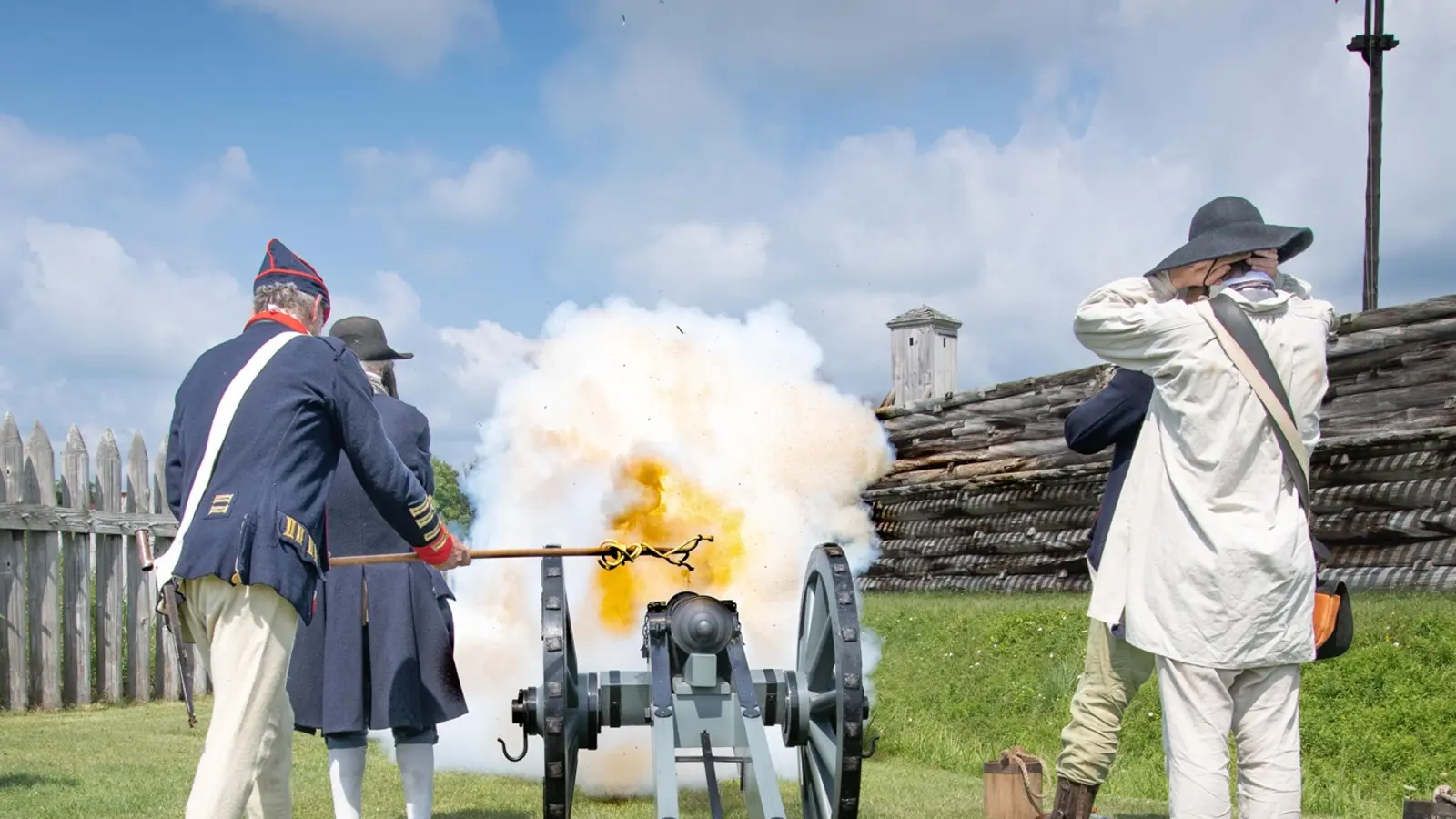
If a cannon or musket demonstration is scheduled, decide before it starts whether the noise fits your family. The NPS specifically warns that historic-weapons demonstrations can be stressful for animals, and the same common-sense warning applies to noise-sensitive visitors. Use properly fitted hearing protection when appropriate, stand only where staff direct and never promise that a child has to stay. The family hearing-protection guide explains why a labeled rating is not a fit test.
1:20–1:45 — Finish the mission, not the museum
Return to the booklet or choose one final gallery. Ask each child for one observation and one question that the exhibits did not answer. That keeps history open rather than pretending a two-hour visit creates certainty. If the Junior Ranger requirements are realistic in the time left, finish them. If not, ask whether the booklet can go home.
1:45–2:00 — Outside lap and clean exit
The NPS describes the trail around the fort as about one-half mile, partly paved with some compacted gravel. Use only the segment the slowest person wants. Take the group photo, count heads, check the next restroom and leave. The three-anchor museum system works here: one must-see, one meal or snack, one flexible block.
Accessibility without vague promises
The park’s accessibility page says accessible parking is available next to the Willett Center on North James Street, and that the center’s entrances and restrooms are accessible. Introductory videos are open-captioned; FM assistive-listening devices, tactile maps, a Braille pamphlet and other formats are available on request. Inside the reconstructed fort, ramps provide access to most—but not all—interior buildings.
The surrounding trail is partly paved and partly compacted gravel. Accessible picnic tables are near the trails on mostly level lawns. Restrooms have infant changing stations, and drinking fountains are listed in the Willett Center and Gregg Barracks. If a particular doorway, grade, seating interval or sensory condition decides the visit, call 315-338-7730 before leaving. “Accessible” is not one universal route.
Food, bags, pets and weather
The NPS permits visitors to bring food and drinks to the park but not into exhibit areas. Keep the snack compact and use it outdoors; do not turn gallery time into a bag-management exercise. Pack water, a small layer, any required medication controlled by an adult, pencils for the booklet and hearing protection if loud programming is possible.
Pets must remain leashed and under control. They may use outdoor public areas but may not enter public buildings; trained service animals are the exception described by the park. There is no designated place to tie a pet unattended. A hot, wet or noise-sensitive pet is a reason to choose a different plan, not to split adults indefinitely.
Rain: keep the indoor anchor if those buildings are open and shorten the outside lap. Heat: arrive early, use indoor breaks and do not make the lawn the endurance test. Thunder: leave exposed outdoor areas and follow official instructions. Snow or ice: verify both the drive and the park schedule. Check the National Weather Service point forecast for Rome before departure.
Kid-meltdown backups
If a child is done with exhibits, move outside for the short perimeter segment or end the visit. Downtown Rome can support a separate food stop, but verify the business, hours and parking rather than naming a permanent “best” option. If the fort buildings close unexpectedly, the outdoor grounds can provide a brief look, but they are not a substitute for a promised two-hour indoor day.
Review the lost-kid plan on arrival: children stop, stay visible and ask a uniformed ranger or another clearly identified staff member for help. For grandparents, mobility differences or mixed energy levels, use the multigenerational day-trip plan and make seating part of the route.
Who should skip it
Skip the day when the only reason to go is a program that is not confirmed, when a family member cannot tolerate unavoidable demonstration noise, or when the indoor schedule does not match the drive. Families seeking a full amusement day may find two hours too quiet. Families willing to let one place carry one complicated story will get much more from it.
Official check-before-you-go sources
- NPS basic information: admission, grounds and visitor-center basics
- NPS operating hours and current calendar link
- NPS accessibility details
- NPS pet rules
- NPS FAQ and Junior Ranger information
- NPS park history overview and source photograph
MAKE THE WEEKEND COUNT
Useful beats heroic.
Build the day your family can finish well, then leave enough energy for the ride home.
More family plans