DAD SYSTEM · ROAD TRIPS
The Family Car-Sickness Plan: Prevent, Prepare, Recover
Carsickness is easier to manage before the first pale face. Reduce the visual-motion mismatch, listen for early warning signs, keep cleanup gear reachable, and make medicine a clinician-guided decision—not a roadside guess.
Why carsickness happens
Motion sickness is commonly explained as a mismatch among what the eyes, inner ear and body report. A child looks down at a still book while the vestibular system detects acceleration and turns. The Centers for Disease Control and Prevention lists obtaining a visual horizon reference and avoiding reading or visual scanning among the behavioral countermeasures that can help.
Children often show the problem before they can name nausea. The American Academy of Pediatrics describes early signs including queasiness, cold sweat, fatigue and appetite loss; younger children may become pale, restless, yawn or cry. Waiting for vomiting throws away the easiest decision window.
Susceptibility varies. CDC notes that it tends to rise after age two and peak around ages seven to twelve. A history of migraine or vestibular problems can increase risk. Repeated or unusual symptoms deserve a clinician's assessment rather than an assumption that every episode is ordinary motion sickness.
Before departure: prevent the predictable triggers
Protect sleep
CDC says sleep deprivation can worsen motion sickness. A predawn departure that saves traffic but costs a child half a night may be a bad trade. Build the car the night before, use the hotel-room exit system on overnight trips, and choose a departure the family can meet without panic.
Use a light, familiar meal
Avoid turning the drive into an experiment with huge, greasy or unfamiliar food. Do not intentionally send a hungry child for hours, either. Use a modest familiar meal and small sips of water. The evidence for ginger, supplements and special diets is weak or contradictory, according to CDC; present them as preferences, not cures.
Set the view without compromising restraint safety
A view toward the horizon may reduce visual-vestibular mismatch. The child must still ride in the correct seat and restraint for age, size, law and the seat and vehicle manufacturers' instructions. Do not move a child to the front seat, turn a seat forward early, loosen a harness or add an unapproved positioner to improve the view. Within the safe setup, reduce visual barriers where possible and encourage looking far ahead.
Make the first activity audio
Download music, stories and spoken games before leaving. Reading, drawing, close-focus games and screens can worsen symptoms for a susceptible rider. The travel-games guide separates good train activities from good car activities instead of pretending they are interchangeable.
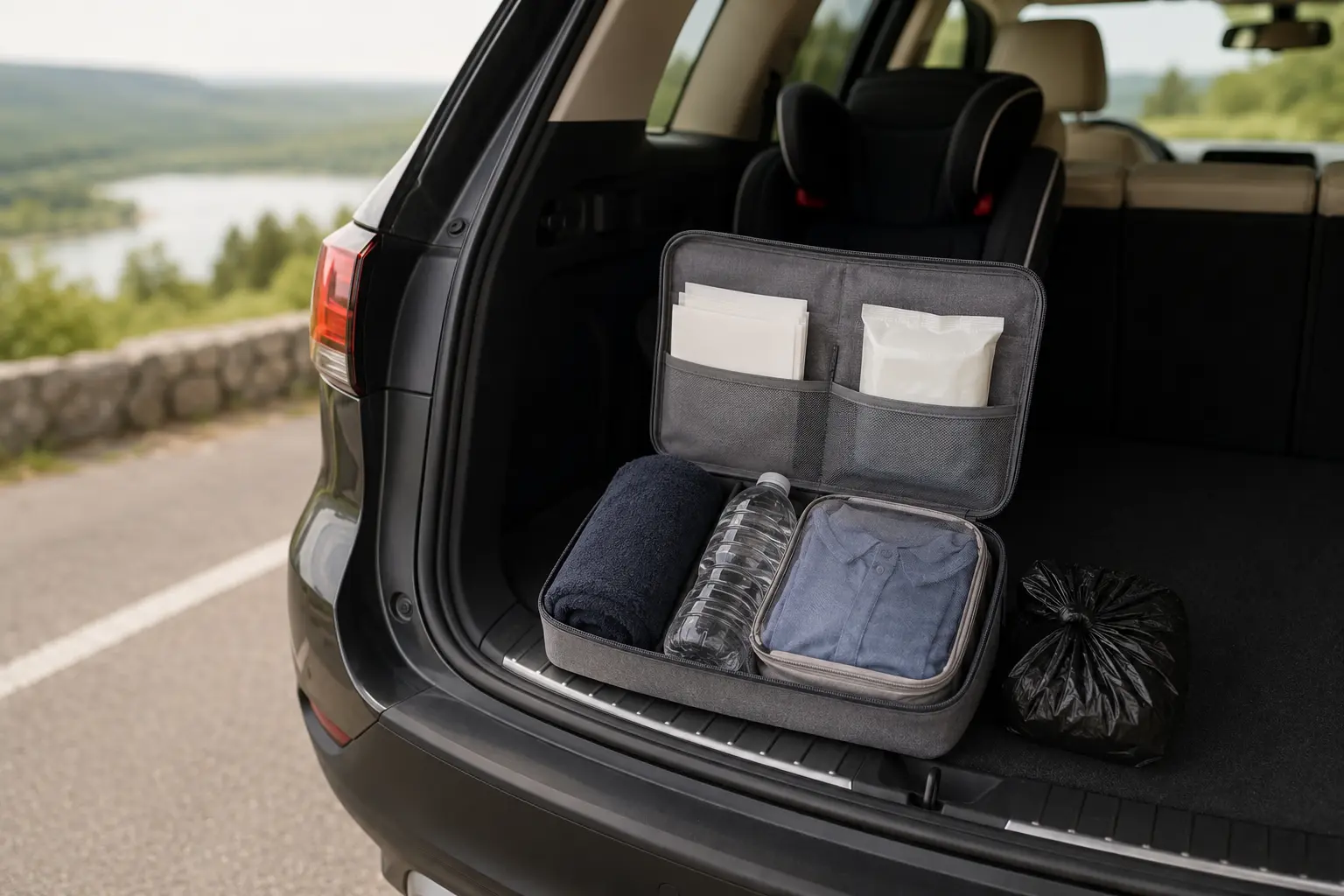
The reachable cleanup kit
- Several plain sickness bags that open quickly and do not leak.
- Fragrance-free wipes and paper towels.
- One dark washable towel.
- A change of clothes in a separate zip bag.
- One larger bag for sealed waste or wet clothing.
- Water for small sips after recovery.
- Any prescribed or clinician-approved item in its original packaging, stored according to directions and adult-controlled.
Keep the kit where an adult passenger can reach it without unbuckling. The driver should never search for a bag while moving. Do not hang a heavy organizer where it can become a projectile or interfere with a restraint. Practice opening the bag once at home; complicated packaging fails quickly when a child whispers, “My stomach feels weird.”
Use an early-warning script
Teach the child to report warmth, yawning, extra saliva, dizziness, headache, stomach awareness or sudden quiet—not only “I am going to throw up.” Use a neutral phrase such as “yellow light.” The response is automatic: screen down, eyes outside, cool air if conditions allow, head still, slow breathing and a safe pull-off.
Do not shame the child, demand certainty or make them hold it until the next scheduled stop. Anxiety can compound the experience. A calm plan reduces cleanup and teaches useful body awareness.
During the drive: the four-step response
- Remove the close visual task. Put down the book, game or screen.
- Change the sensory input. Look toward a stable distant point, minimize head movement and use cool fresh air when practical.
- Prepare without drama. Hand over an open bag and towel before they are urgently needed.
- Pull over safely. Use a real rest area, parking lot or legal safe location. Do not stop on a narrow shoulder unless the situation makes it unavoidable.
Controlled, regular breathing may help and has no medication side effects. Keep instructions simple. If lying down is considered after stopping, the child still needs to be correctly restrained before the vehicle moves again.
Medication: a firm boundary
Medication can be appropriate, but this page is not a dosing chart. CDC cautions that anti-motion-sickness medicines for children require care; sedation is common, some children become paradoxically agitated, excessive sedation can be dangerous, and scopolamine can cause dangerous effects in children and should be avoided. Product names, concentrations, age limits and a child's health history matter.
Ask the child's pediatrician or pharmacist what—if anything—is appropriate, when it should be taken, which other medicines or conditions matter, and whether a supervised test dose is advised. Follow the exact current label and professional advice. Never use medicine mainly to make a child sleep through the drive, never combine products casually, and never copy an adult dose.
After vomiting: reset the trip
Stop safely. Clean the child first, then the vehicle. Replace wet clothing, offer reassurance and allow time for symptoms to settle. Use small sips of fluid rather than forcing a large drink. Decide whether the child is alert, comfortable and willing to continue. A schedule is not more important than recovery.
Persistent vomiting can cause dehydration. Seek medical advice when symptoms are severe, unusual, continue after motion stops, include severe headache, trouble walking, confusion, blood or green vomit, significant abdominal pain, signs of dehydration, or anything that makes the caregiver think this is not ordinary carsickness. Call emergency services for an emergency.
Clean the car without creating another hazard
Park, switch on hazard lights when appropriate and move occupants away from traffic. Seal waste, wipe hard surfaces according to the vehicle manufacturer's cleaning instructions and keep contaminated items separate. Do not saturate buckles or harness webbing with cleaners; child-restraint manufacturers specify what may be used, and harsh chemicals can damage components. If a restraint is soiled, follow its manual or contact the manufacturer.
Build breaks into the route
For a child with a known pattern, schedule breaks before the usual failure point. Use a real destination with restrooms and space to walk, not an optimistic promise to “see how it goes.” The road-trip packing system keeps the cleanup kit reachable, and the day-trip plan gives the family an honest turnaround rule.
On a winding route, slow smooth driving helps everyone and improves safety. Avoid abrupt acceleration and aggressive cornering. The driver should focus on the road; an adult passenger handles the child when possible. If only one adult is present, pull over before helping.
Who needs a clinician-led plan
Talk to the child's clinician before a trip when episodes are frequent or severe; the child has migraine, dizziness, hearing or balance problems; symptoms happen without motion; other medicines or health conditions complicate choices; or prior medication caused marked sleepiness or agitation. A personalized plan matters more than a generic packing list.
The final family protocol
- Sleep, light meal, safe forward view.
- Audio first; close visual tasks only for riders who tolerate them.
- Kit reachable; bags pre-opened.
- Use the “yellow light” warning before nausea becomes urgent.
- Pull over safely, recover fully and change the plan if needed.
- Medicine only after child-specific professional guidance.
Authoritative health sources
Health guidance was checked September 3, 2026. This page is educational and does not replace care from the child's clinician.
- CDC Yellow Book: motion sickness, behavioral measures and pediatric cautions
- American Academy of Pediatrics: car sickness
- American Academy of Pediatrics: motion-sickness care guidance
- NHTSA: car seats and booster seats
MAKE THE WEEKEND COUNT
Useful beats heroic.
Build the day your family can finish well, then leave enough energy for the ride home.
More family plans