SYRACUSE · ZOO DAY
Rosamond Gifford Zoo With Kids: The Two-Loop Day That Leaves Before the Crash
Pick three animals, walk one outdoor loop, reset indoors, and leave with one thing the kids still want to see next time. The zoo is not a checklist.
Why this is an easy Syracuse win
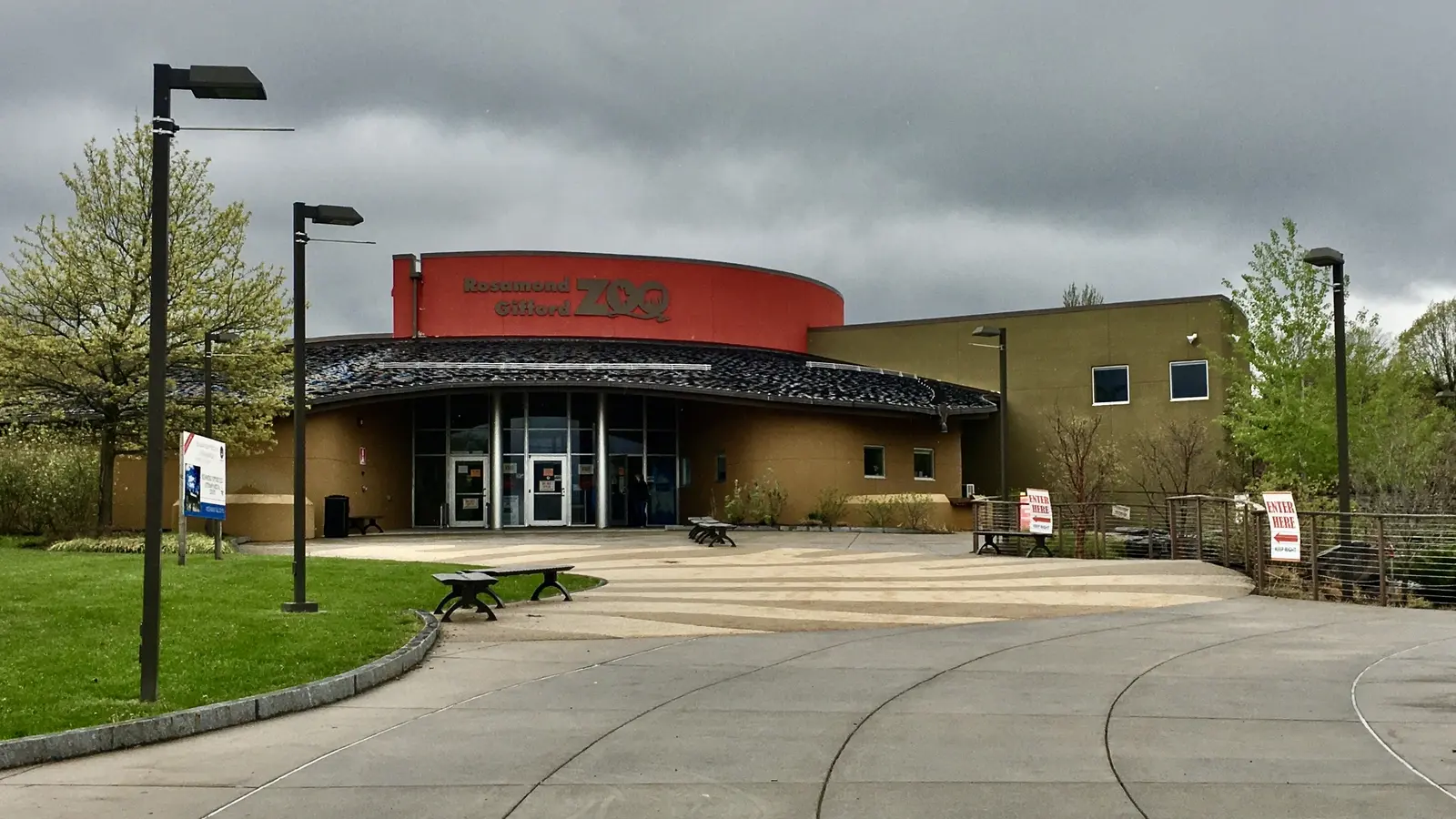
Rosamond Gifford Zoo sits at Burnet Park in Syracuse, close enough for a short local day and substantial enough to fill several hours. The useful feature for families is not simply the animal list. The zoo says about 60 percent of its exhibits are indoors, so the day can move between outdoor walking and climate-controlled spaces without abandoning the destination when weather or energy shifts.
This plan is built for school-age children who want animals but do not need every habitat, every scheduled talk and every gift-shop aisle. It is more contained than the full Syracuse day-trip guide and less weather-dependent than the Beaver Lake family plan. Treat it as one strong anchor, not the first stop in a four-attraction marathon.
Current facts to verify before leaving
- Hours: the official admission page currently lists daily hours of 10 a.m. to 4:30 p.m., with closures on Thanksgiving, Christmas and New Year's Day.
- General admission: March through December pricing currently lists adults ages 18–61 at $9, youth ages 3–17 at $5, seniors 62 and older at $5, and children two and under free. The page lists separate January–February discount pricing. Verify before paying; promotions and policies can change.
- Supervision: the zoo says youth 14 and under must be accompanied by an adult age 18 or older.
- Parking: the zoo advertises free on-site parking. If its lots fill, it directs visitors to legal street parking in Tipperary Hill or Burnet Park and says everyone must still use the main entrance. Read the posted odd/even and other parking signs.
- Tickets: the official page lists payment methods at admission and does not currently state that ordinary daytime visitors need an advance reservation. Special events and encounters can have separate rules; check the calendar before assuming.
- Weather policy: the zoo says it does not refund admission or provide rain checks because of weather.
These details were checked September 5, 2026. Save the official plan-your-visit page and call 315-435-8511 when a facility, rental or accommodation will decide the trip.
The two-loop itinerary
Before arrival: every person picks one priority
Ask each child for one animal or exhibit they most want to see, then give the adults one shared priority. Check the current map and same-day notices. Do not promise an individual animal: the zoo explicitly says animals can choose viewable or private areas. Promise that the family will visit the habitat and look carefully.
Plan to reach the entrance a few minutes before or near opening. That gives the family time to park, use the lobby bathroom and orient without starting behind a crowd. Photograph the map or keep the official version open. Put one adult in charge of navigation and the other, when present, in charge of pace and body count.
10:00–11:15: outdoor priority loop
Start with the outdoor habitats that matter most to the children while legs and attention are fresh. Follow the zoo map rather than inventing shortcuts. One loop does not mean every spur. Stop for behavior—feeding, movement, vocalizing, keepers working—not just a quick proof photo.
Give kids a simple observation job: find one animal using shade, one using height and one interacting with another animal. The point is to slow down enough to see something. Respect barriers, keep hands off glass and never feed an animal. The zoo specifically prohibits tapping windows, loud behavior that stresses animals, climbing non-pedestrian structures and throwing objects near habitats.
11:15–12:15: indoor reset
Move indoors before anyone demands it. Indoor exhibits are not a consolation prize; they are the planned second act. Lower voices, drink water and let the family spend time with fewer transitions. If a child needs a sensory break, the zoo identifies a quiet/nursing room in the Animal Health Center with a chair and changing table. It also publishes a sensory map and social story that families can review before arrival.
If a scheduled creature chat lines up naturally, attend one. The current summer schedule lists talks from late morning through afternoon, but the zoo labels the schedule subject to change and announces exact locations. Do not sprint across the grounds for a talk that breaks the family rhythm.
12:15–1:00: lunch before bargaining begins
The zoo allows visitors to bring refreshments except alcohol. Seating is limited to courtyard tables and benches, so pack food that can be eaten neatly without building a full picnic camp. The HoneyBee Café is currently listed as open daily 10 a.m. to 4 p.m.; seasonal stands have narrower schedules. Food operations can change, so bring a reliable backup for medical or dietary needs.
Use a restroom before the second loop. The zoo lists accessible restrooms and a large family bathroom off the main lobby. The day-trip cooler guide can keep lunch compact, but a small bag is better than hauling a trunk-sized cooler through exhibits.
1:00–2:00: one repeat and one new thing
Return once to a priority habitat where an animal was not visible, then choose one new area. That honors the child's pick without turning the visit into a search mission. Leave when the group has one good observation left in it. A two- to four-hour visit is a complete zoo day.
Put the gift shop after the adult has stated the rule: browse only, one item within a fixed amount or skip it. Do not negotiate the budget under the exit sign. A photo, child sketch or favorite-animal vote can close the day without buying anything.
Accessibility, strollers and service animals
The zoo states that accessible parking and restrooms are available and both indoor and outdoor pathways are accessible. Push wheelchairs are free with an ID held at the membership desk, first come, first served. A limited number of motorized wheelchairs are available free for guests 18 and older with ID and a waiver, but not during inclement weather. Stroller rental is listed from 10 a.m. to 4 p.m., with current non-member prices of $8 single and $10 double. Confirm availability and policy before relying on any rental.
Pets, comfort animals and emotional-support animals are not allowed, including in the parking lot or cars. On-duty and in-training service animals are permitted with restrictions; some indoor animal areas exclude outside animals, and staff can arrange an escort. Call the Duty Officer extension provided on the official accessibility page before travel if those restrictions affect the visit. Never leave any animal or child in a parked car.
What to pack
- Water bottles, compact food and any required medication in an adult-controlled location.
- Weather layer, sun protection and a small umbrella or rain shells when needed.
- Comfortable walking shoes; scooters, bicycles, wheeled shoes and recreational balls are prohibited.
- A saved map, the sensory guide when useful and one written adult phone number for school-age kids.
- A tiny observation notebook or camera with the expectation that personal photography stays in public visitor areas.
- One spare child layer and wipes, not an entire rolling base camp.
The lost-kid plan is worth rehearsing before a crowded day. The museum-day system also works for indoor-heavy zoo blocks: three anchors, an early meal and a deliberate exit.
Weather and meltdown backups
Rain: remember that the zoo does not issue weather rain checks. Use the indoor majority, keep one outdoor priority and shorten the visit. Heat: begin outdoors, move inside early, drink regularly and do not add Burnet Park afterward merely because the day looks short. Cold: use shorter outdoor loops and confirm which species or seasonal areas are available. Thunder: move into a substantial building and follow staff direction; do not shelter under a tree.
The animal is not visible: read the habitat information, wait briefly, then make one later return. The child is overloaded: use the quiet room or a calm indoor corner, drink and decide whether one final habitat is realistic. The lot is full: follow legal signed parking; do not unload children in an unsafe lane. The line is long: skip the optional transaction and keep the core day intact.
Who should skip or simplify it
Skip a peak-time visit if a child cannot tolerate crowds and the available sensory supports are not enough. Simplify to indoor exhibits when heat, cold or mobility makes the outdoor loop unreasonable. Families expecting guaranteed animal appearances should reset that expectation before paying. Anyone bringing a pet should choose a different destination because the zoo prohibits pets even in its parking areas and inside vehicles.
Official check-before-you-go sources
- Rosamond Gifford Zoo: hours, admission and parking
- Rosamond Gifford Zoo: current policies, rentals and animal-viewing guidance
- Rosamond Gifford Zoo: accessibility, sensory supports and service animals
- Rosamond Gifford Zoo: food and outside-refreshment policy
MAKE THE WEEKEND COUNT
Useful beats heroic.
Build the day your family can finish well, then leave enough energy for the ride home.
More family plans