Floor one: high-motion science
Start with the most interactive science zone or scheduled demonstration that matters to the family. Give it 60–75 minutes, then leave while everyone can still transition.
ROCHESTER · INDOOR DAY TRIP · DATA-LED
Three floors and a separate planetarium can turn curiosity into an endurance test. Pick two museum floors, eat on time, and make exactly one after-lunch decision.
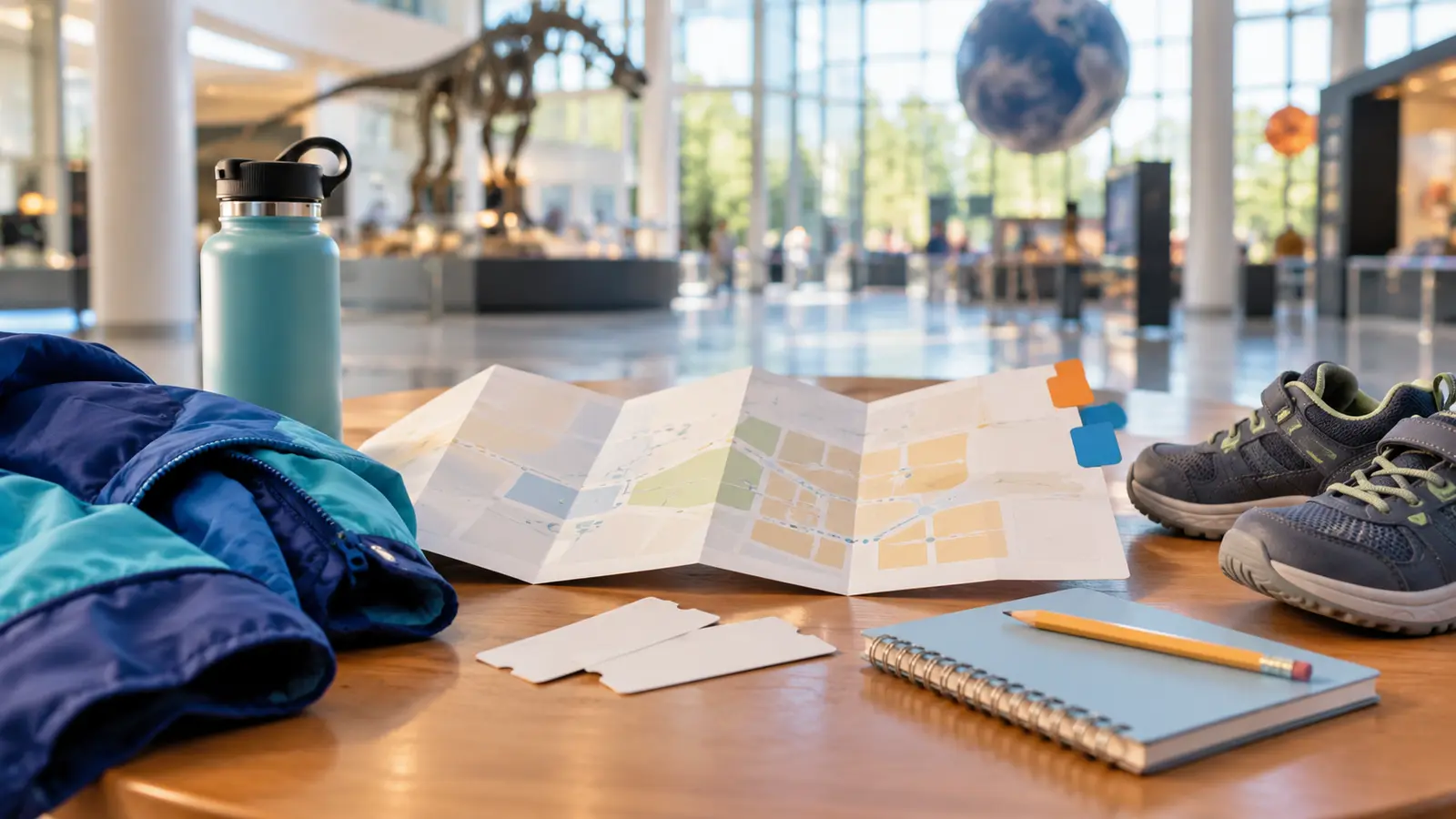
RMSC is a strong Rochester break-day option when the family wants hands-on science, regional history and an indoor weather hedge without committing to an all-day theme park. The official museum page describes three floors and more than 120 interactive science- and history-themed exhibits. That is a menu, not an assignment. School-age kids do better when the adult defines a finishable route before the first button, tunnel or demonstration pulls the group sideways.
This guide is for a roughly four-hour museum visit from Syracuse, not a claim that every exhibit fits every child. Drive time varies with origin, traffic, weather, construction and stops; check the live route immediately before leaving. The separate Strong Museum two-zone plan solves a play-first Rochester day. This page is for a science-and-history day and deliberately avoids duplicating the October 24–25 event roundup.
As reviewed October 24, 2026, the official admission page listed museum general admission at $23 for adults, $22 for seniors and students with valid ID, $21 for ages 3–18, and free admission for children under three. It also listed reduced or free programs with exact eligibility and proof requirements. These are volatile facts, not a promise of checkout total. Use the live ticket flow for the exact date, taxes, special-program charges, refund terms and household eligibility.
The museum says online tickets are date-specific and nonrefundable. Planetarium admission is separate; the official pages currently describe a $4 combined-admission discount when both are purchased at the box office or welcome desk. Do not assume the discount applies online, to every show or with another offer. Price the actual household both ways before paying. The family membership break-even calculator shows the right method: compare real household totals and visits you will actually make, not a headline claim that a membership “pays for itself.”
The official planetarium page says online tickets are nonrefundable, seating is first come, first served and early arrival is strongly encouraged. Show content, length, age fit, lighting, volume and late-seating policy vary. Read the exact show listing and call when darkness, motion, seizure sensitivity, hearing, mobility or a quick exit matters. A 65-foot dome is not a casual five-minute add-on for a child who dislikes enclosed darkness.
Ask four questions before adding it: What is the exact runtime and content? When do doors close? Can a family leave and re-enter? Which accommodations are available for this show and seat location? If any answer is essential and unclear, stay in the museum or go home. Use the hearing-protection guide only after the venue confirms a support will preserve necessary instructions and comply with show rules.
The current RMSC accessibility page provides a central contact route but does not, by itself, answer every exhibit-level question. Call 585-271-4320 for the museum or use the official contact route when step-free arrival, elevator status, wheelchair turning space, accessible restroom features, service-animal access, seating, captioning, lighting, sound or a quiet break location decides the day. The official hours page says on-demand live interpretation in more than 300 languages, including ASL, can be requested at the welcome desk or planetarium box office; confirm availability for the visit.
Interactive galleries can combine sudden sounds, dark spaces, moving images, shared controls and school groups. Preview the map, name the first destination and agree on a stop phrase. An adult carries essential medication and keeps the arrival separation drill active. Do not rely on a child’s phone in a loud building. If preserved animals, human remains, cultural objects or flashing effects matter, ask staff about the specific galleries before entering.
Pack lightly: charged phone, necessary medication, one simple layer, a water plan and only items the current museum policy allows. Check bag, stroller and outside-food rules directly; this guide does not invent them. Do not bury medicine under coats. The family museum-day system keeps the group to one anchor, one food plan and one exit rule.
For food allergies, review current café information and contact the venue; follow the family’s clinician-directed plan and the six-gate allergy plan. A café name or staff reassurance cannot replace ingredient, cross-contact and emergency decisions appropriate to the child. If food uncertainty is unresolved, plan a safe meal before or after the museum.
An indoor destination still has a highway, parking lot and walk to the entrance. Check National Weather Service forecasts, road conditions and museum messages. Heavy lake-effect snow, ice, flooding or severe weather can cancel a paid plan. Nonrefundable tickets are not permission to drive badly. If the route is unsafe, contact the venue about available options without assuming an exception.
Low energy: one floor, lunch and leave. Crowd overload: ask staff for a quieter location or return to the lobby; if regulation does not recover, go. Planetarium fail: skip it without replacing it with another paid attraction. Drive fail: use the closer MOST Syracuse plan on a suitable open day, or run the home shadow lab.
Skip the four-hour plan when the drive consumes the family’s usable energy; a required access or sensory support is not confirmed; illness or weather makes the return uncertain; the child needs one quiet predictable room rather than multiple transitions; or the household is counting on seeing every exhibit to justify the price. Skip the planetarium when the exact show’s darkness, sound, seating or exit procedure does not fit. A shorter local museum or library visit can be the better day.
Reviewed October 24, 2026 by Mr Adventure Dad Editorial Desk using the official RMSC Museum & Science Center overview, hours, admission, parking, café and language-access information, accessibility contact page, and planetarium ticket and arrival guidance. Prices and schedules are labeled volatile. The two-floor route is an editorial planning tool, not a first-person visit, accessibility certification or venue endorsement. No affiliate link is attached. Report sourced corrections through About.
MAKE THE WEEK COUNT
Build the plan your family can finish well, then leave enough energy for the next part of the day.
More family plans