1. Ship and cargo
Choose one model, tool or photograph that shows how something moved. Ask what the vessel carried, where it could go and what work the crew had to do.
OSWEGO · MARITIME HISTORY · AUTHORITY-EXPANSION
The reliable visit is the main museum. Treat the historic vessels and lighthouse as separate, seasonal decisions—not automatic bonuses hiding inside admission.
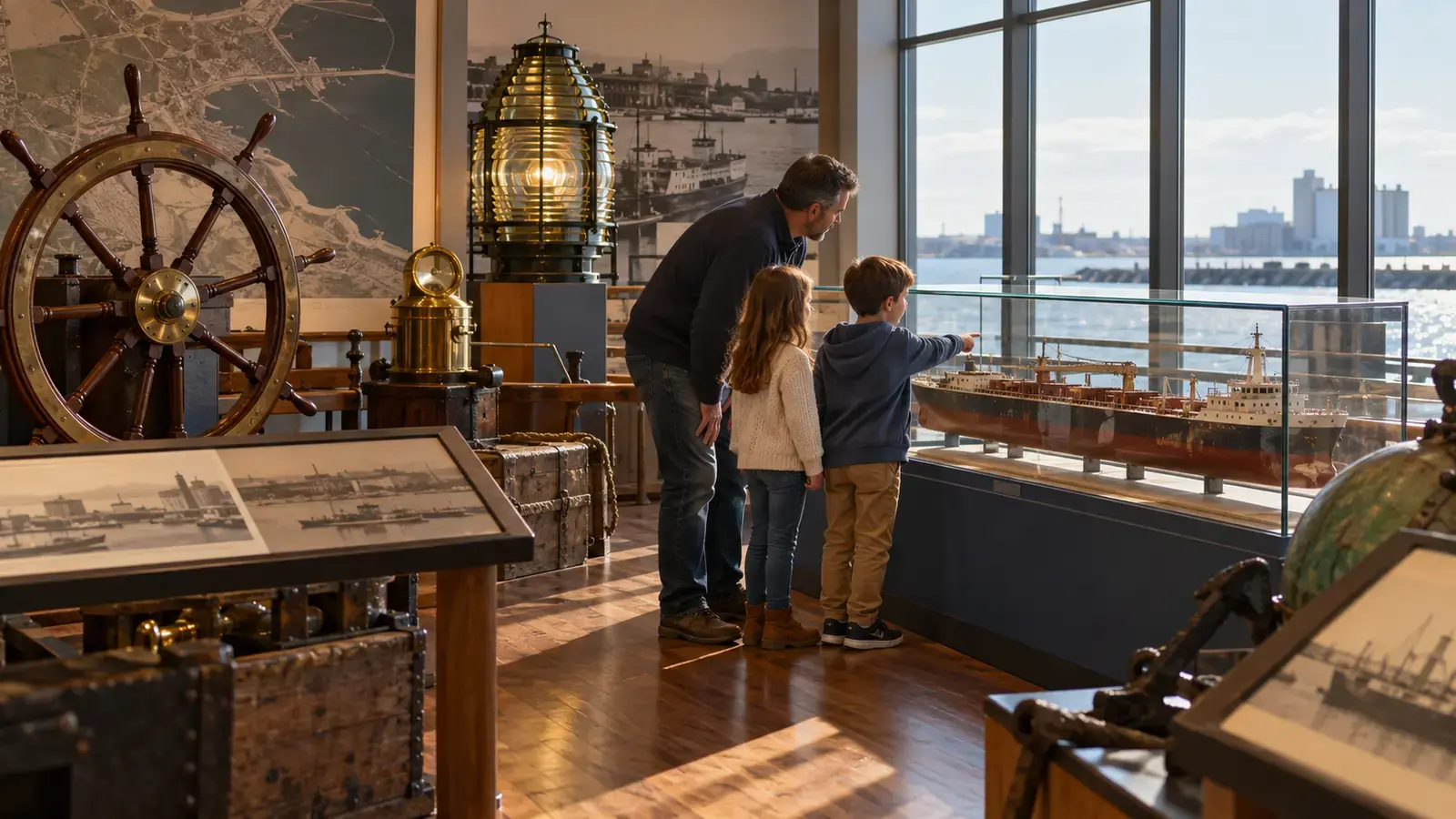
Build this as a 90-minute indoor history visit, not a promise that the family will climb aboard a vessel. The H. Lee White Maritime Museum sits at the end of West First Street Pier in Oswego and interprets more than 400 years of regional maritime history through artifacts, images, archival records and artwork. That gives school-age kids enough real material for one focused mission: find evidence of how cargo, people, weather and navigation shaped Lake Ontario.
On October 28, the museum’s own published season means the vessels should not be assumed open. A locked or weather-closed vessel is not a failed trip when the main building was the plan from the start. Families wanting another Oswego history day can compare the Fort Ontario plan; families who tend to overstay indoors should use the three-anchor museum system.
Kids may finish in 60 minutes. Good. A compact visit leaves room for lunch, a short Oswego stop or simply going home without the museum crash.
The official visit page currently lists museum admission at $12 for adults, $6 for ages 13–17 and free for children 12 and younger, with some discounts. Treat those figures as volatile and verify them before the trip. Ordinary museum admission is not the same thing as a reserved lighthouse tour or guaranteed vessel access. Lighthouse tours are separately priced, seasonal, reservation-based and travel by boat; they require their own readiness, weather and mobility decision.
The museum lists its vessels as open mid-May through mid-October, weather pending. Even in season, call before building a child’s expectation around boarding. Ask which vessel is open, whether admission includes it, what ladders or thresholds are involved, what footwear is required and whether rain or wind can close it. If any answer is unclear, use the main building only.
The museum’s FAQ says the main facility has a chair lift to second-floor exhibit spaces. It also says the vessels and Oswego West Pierhead Lighthouse are not accessible. That is the starting point—not an individualized access promise. Call about the entrance route, parking-to-door surface, chair-lift dimensions and operation, seating, restroom configuration, stroller storage, service-animal needs and whether every planned gallery can be reached.
A maritime gallery can include dim areas, large objects, recorded sound, narrow paths or detailed displays. Ask before arrival if a child needs a quieter period or a predictable route. Bring only the established supports that the child already uses. The hearing-protection guide covers actual noise protection, but ordinary sensory earmuffs are not a reason to make a medical or protection claim.
The official page gives the museum address at the end of West First Street Pier but does not make this guide a live parking guarantee. Check directions, signs, snow restrictions and any event closures on the day. Do not stop in a fire lane or assume a clear-looking pier space is legal. In cold months, lake-effect weather and wind can change the final mile even when central Syracuse looks fine.
Do not count on a café, water fountain or specific restroom arrangement without confirmation. Use a restroom before the final segment if that is a hard need, carry water according to museum rules and plan lunch separately. Keep food out of galleries unless staff says otherwise. A familiar snack in the car can protect the drive home without turning exhibit cases into a picnic area.
Check the National Weather Service forecast for Oswego, not just Syracuse. Strong wind, lightning, heavy lake-effect snow, poor visibility or icy pier conditions can cancel the outside portion or the entire drive. Thunder means stay away from exposed waterfront areas. Children stay beside the responsible adult near the harbor edge; no climbing railings, approaching working equipment or stepping onto a vessel without staff permission.
In summer, sun and heat still matter on the pier. In cold rain or wind, wet clothing can chill a child quickly. Use the family weather cutoff before departure and again before any outside add-on. The museum is not a reason to force a dangerous road.
Bring the confirmation or current hours screenshot, a charged phone, required medication under the responsible adult’s established plan, water if allowed, simple weather layers for the pier, and a small notebook or pencil only if the museum permits it. Closed-toe shoes are the conservative choice for a working-harbor setting and any vessel question. Leave bulky toys, food mess, rolling gear and anything children will swing near cases in the car.
Download the route and museum phone number before leaving. If the family might add Fort Ontario or another stop, verify that destination separately; one attraction’s hours do not prove another is open.
Bad weather: keep the visit entirely inside or cancel the drive if roads are the problem. Low energy: choose one ship model and one lighthouse-related object, then leave after 45 minutes. Vessels closed: do not negotiate; use the building mission. Meltdown: move away from cases and traffic, lower demands, return to the entrance or car and end the visit. Unexpected crowd: ask staff for the quietest available route or return another day.
Skip today if the family needs guaranteed vessel boarding, a confirmed accessible route that has not been discussed with staff, a full restaurant, an all-day hands-on attraction or a child cannot follow waterfront and artifact boundaries. Also skip when the drive or pier weather fails the gate. This museum fits families willing to look closely at real history for about 90 minutes.
Reviewed October 28, 2026 using the H. Lee White Maritime Museum’s official visit, hours, admission and tour page, its accessibility FAQ and the museum homepage’s current seasonal notice. The three-part route and stop rules are independent editorial planning, not a museum itinerary, access determination or live operating statement. No affiliate links are attached. Report corrections through About.
MAKE THE WEEK COUNT
Build the plan your family can finish well, then leave enough energy for the next part of the day.
More family plans