GEAR SYSTEM · SIT WITHOUT HAULING
Family Picnic Seating: Blanket vs Camp Chair vs Stadium Seat
The comfortable seat in the garage is useless when the venue bans it, the child cannot carry it, or an adult loses a free hand. Buy for the transfer, not the catalog photo.
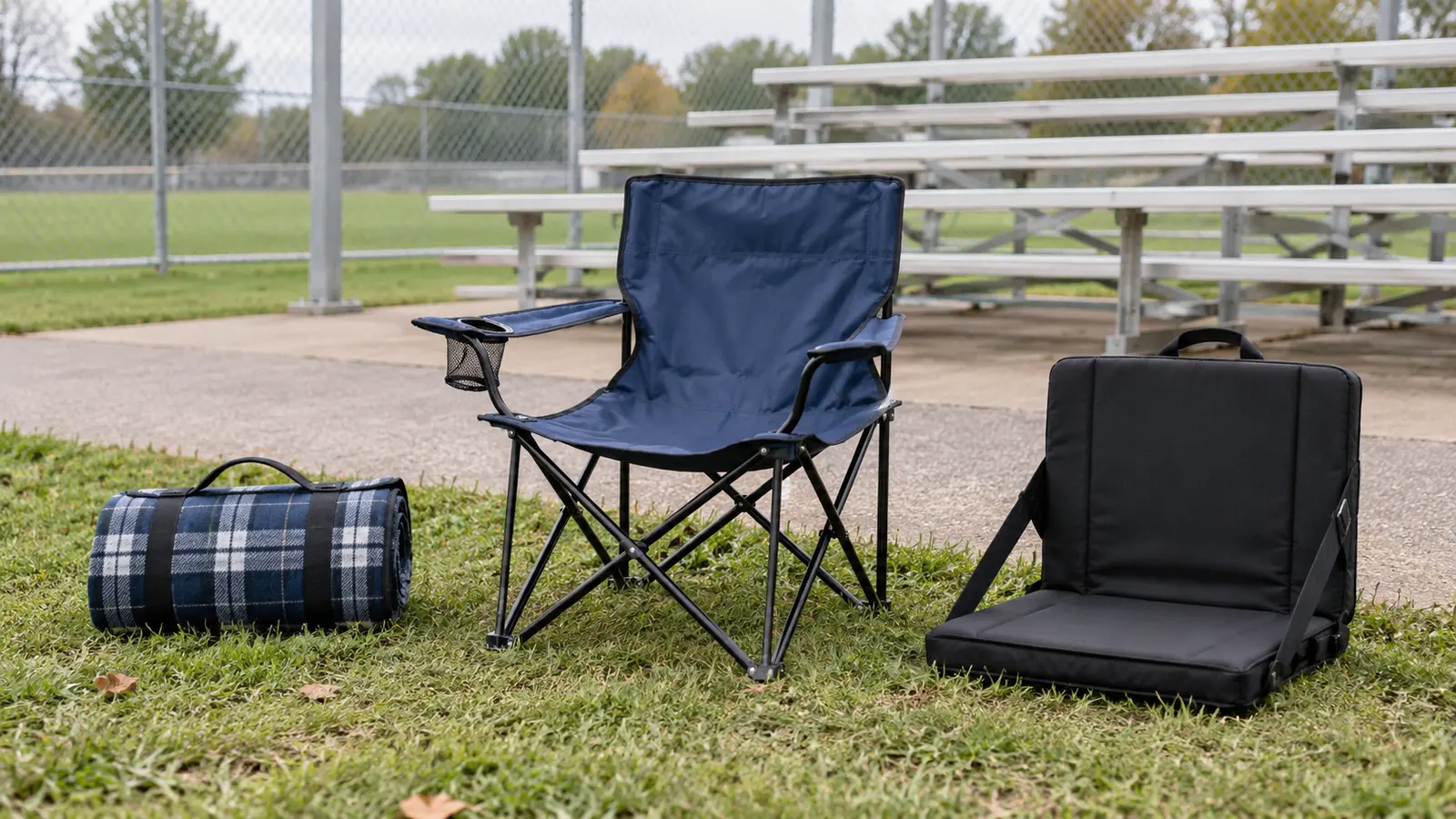
Start with the place you have to carry it through
Family seating decisions usually fail between the car and the destination. A chair that feels light for ten seconds can become the item that consumes the adult's hand while that same hand is needed for a child, cooler, ticket scan or street crossing. A blanket that packs beautifully can be miserable on saturated grass. A stadium seat can be perfect on aluminum bleachers and prohibited at the gate.
Before buying, write down four facts: the longest carry, the surface, the venue rule and who carries each item. Then compare the seating. This is the same transfer-first logic used in the family travel-bag guide: packed dimensions and hand use matter at least as much as storage capacity or padding.
The fast decision
- Picnic lawn, beach or outdoor movie: choose a blanket when low seating works for every person and the underside matches moisture and cleanup needs.
- Campsite, sideline or long fixed base: choose a freestanding camp chair when back support matters and the carry is short.
- Unbacked bleachers: consider a compact stadium seat only after reading the exact venue policy, including dimensions, attachments and bag rules.
- Frequent moving: choose no added seat, a tiny foam pad or one shared blanket. Mobility beats comfort you cannot move.
- Mixed needs: do not buy four identical seats by default. One supportive chair plus a family blanket may solve more problems with less cargo.
Option one: the picnic blanket
A blanket creates the largest shared area for the least structure. It works for meals, card games, changing shoes and letting kids spread out. It also keeps adults at ground level, which can be a bad fit for knees, backs, pregnancy, balance limitations or anyone who needs arm support to stand.
Compare the usable open size, packed shape, actual weight, underside material and cleaning instructions. “Waterproof” needs a defined claim: is the underside designed to resist damp grass, or is the whole item rated for immersion? For a picnic, the useful question is whether moisture migrates through during the expected sitting time and whether mud wipes off before the blanket enters the car.
Skip oversized multi-layer blankets when one adult must shake, fold and carry them alone. A family can test size at no cost by laying towels on the floor, placing the real cooler and having everyone sit for twenty minutes. If elbows and lunch do not fit, change the layout before buying.
Option two: the folding camp chair
A standard camp chair provides its own back and elevation. That matters for grandparents, long sidelines, camp meals and adults supervising from one stable spot. The trade is volume: four chairs can fill a trunk and occupy both adult hands.
Compare the manufacturer's stated weight capacity, seat height, seat width, packed length, total weight, frame locks and foot shape. Narrow feet sink more easily into soft soil. Very low chairs are compact but harder to enter and leave. Rockers and reclining mechanisms add motion and failure points that may not help a family sideline.
Open the chair on a level surface before use. Confirm every joint is fully engaged, fabric and stitching are intact, and fingers are clear while folding. Keep children from climbing the back, standing on the seat or using a chair on a slope. Product recalls have included failures in chair legs, straps, joints and hardware, so search the current U.S. Consumer Product Safety Commission database by brand and model before using a secondhand or unfamiliar chair.
Option three: the stadium seat
A stadium seat is a pad or folding back support intended to sit on a bleacher. It is not a freestanding camp chair. Its advantage is a smaller carry and insulation from cold metal. Its failure mode is assuming “stadium” means “allowed.” Venues can limit backs, arms, pockets, metal frames, attachment methods or overall width, and some allow only a pad.
Open the official policy for the exact game, school, arena or festival. Measure the seat as the venue instructs and read the bag policy separately. If the policy is silent, contact the venue; do not argue with gate staff using a retailer description. A seat that clamps or hooks to a bench must be used only as its manufacturer directs and only where the venue permits the attachment.
Choose a width that does not invade the neighboring place and a back that supports without pushing the child forward. Avoid dangling straps in an aisle. The simplest foam or padded bleacher cushion can beat a complicated hinged seat when the event is short.
Do not confuse a child-size chair with a safer chair
Small folding chairs can fit a child better, but size alone does not establish stability or compliance. The CPSC publishes specific business guidance for children's folding chairs and stools and a searchable recall system. Check the label, age guidance, setup instructions and recall status. Reject missing hardware, sharp edges, pinching mechanisms, torn seats, corrosion or a frame that rocks on level ground.
Do not place a child's chair beside traffic, water, a campfire, a drop or an active sideline merely because it defines a “spot.” Seating never replaces supervision. For younger siblings, choking hazards and folding joints deserve extra attention even when the intended user is school age.
The one-trip carry test
- Put the real water, food, layers and child gear by the door.
- Assign each bag and seat to a named carrier. Do not write “family.”
- Walk for ten minutes, climb one flight of stairs and open a door without setting a child item down.
- Set up every seat while keeping one adult hand free.
- Pack it all again in two minutes. Wet or muddy gear needs its own containment plan.
If the test fails, reduce the seating before upgrading it. The day-trip packing system uses the same rule: every object needs a job, owner and exit path.
What not to buy
- An unlabeled chair with no clear capacity, instructions or manufacturer contact.
- A four-seat bundle before one example passes the carry and setup test.
- A seat whose main selling point is a cup holder when its packed size breaks the trip.
- A “waterproof” blanket without clear care and materials information.
- A stadium seat before checking the venue's current policy.
- A recalled, damaged or incomplete secondhand chair.
- A child's folding seat that creates pinch access, tips on level ground or lacks appropriate labeling.
A realistic family setup
For a two-hour park picnic, begin with one shared blanket and use an existing supportive chair only for the person who needs it. For an all-day campsite, individual chairs earn their bulk because the family returns to the same base. For bleachers, buy nothing until the policy is open on screen. At a destination with benches, use the bench and spend the packing budget on water and weather layers.
Keep food independent from seating. The cooler guide prevents a chair from becoming a shelf for a leaking lunch. Keep a small weather backup in the family rain system; soaked cushions and a long walk are a predictable ending.
Weather, food and meltdown backups
Wet ground: use a moisture-resistant underside or move to a lawful hard-surface seat. Wind: fold and secure empty lightweight chairs and blankets rather than letting them become hazards. Heat: shade and hydration outrank padded seating. Cold bleachers: insulation matters, but venue permission still comes first.
The child will not sit: stop hauling a dedicated chair next time; build a safe movement break. The gate rejects the seat: return it to the vehicle or surrender it only if that is the informed choice—never hide it or block the entrance. The chair breaks: stop using it immediately, preserve the model information and check recalls. The meal spills: keep cleanup supplies separate from the blanket so one failure does not soil everything.
Who should skip each option
Skip blankets for anyone who cannot safely get to and from the ground. Skip camp chairs when the route is long, crowded or requires adults to keep hands free. Skip stadium seats at venues that prohibit them or where the bench already has backs. Skip all added seating when the family will move every twenty minutes. The best no-buy option is often the destination's bench, the car tailgate where lawful, or a shorter event.
Sources and safety checks
- U.S. Consumer Product Safety Commission: current recall search
- CPSC: chair and folding-chair recalls
- CPSC: children's folding chair and stool guidance
- SaferProducts.gov: incident reports and reporting
MAKE THE WEEKEND COUNT
Useful beats heroic.
Build the day your family can finish well, then leave enough energy for the ride home.
More family plansTHE USEFUL STUFF
Gear that removes friction.
These are practical categories to compare—not a reason to overpack. Check fit, specifications and current reviews before buying.
Paid links: As an Amazon Associate I earn from qualifying purchases. You pay no additional cost.
Foldable picnic blankets
Compare open size, packed shape, underside material, care instructions and the maker's exact moisture-resistance claim.
See current options → COMPARE ON AMAZONFolding camp chairs
Check stated capacity, seat height, packed length, total weight, locking points and foot shape before buying a set.
See current options → COMPARE ON AMAZONPadded stadium seats
Verify width, attachments and the exact venue policy before choosing a bleacher seat with a back.
See current options →