GEAR SYSTEM · WEEKEND TRAVEL
Family Travel Bags: Rolling Carry-On vs Duffel vs Backpack—and the Shared-Bag Trap
The right bag is the one your family can move, identify and open without unloading the whole trip. Choose for the transfer points—not the hotel room.
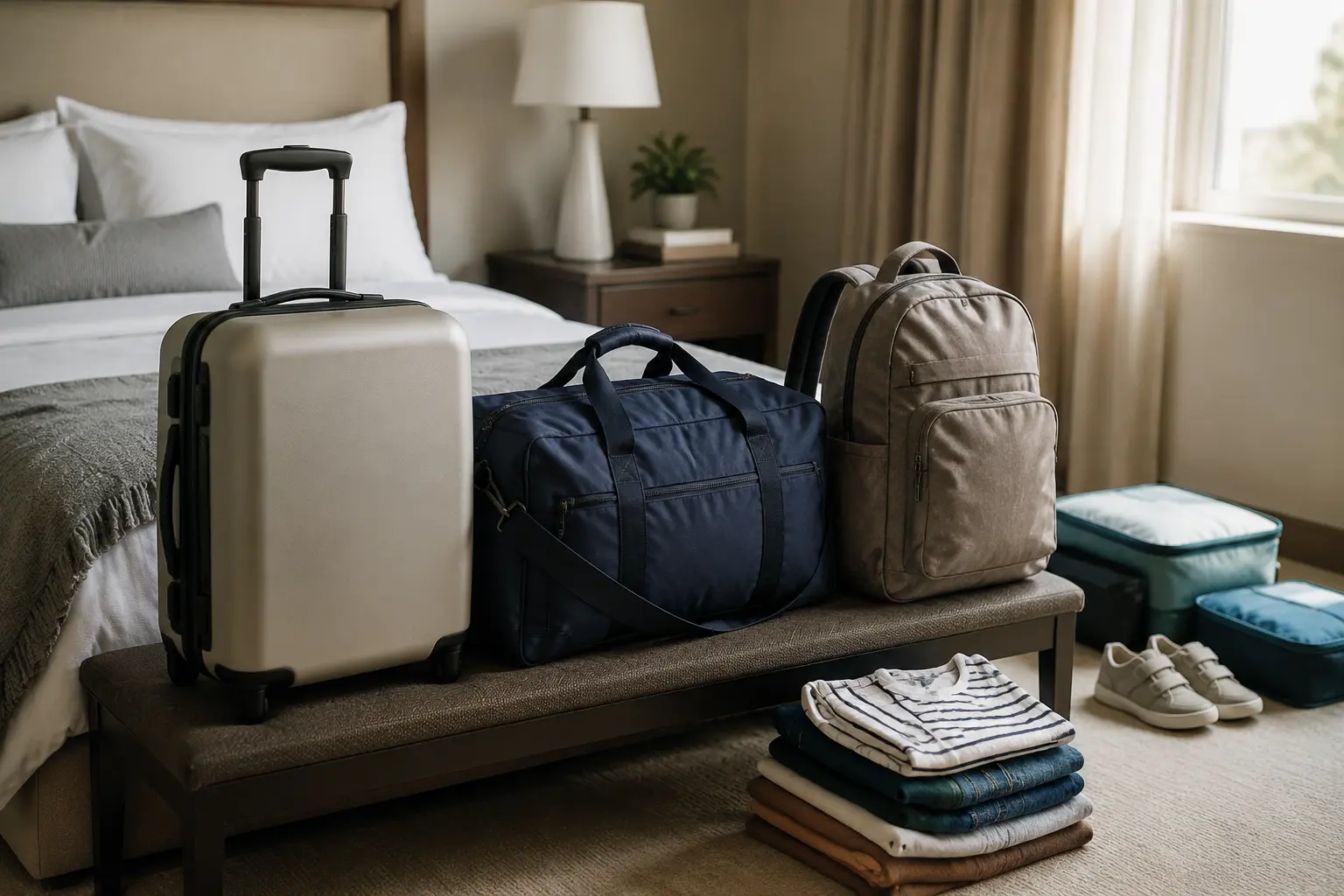
Choose for the hardest ten minutes
Every bag looks acceptable on a bedroom floor. The decision appears at the parking garage, station stairs, hotel entrance or crowded platform. Count the transfer points: vehicle to curb, curb to check-in, train to connection, room to car. The best system is the one two adults can still control while helping two children.
Start with what you already own. Pack the actual weekend load, walk it around the block and carry it up one flight of stairs. A no-buy test exposes bad handles, overloaded bags and fake capacity faster than product photos.
The quick decision
- Drive-to-hotel weekend: a medium duffel per adult or one adult bag plus one light child bag is simple and flexible.
- Airport with smooth terminals: dimension-compliant rolling carry-ons reduce shoulder load, but each adult needs one free hand.
- Train with stairs and short connections: backpacks usually control better than rollers, provided they fit and are not overloaded.
- One-night stop: use one small overnight bag that stays separate from the deeper luggage.
- Young children: give them a tiny personal-item bag only for light belongings they can truly carry; adults retain essentials.
Rolling carry-on: easy floors, strict envelope
A wheeled carry-on is efficient through airports and modern hotels. A clamshell opening separates two sides, structured walls protect contents and the bag can stand during check-in. The weaknesses are stairs, gravel, snow, small trunks, wheel failure and a child who abandons a heavy roller halfway to the gate.
There is no single federal carry-on size. The U.S. Department of Transportation and TSA direct travelers to check the airline because dimensions, weight and quantity vary. Connecting itineraries may involve more than one carrier or smaller aircraft. Measure the case including wheels and handles, then verify every carrier's current rule before buying or packing.
Four-wheel spinners turn easily on smooth floors but expose more wheel hardware and can roll away on slopes. Two-wheel cases sacrifice some maneuverability for larger, more protected wheels. Check the telescoping handle at full extension with the actual user; a short handle makes every terminal feel longer.
Duffel: best for the trunk, worst when overloaded
A soft duffel flexes into vehicle cargo gaps, opens quickly and stores flat at home. It is excellent for a two-night drive when the bag travels twenty yards at a time. It becomes miserable when the generous opening invites forty pounds of shared clothing and one adult must carry it through a station.
Look for a wide opening, strong zipper, handles that wrap under the load, an adjustable shoulder strap and at least one useful end pocket. Shoe tunnels and many organizers consume space and can encourage complicated packing. A plain rectangular interior plus a few pouches is usually easier to audit.
Do not assume soft-sided means carry-on compliant. A stuffed duffel can exceed the allowed dimensions even when the empty bag measures correctly. If air travel matters, pack it and measure the bulges.
Travel backpack: hands free, shoulders responsible
A backpack wins on stairs, uneven sidewalks, public transit and any trip where an adult needs both hands for children. A panel-opening travel pack is easier to live out of than a deep top-loader. The tradeoff is physical: every extra item rides on the wearer's shoulders and back.
Fit comes before advertised liters. Check torso length guidance, shoulder-strap shape, load lifters when present and whether the hip belt actually lands on the wearer. A large bag without a usable frame or hip support can feel worse than a smaller bag carried correctly.
Backpacks also need awareness in crowds. Remove or lower the pack before turning near children, displays or seated passengers. Secure loose straps around conveyors and vehicle doors.
The shared-bag trap
One giant family bag sounds efficient because it reduces the number of objects. It also creates one heavy failure point. If that bag is delayed, locked in the car or buried at the bottom of the hotel cart, everybody loses clothes. If only one adult can lift it, the whole movement plan depends on that adult.
Use distributed responsibility instead. Each adult carries a manageable main bag. Each child may carry one light personal bag with entertainment and a layer. Keep the first-night kit and critical items separate. Medication, documents, keys, tickets, valuables, basic toiletries and one change for a child should not disappear into checked luggage.
A family-of-four weekend layout
- Adult bag one: one adult plus shared sleep items.
- Adult bag two: second adult plus overflow children’s clothing.
- Child personal bags: light layer, headphones, activity and empty water bottle when flying.
- Arrival pouch: chargers, pajamas, toothbrushes and tomorrow's first outfit.
- Critical small bag: documents, medication, valuables and items that must remain with an adult.
The road-trip packing system separates reachable, arrival and emergency zones. The hotel-room system keeps the bags from exploding across every surface. For entertainment, use the compact approach in the travel-games guide.
Compatibility checks before buying
- Measure exterior dimensions with wheels, feet and handles.
- Check current airline, rail or bus rules for every segment.
- Confirm the packed bag fits the vehicle cargo plan without blocking rear visibility or loose-item safety.
- Test stair carry, overhead lifting and a five-minute walk.
- Open every zipper under load and inspect seams, wheel mounts and handle play.
- Check return terms before removing tags; fit is hard to judge from specifications alone.
- Use a luggage scale if a carrier has a weight limit.
What not to buy
Skip oversized matching sets purchased for an imaginary travel life. Skip children's rollers that are too small for useful clothing but too awkward for the child to manage. Skip a bargain spinner with visibly unsupported wheel housings if air travel is the main use. Skip a tactical-looking backpack with heavy decorative webbing when comfort and a clean hotel carry are the real job.
Do not buy “smart luggage” without understanding the battery design and current carrier rules. Spare lithium batteries and power banks generally belong in the cabin, not checked baggage. A bag with a battery that cannot be removed may create an avoidable problem. The family power-bank guide covers the battery boundary.
Car, train and plane differences
Car: soft bags stack well, but do not pile cargo above seatbacks or leave hard objects loose. Train: prioritize a system one family can board quickly; stairs and narrow aisles punish wide rollers. Plane: assume the overhead bin may fill. DOT advises keeping fragile, valuable and critical items in a smaller under-seat bag that can be removed quickly if a carry-on is gate-checked.
The no-buy answer
Use the soundest suitcase, gym duffel and school backpack already in the house. Pack less, add colored handle tape for identification and keep a small arrival pouch. If the test trip reveals a specific failure—painful carry, bad dimensions, no opening access—buy to fix that failure. The bag does not make the family organized; the ownership and transfer plan does.
Official travel checks
Air-travel guidance was checked September 4, 2026. Carrier limits can change and the ticketed airline is the source of truth for the itinerary.
- U.S. DOT: avoiding baggage problems
- TSA: carry-on size restrictions vary by airline
- TSA: What Can I Bring?
MAKE THE WEEKEND COUNT
Useful beats heroic.
Build the day your family can finish well, then leave enough energy for the ride home.
More family plansTHE USEFUL STUFF
Gear that removes friction.
These are practical categories to compare—not a reason to overpack. Check fit, specifications and current reviews before buying.
Paid links: As an Amazon Associate I earn from qualifying purchases. You pay no additional cost.
Rolling carry-on luggage
Compare the external dimensions, loaded weight, wheel clearance and every carrier's current limits.
See current options → COMPARE ON AMAZONWeekend travel duffels
Look for a comfortable loaded carry, a stable opening and dimensions that fit the actual trunk or luggage rack.
See current options → COMPARE ON AMAZONCarry-on travel backpacks
Prioritize torso fit, strap comfort, panel access and the strictest carrier or venue rule on the trip.
See current options →