CENTRAL NEW YORK DAY TRIP
Chimney Bluffs With Kids: A Family Day-Trip Plan
The bluffs deliver the view. Your turnaround plan saves the day.
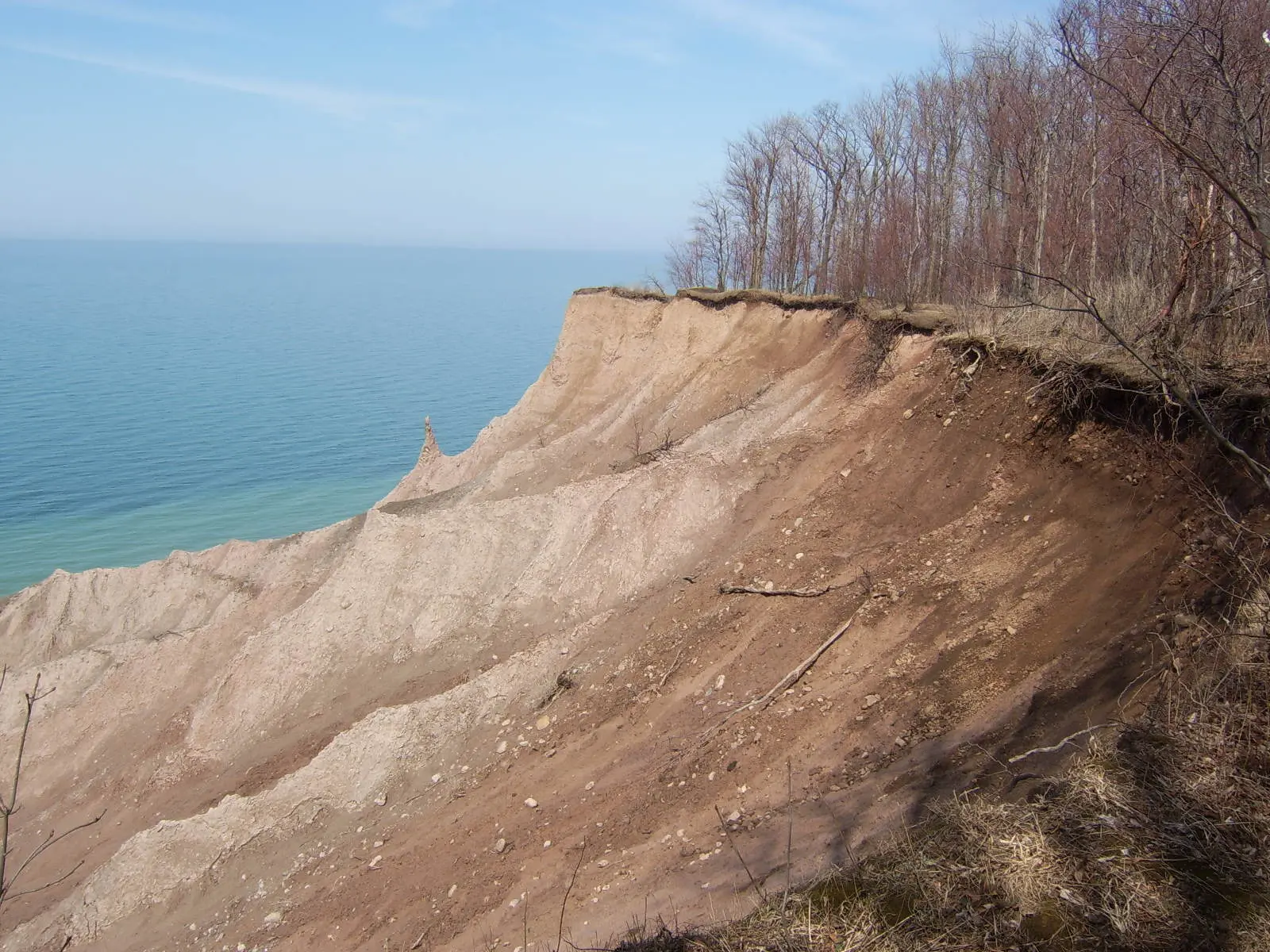
Is Chimney Bluffs right for your family?
This is a compact state park with a big visual payoff: narrow earthen spires above Lake Ontario and changing views from the park’s nature trails. It works best for a family that wants a real hike without committing the entire weekend. It is not the place to improvise around cliff edges or force a loop because a map makes it look tidy.
Good fit: school-age kids who stay with an adult, can handle uneven natural surfaces, and will accept a turnaround before they feel finished. Skip or postpone: active thunderstorms, high wind, ice, saturated trail conditions, a child who bolts, or a group that needs a guaranteed stroller-accessible route. Trail conditions and closures can change with erosion, so the official map and posted signs outrank this plan.
The facts to check before leaving
- Address: 7700 Garner Road, Wolcott, New York 14590.
- Hours: New York State Parks lists the park as open year-round, dawn to dusk.
- Vehicle fee: the current official listing shows $5 per vehicle, collected all day from April 1 through October 31. Fees and collection can change; check the park page.
- Facilities: the official amenity list includes restrooms and picnic areas. Seasonal availability is never a reason to skip a bathroom stop before arrival.
- Questions: the park lists 315-947-5205 for general information.
From central Syracuse, budget roughly 75 to 90 minutes each way. That is a planning estimate, not a promise; construction, your starting neighborhood and summer lake traffic matter. Put the destination into navigation before loading the kids.
A day that does not eat the whole day
8:15 a.m. — Leave Syracuse
Fuel the car the night before. Give each kid breakfast, a water bottle and one job: carry a layer, hold the picnic blanket, or check that everyone has a hat. The jobs reduce the parking-lot scramble.
9:35 a.m. — Park, restroom, five-minute briefing
Use the restroom if it is open, photograph the trail map, and state three rules: stay on the maintained trail, no running near an exposed edge, and stop whenever the adult in front stops. Keep one adult in front and one behind when the trail feels narrow or busy.
9:50–11:20 a.m. — Hike out and back
Choose the route from the current official map and conditions at the trailhead. An out-and-back is easier to manage than a forced loop because you can turn around at 35–45 minutes, while everybody still has legs for the return. Stop for viewpoints only where the maintained trail and barriers permit. The bluffs are shaped by erosion; an inviting patch of ground is not proof that it is stable.
11:30 a.m. — Picnic before the hunger crash
Eat at the picnic area rather than balancing lunch on the trail. Pack food that can survive the drive and a crushed backpack. If you bring perishable food, use a cold cooler and follow the food-safety rules in our family day-trip cooler guide.
12:15 p.m. — Make the honest second-half decision
If shoes are dry, energy is good and the official route is open, take one short second look. If anybody is fading, leave. Sodus Point can be a low-effort lake-view or snack reset, but check its current facilities separately. The win is the bluff hike, not squeezing three destinations into one day.
1:00–1:30 p.m. — Head home
That gets most Syracuse families back with enough afternoon left to unpack, shower and eat dinner without mutiny. Protecting the landing is part of the trip.
What to pack
- Closed-toe shoes with useful tread; bring dry socks for the car.
- One water bottle per person and a simple picnic.
- Wind layer or light rain shell—the lakeshore can feel different from Syracuse.
- Sun protection, insect repellent and a tick check plan.
- Small first-aid kit, wipes and a trash bag.
- Downloaded trail map or screenshot; do not assume cell coverage will do every job.
Weather, meltdown and safety backups
Wet trail: shorten the walk and avoid slick slopes; do not “make up” value by getting closer to an edge. Thunder: leave exposed terrain and return to the vehicle; a parked car is the reset, not a punishment. Kid collapse: snack, water, ten quiet minutes, then turn around. Full parking area: do not invent roadside parking. Use a preselected legal alternative or go home early.
This is not a guarded swimming-beach itinerary. Treat the shore and bluffs as natural terrain, keep kids within reach near water, and obey every closure, barrier and posted instruction. If route access or mobility needs are important, call the park before the drive instead of relying on a generic trail description.
Pets and accessibility
The current park policy allows up to two pets in day-use areas unless a specific area prohibits them. Pets must be supervised and either crated or on a leash no longer than six feet; proof of rabies vaccination may be requested. State Parks also lists locations where pets are prohibited, including buildings, boardwalks and guarded beaches, with service-animal exceptions. Natural trail surfaces and erosion make accessibility route-specific—confirm current access with the park.
Sources and check-before-you-go links
Official details were checked on August 22, 2026. Hours, fees, facilities and closures are volatile. Confirm them on the official pages before each trip.
- New York State Parks: Chimney Bluffs details, hours, fees and pet policy
- New York State Parks: address, directions and contact information
Keep the weekend moving
Use the family day-trip system to protect the day’s energy, the road-trip packing system to make departure easier, and the rainy-day plan when the forecast refuses to cooperate.