CENTRAL NEW YORK · WATERFALL DAY
Chittenango Falls With Kids: The View-First Day That Respects the Gorge
See the 167-foot falls before asking anybody to earn the view. Then decide whether the gorge loop fits the children, shoes, weather and energy you actually brought.
Why this is a strong Central New York family day
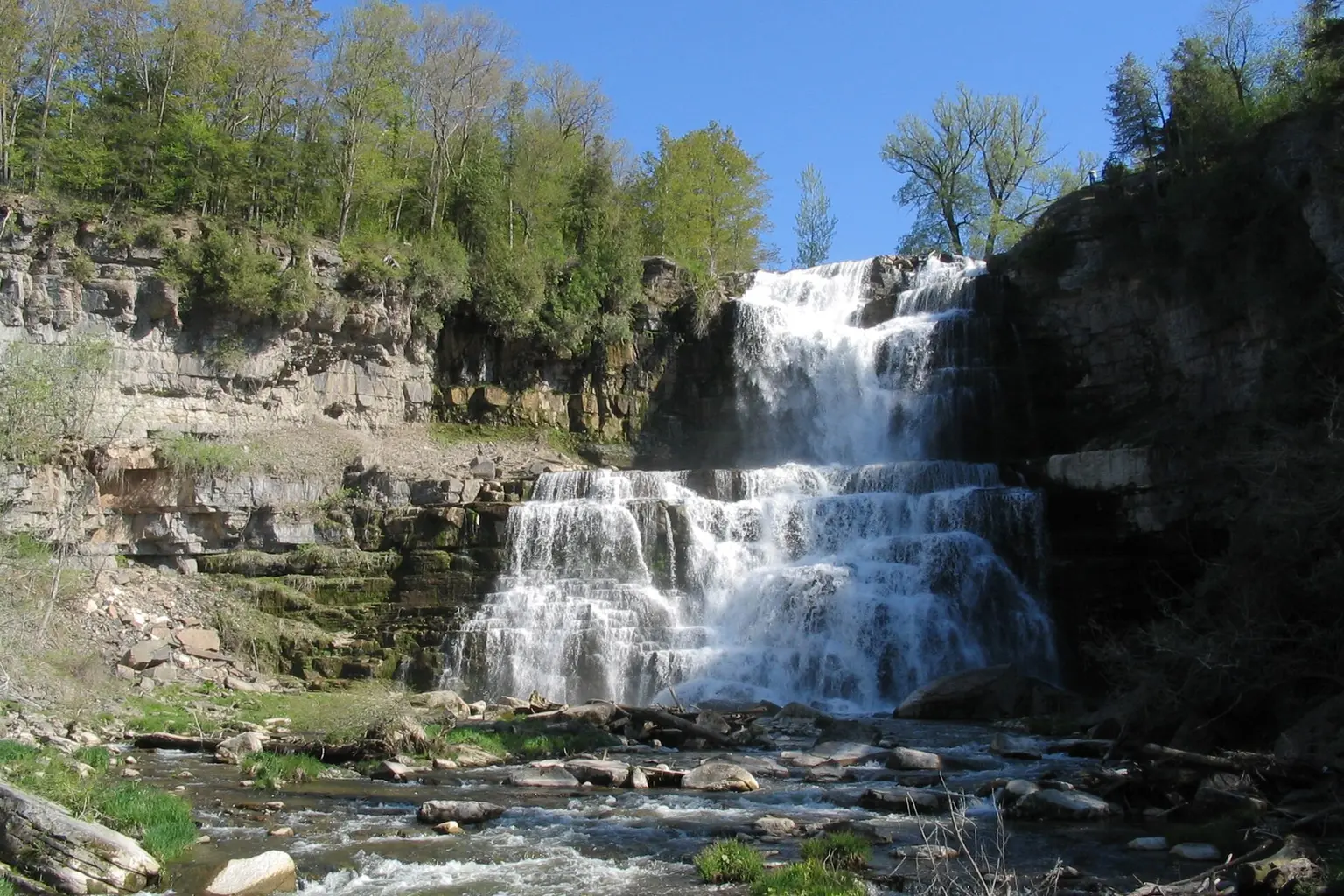
Chittenango Falls State Park is close enough to Syracuse for a short day but dramatic enough to feel like a real destination. New York State Parks identifies the main feature as a 167-foot waterfall created by water cutting through bedrock more than 400 million years old. The park also has picnic space, pavilions, a playground, fishing access and hiking trails.
The practical advantage is immediate payoff. You do not need to walk miles before seeing why you came. That matters with school-age children because the family can make a clean decision after the first view: descend together, split the adults briefly, stay for a picnic or end while everybody still likes waterfalls.
This is a different day from the long gorge commitment in the Watkins Glen family plan. It is also more concentrated than the exposed shoreline in the Chimney Bluffs guide. Think one major natural feature, one honest trail decision and a relaxed finish.
Current facts to check before leaving
- Hours: the official park page says the park is open year-round, with restrictions, from sunrise to sunset.
- Office: listed office hours are Monday through Friday, 8 a.m. to 4 p.m. That does not mean every facility or service is available whenever the grounds are open.
- Parking fee: the official fee panel still displays a seasonal collection window dated in 2025 and a $5 passenger-vehicle fee. Because that date is stale, call the park before relying on either the collection period or amount in 2026.
- Payment: the official page describes an automated pay station that accepts credit cards, coins and one- and five-dollar bills and does not make change. Verify the current setup.
- Pets: up to two pets are allowed in day-use areas unless signs or staff say otherwise. They must be supervised and crated or leashed no longer than six feet. Proof of rabies vaccination may be requested. Pets are excluded from several facility types, including playgrounds and buildings.
- Accessibility: the official page directs visitors to contact the park for location-specific accessibility details. Call 315-423-3744 when surface, grade, restroom or mobility information will decide the trip.
Download or save the official trail map before leaving. Water, erosion, maintenance and winter conditions can change what is sensible even when the park itself is open.
The family itinerary: ninety minutes that can grow
First 15 minutes: restroom, rules and the upper view
Use the restroom at arrival if open, confirm any posted trail notices and walk to the upper viewing area. Keep children behind barriers and away from the gorge edge. The first look is not a teaser; it is the day's main event. Let everyone watch long enough to notice the separate tiers, exposed layers of rock and creek direction.
Give each child one observation job: count the visible drops, find three rock colors, listen for how the sound changes away from the overlook, or sketch the outline of the falls. A tiny job creates attention without turning the stop into school.
At 15 minutes: make the gorge decision
Look at footwear, trail notices, wetness, temperature and enthusiasm. The state's description says visitors can follow the winding trail into the gorge, view the falls from a footbridge and return on the small trail on the opposite side. That description is not a promise that the route is easy, dry or right for every child.
Use one rule: every person who descends needs enough energy, traction and patience to climb out. If somebody is already dragging, the lower view will not repair the day. Stay above, use the playground or picnic area and preserve the waterfall as a good memory.
Next 45 to 75 minutes: descend without racing
If the family goes, keep a steady pace and maintain adult spacing so one grown-up is not leading far ahead while another manages every hesitation. Wet leaves, mud, stone steps and roots demand more attention than the short mileage suggests. Do not leave the established trail, climb rock near the cascade or approach the water for a better photograph.
At the footbridge, stop long enough to make the climb worthwhile. Drink, look back at the full drop and decide whether to complete the signed route or retrace only where park directions allow. The map and posted signs outrank a remembered route from social media.
Finish: food before the ride home
Use the picnic area or choose a planned meal nearby. Bring food rather than assuming a concession exists. Eat before hunger becomes the loudest part of the park. A twenty-minute picnic and playground stop can reset the family after the climb.
What to pack
- Closed shoes with usable tread for everyone considering the gorge.
- Water and a small snack that can stay in the adult pack.
- A light layer; the shaded gorge can feel different from the parking area.
- Rain shells when showers are possible, plus a towel and dry socks in the car.
- Season-appropriate insect and sun protection.
- The saved trail map and park phone number.
- Proof of rabies vaccination if bringing an allowed pet.
The family hiking daypack guide helps keep the load reasonable. The rain-gear decision guide is useful when the forecast is uncertain. You do not need trekking gadgets for a short park visit; you need shoes, water and enough judgment to turn around.
Weather and seasonal judgment
Rain: the falls may look stronger, but wet rock, leaves and stairs reduce traction. Do not treat higher water as permission to get closer. Thunder: leave exposed overlooks and seek a substantial building or hard-topped vehicle. Heat: shaded trail does not eliminate exertion; slow the return climb and drink before anyone feels awful.
Cold and ice: open year-round does not mean summer trail conditions. Call when freezing weather, snow or thaw cycles may affect the route. Low light: sunset is closing time, not the time to begin climbing out. Turn around early enough to finish in daylight.
The kid-meltdown backups
Nobody wants the gorge: overlook, picnic, playground, done. One child wants the trail: if two capable adults are present, one can take a short signed section while the other stays above; set a meeting time and keep phones usable. Trail closed: respect it and use the upper experience. Parking is busy: do not invent roadside parking or unload children into traffic; return later or choose another day.
If the family needs a flatter outing, the auto-first Montezuma plan is the better fit. If the weather turns hard, use the Finger Lakes rainy-day framework instead of forcing a slippery gorge.
Who should skip the lower route
Skip the descent when a child cannot reliably stay with an adult near steep terrain, footwear is poor, the surface is icy or slick, posted conditions are unfavorable, or the return climb exceeds someone's current mobility. Families using a stroller or mobility device should call for current accessible-viewing details rather than assuming the lower route works. The upper visit can still be worthwhile.
Official check-before-you-go sources
Park information was checked September 4, 2026. Fees, trail access, facilities and restrictions can change.
MAKE THE WEEKEND COUNT
Useful beats heroic.
Build the day your family can finish well, then leave enough energy for the ride home.
More family plans