FAMILY GEAR · FIT BEFORE FEATURES
Kids’ Hiking Footwear: Trail Runner vs Hiking Shoe vs Boot—and the Fit-First Rule
Most children need the lightest shoe that fits the actual route. A taller boot does not rescue poor fit, weak traction or a trail that should have been shortened.
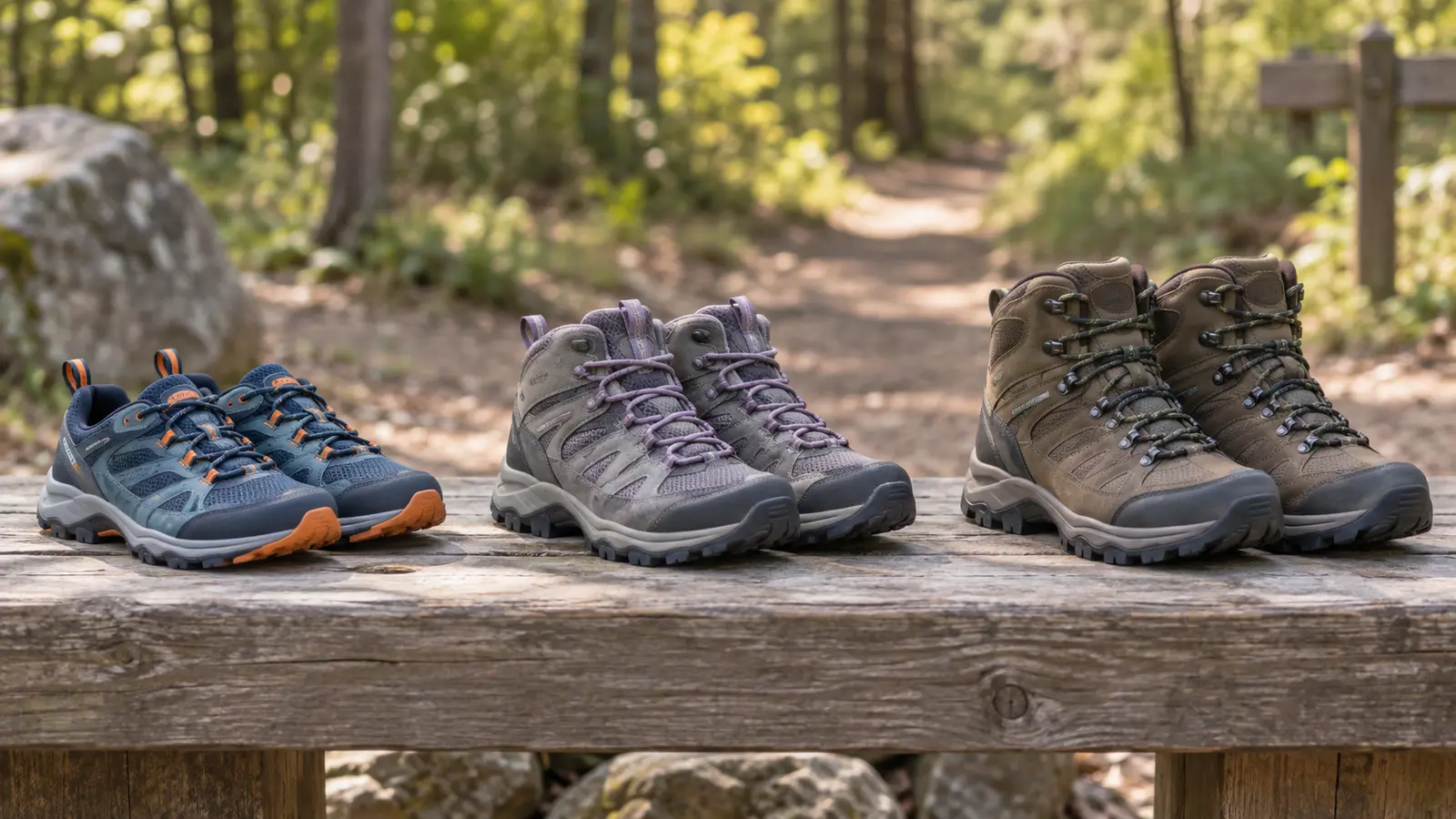
Define the job before the category
A flat nature-center loop, a dry two-mile forest trail and a cold rocky Adirondack day are not the same footwear problem. Write down four things: surface, expected wetness, longest planned distance and whether the child will carry a pack. Then include the backup plan. If a child’s first hike can become a paved overlook, footwear does not need to imitate an expedition boot.
Use the first-hike guide to set distance and turnaround before shopping. Footwear can improve comfort and grip; it cannot create skill, attention or energy. No sole makes wet rock, ice, roots or steep drop-offs harmless.
Three categories and the real tradeoffs
Low trail runner
A trail runner is usually the lightest and most flexible option. It can feel familiar to a child who already wears athletic shoes, dries faster when built with breathable mesh and is easy to use on maintained dry trails. Low collars also let water enter easily and provide less protection from brush, loose stones and cold mud.
Fits: warm-weather maintained trails, short distances and children who value light weight. Skip: when the actual route needs more underfoot protection, the fit slips at the heel or the upper cannot manage the expected weather.
Low or mid hiking shoe
A hiking shoe usually adds a tougher upper, toe protection and a trail-focused outsole while remaining lighter than a traditional boot. “Mid” is not a standardized promise; compare the actual collar, weight and flex. This category is often the middle ground for mixed park paths, roots and moderate family hikes.
Fits: repeated day hikes where a normal sneaker feels underbuilt. Skip: when the shoe is heavy for the child, pinches at the forefoot or requires a break-in period just to become tolerable.
Hiking boot
A taller boot can provide more coverage, a more structured upper and room for insulated or waterproof constructions. It also weighs more, holds heat and may take longer to dry. A high collar does not guarantee that an ankle cannot roll, and it does not justify carrying a child farther than their balance or judgment supports.
Fits: colder, rougher or wetter trips when the exact boot fits well and its added structure solves a real problem. Skip: for everyday paved outings, rapid growth, warm weather or a child who walks stiffly in it.
The fit-first appointment
Shop late enough in the day that normal foot swelling is represented, with the socks the child will hike in. Remove the insole if the maker allows it and compare the standing foot without treating that as the only fit test. Size charts are brand-specific; a number from last season is not a measurement.
- Heel: lace the shoe correctly and walk uphill. A little material movement is different from the heel lifting every step.
- Toes: stand and walk downhill on a safe fitting ramp if the store has one. Toes should not hit the front. Use the manufacturer’s own guidance rather than a universal thumb-width claim.
- Width: look for squeezing, bulging or numbness. “They will stretch” is not a fit plan.
- Flex: the shoe should bend where the child’s foot bends, not fold randomly through the arch.
- Control: the child should walk, turn, squat and climb one safe step without the shoe feeling like a weight.
Feet may differ in size; fit the larger foot and check both. Children who have persistent pain, unusual wear, a known foot condition, numbness or repeated falls need advice from a qualified pediatric clinician or podiatrist—not a longer online buying guide.
Waterproof is a system, not a magic word
A waterproof membrane can reduce water entry through the upper while also trapping more heat and slowing drying after water comes over the collar. Construction, seam treatment, tongue design and wear all matter. Read the exact maker’s claim and care instructions. “Water-resistant” and “waterproof” are not interchangeable, and neither means a shoe can be submerged indefinitely.
For shallow puddles and damp grass, a breathable shoe with spare socks may create a better day than a warm membrane. For cold wet conditions, a properly fitted waterproof model may be worth the drying tradeoff. Never add a plastic bag inside a shoe; it traps moisture and can change fit and friction.
Traction, laces and the parking-lot test
Look at the outsole as a whole: tread depth, spacing, rubber coverage and whether the lugs match soil, gravel or pavement. Aggressive lugs that grip mud can feel awkward on smooth indoor floors. No catalog photo proves grip on wet leaves or algae.
Choose closures the child can actually secure. Traditional laces are adjustable but come untied when poorly knotted. Speed laces and hook-and-loop systems can be simpler but still need inspection. Keep loose lace loops away from bike chains, escalators and trail debris.
Wear the final choice around home on clean floors, then for a short local walk under the retailer’s return policy. Check red spots, heel slip, toe contact and complaints after the shoe comes off. Do not discover a bad fit at the far end of a trail.
Growth, used shoes and what not to buy
Buy for the foot that exists now. Excess growth room lets the foot slide and makes descents worse. Recheck fit before each season and after a growth spurt. Mark the purchase date inside the family gear log rather than guessing how long the pair “should” last.
Used footwear can be reasonable only when the structure, outsole, lining and closure remain sound and the fit is right. Skip pairs with uneven wear, compressed cushioning, cracking, delamination, missing size labels or an unknown recall history.
- Do not buy by age alone.
- Do not assume a taller boot is automatically safer.
- Do not choose waterproof construction without a heat and drying plan.
- Do not buy a stiff pair that needs pain to break in.
- Do not keep a shoe because it was expensive after the child reports pain.
- Do not use star ratings as a substitute for current fit.
Build the rest of the system
Socks should fit without wrinkles and match the weather. Pack a dry pair in a sealed pouch. Keep rain layers in the family rain system, and use the daypack guide to avoid making a small child carry adult emergency gear. Bug, sun and water planning still matter; footwear does not replace the weather cutoff.
Cost and purchase timing
Prices and availability change. Compare return terms, current size chart, replaceable insoles, care instructions and the real number of hikes before the next growth spurt. A premium boot worn twice can be worse value than a simple trail shoe that fits. Buy early enough to complete the clean indoor fit check and one short walk before the trip.
The Amazon category links below use the site’s approved affiliate account and compare broad footwear types, not winners. No hands-on testing, current price, stock, rating, waterproof performance or universal best fit is claimed.
Manufacturer and safety checks
MAKE THE WEEKEND COUNT
Useful beats heroic.
Build the day your family can finish well, then leave enough energy for the ride home.
More family plansTHE USEFUL STUFF
Gear that removes friction.
These are practical categories to compare—not a reason to overpack. Check fit, specifications and current reviews before buying.
Paid links: As an Amazon Associate I earn from qualifying purchases. You pay no additional cost.
Kids’ trail-running shoes
Compare current size guidance, heel security, toe room, outsole, weight and return terms for the actual child.
See current options → COMPARE ON AMAZONKids’ hiking shoes
Check width, closure, tread, drying time and the maker’s exact water-protection claim rather than choosing by ankle height.
See current options → COMPARE ON AMAZONKids’ hiking boots
Use a taller boot only when its added coverage, structure and weather protection solve a real route problem and the fit works now.
See current options →