GEAR SYSTEM · GROUP COMMUNICATION
Family Walkie-Talkies: FRS vs GMRS, Real Range, and What to Buy
Buy for the place you will actually separate—not the fantasy mileage printed on the box.
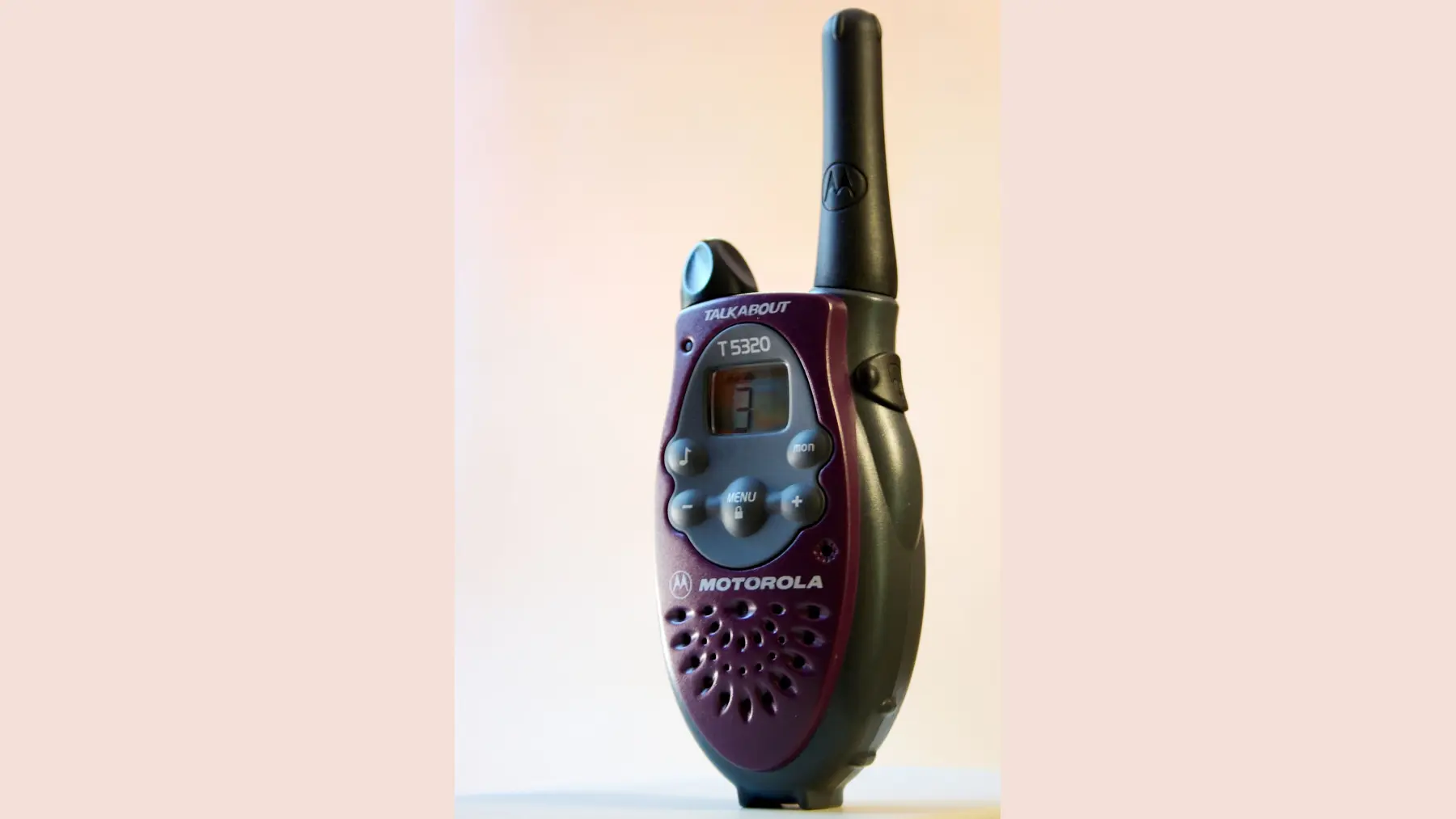
First decision: FRS, GMRS or no radio
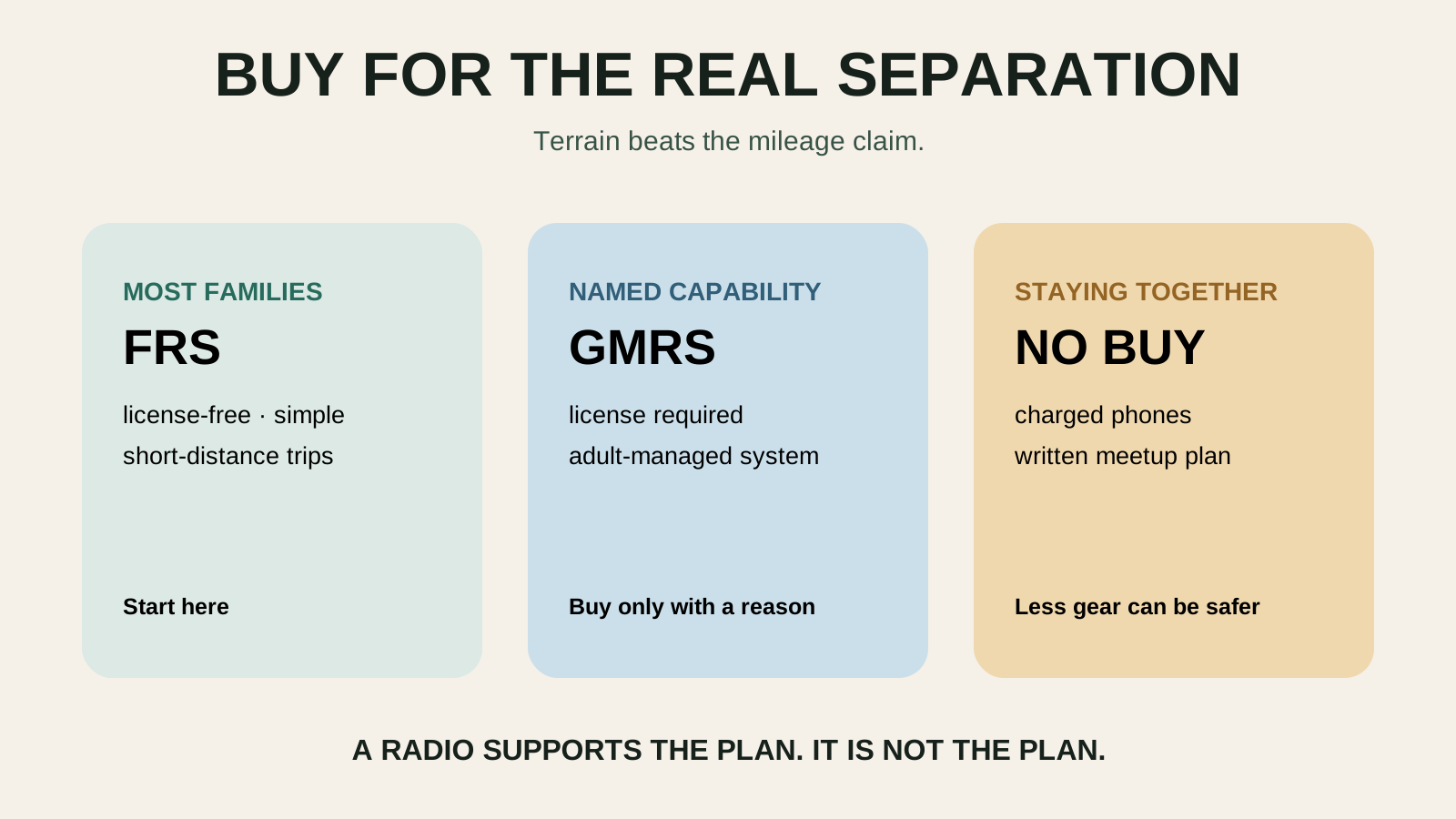
Choose FRS for ordinary family trips
FRS is the short-distance, low-power handheld service defined for individual, family, group, recreational and business communication. Current eCFR rules allocate 22 channels. Certified FRS units use integral, non-removable antennas; power is limited to 0.5 watt on channels 8–14 and 2 watts on channels 1–7 and 15–22. For most families, that restriction is a feature: buy a compliant radio, pick a channel, practice, and go.
Choose GMRS only for a named reason
GMRS can support more capable equipment and repeaters, but an individual license is required. The license holder must be at least 18 and is responsible for proper operation; current rules allow the licensee’s listed immediate-family categories to operate under that authority. Do not buy a radio labeled GMRS and assume the word “family” removes the license requirement.
Choose no radio when the system is unnecessary
If everyone remains together, cell coverage is dependable, and separation would be solved by stopping in place, radios may add charging, chatter and one more thing for a child to lose. A written meetup plan and charged phones can be the better system.
Real range: terrain writes the answer
Package claims often describe unobstructed, ideal conditions. Trees, terrain folds, buildings, vehicles, the height of each radio and how a child holds the antenna all matter. A pair that works across an open field may fail between opposite sides of a concrete attraction or behind a ridge. Treat range as something to test at the destination—not a number to believe.
Before trusting new radios, perform a three-point test: close distance, the farthest planned separation, and one realistic obstruction. If contact is unreliable, shorten the allowed separation. Do not send a child farther away because a box advertised more miles.
The buying criteria that actually matter
- Service and certification: confirm the exact model is certified for FRS or understand the GMRS licensing duty.
- Battery system: sealed rechargeable packs are convenient; replaceable cells can recover a long day. Compare charging ports, spare availability and whether the radio can operate while charging.
- Controls: a child must manage push-to-talk, volume and lock without entering menus.
- Weather claim: verify the manufacturer’s exact ingress rating. “Outdoor” is not a water-resistance standard.
- Audio: prioritize intelligibility and volume over call tones and gimmicks.
- Size and retention: the radio should stay clipped or tethered without blocking movement.
- Compatibility: channel numbers can match across FRS brands, but tone-code settings must also agree.
“Privacy codes” are not private
CTCSS or DCS tone settings filter what opens your speaker; they do not encrypt the channel or prevent other people from listening. Use plain, non-sensitive messages. Do not transmit a child’s full name, address, hotel room, medical details or a detailed unattended-home plan.
The family protocol
- Set one channel and one tone setting before leaving.
- Lock controls after setup where the model permits it.
- Use short names such as “Dad” and “Base,” not personal identifiers.
- Press, pause half a second, speak, then release.
- Repeat critical information and require a clear acknowledgment.
- If contact fails, stop moving and return to the last agreed point.
- A radio is never permission for a child to separate beyond the adult’s normal safety rule.
Practice in the driveway. A device first explained during a crowded festival is decorative plastic.
Battery and packing system
Charge radios the night before, label each unit, and carry them where the speaker can be heard. For replaceable cells, keep one matched spare set isolated from metal objects. Extreme heat and cold affect batteries; follow the manufacturer’s storage and charging instructions. Put the radios on the day-trip departure checklist, not loose at the bottom of the car.
What not to buy
Skip a model whose legal service is unclear, a marketplace radio marketed as “FRS/GMRS” without a clear certification path, a giant claimed range used as the main selling point, a charging cradle that cannot support your travel setup, or a complicated unit children cannot lock and use. Avoid buying repeaters, external antennas or programming features before you have a real GMRS use case and understand the applicable rules.
Who each option fits
Basic rechargeable FRS pair: best for amusement parks, campgrounds, ski areas and two-car arrival logistics. Water-resistant FRS: useful where rain or paddling-adjacent spray is credible, after verifying the exact rating; it is not a marine emergency device. Replaceable-battery FRS: useful for long weekends away from charging. GMRS: for an adult willing to license, identify and manage a more deliberate family radio system. No buy: families that stay together or have not identified a real communication failure.
A buying framework that keeps commission out
The Amazon category links below use Mr Adventure Dad’s approved affiliate tag. They compare relevant FRS categories, not claimed winners. We have not asserted hands-on testing, current prices, stock, ratings, certification or advertised range. Verify the exact model’s FCC service, certification, battery, weather rating and manual before buying.
Where this system helps
Radios can support two-adult groups at Taughannock Falls, a busy local outing such as Green Lakes, or a weekend using the Adirondacks family plan. They do not replace maps, weather checks, adult supervision or the daypack essentials.
Official sources and boundary
Rules were checked against the eCFR on August 25, 2026. Regulations and product certifications can change. This guide explains the family decision; it is not legal advice, an emergency communications guarantee or a radio test.
- 47 CFR Part 95 Subpart B: Family Radio Service
- 47 CFR Part 95 Subpart E: General Mobile Radio Service
- FCC: General Mobile Radio Service
Keep the weekend moving
Use the family day-trip system, hiking daypack guide and cooler guide to make the plan survive contact with actual children.
THE USEFUL STUFF
Gear that removes friction.
These are practical categories to compare—not a reason to overpack. Check fit, specifications and current reviews before buying.
Paid links: As an Amazon Associate I earn from qualifying purchases. You pay no additional cost.
Rechargeable FRS radios
Compare control lock, charging method, certified radio service and a size children can actually manage.
See current options → COMPARE ON AMAZONWeather-resistant FRS radios
Verify the exact ingress rating and charging-cover design instead of trusting the word outdoor.
See current options → COMPARE ON AMAZONReplaceable-battery FRS radios
Useful when a long weekend needs a spare-cell fallback instead of another proprietary charging cradle.
See current options →