BIKE GEAR · FIT BEFORE FEATURES
Kids’ Bike Helmets: Fit, Certification, and the Replacement Decision
The right helmet is the one made for bicycling, correctly sized today, adjusted every ride and replaced when impact or damage makes its history uncertain.
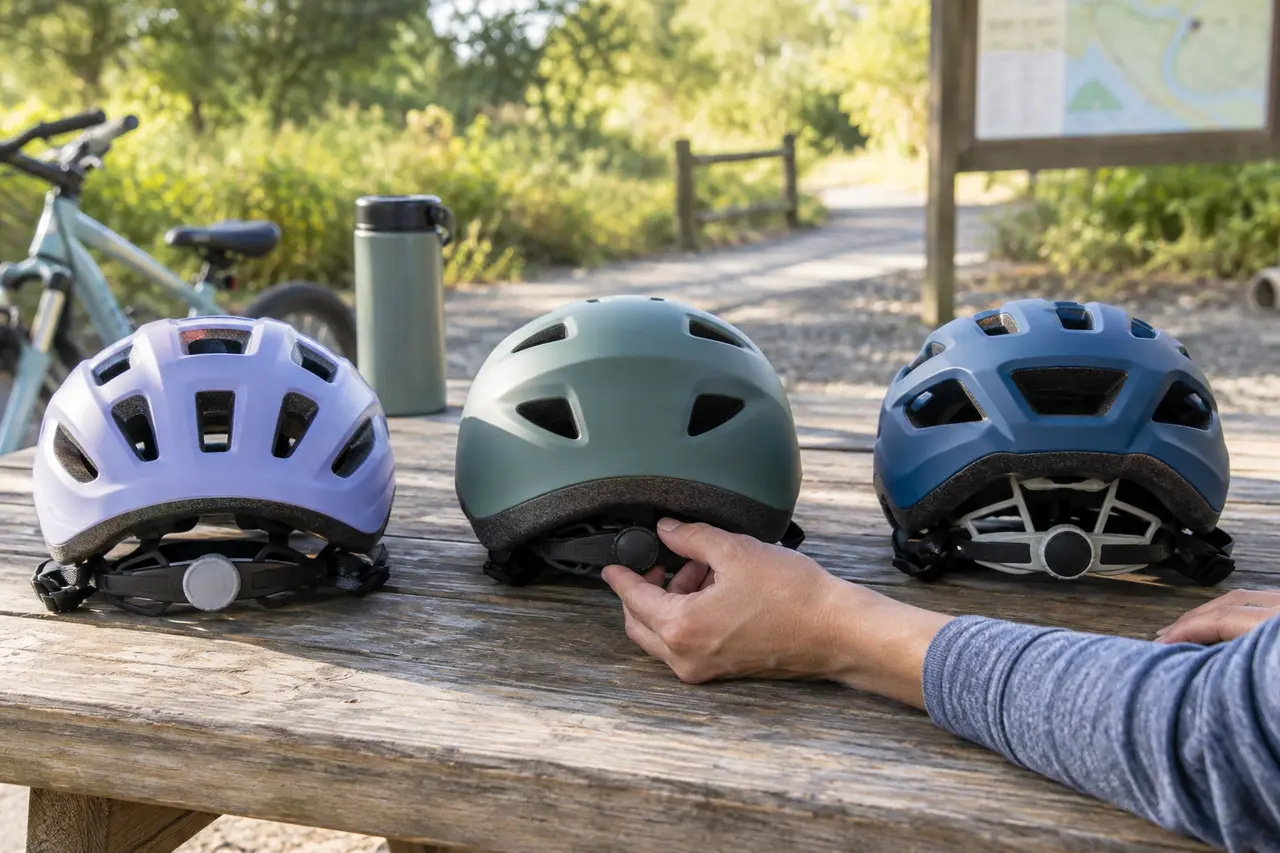
The non-negotiable starting point
For ordinary bicycling in the United States, choose a helmet that complies with the U.S. Consumer Product Safety Commission bicycle-helmet standard and carries the required certification labeling. A familiar brand name, an online star rating or the word “sport” is not a substitute for the label. Search the CPSC recall database for the exact manufacturer and model before keeping it.
New York law requires bicycle operators and passengers ages one through thirteen to wear properly fitting protective headgear fastened securely. Local laws can be stricter, and other activities have different standards. Mr Adventure Dad recommends a properly fitted bicycle helmet for every rider, every ride; the legal minimum is not the family safety target.
Measure before shopping
Use a flexible tape around the largest part of the head, generally just above the eyebrows and ears and around the back. Record the measurement in centimeters and compare it with the exact manufacturer’s size chart. Do not assume “youth,” “small” or an age range means the same thing across brands.
If the measurement sits at a boundary, try both adjacent sizes. The smaller size is not automatically safer, and the larger size is not a sensible growth strategy. The helmet must sit fully on the head with the fit system in its usable adjustment range and without painful pressure points.
The parking-lot fit sequence
- Open the adjustment system: loosen the rear cradle or sizing pads according to the manual before placing the helmet.
- Seat it level: the front edge should sit low on the forehead, not tipped back like a sun visor and not pushed down over the eyes.
- Set the side straps: adjust the sliders so the straps meet around each ear without twisting or crossing the ear.
- Close the buckle: center it under the chin and tighten only as directed. The child must be able to open their mouth and move normally while the strap remains snug.
- Set the retention system: tighten the rear dial or pads until the helmet is secure without pain.
- Run the movement check: have the child shake and nod. The helmet should not roll back, fall forward or expose the forehead. Refit rather than overtightening one strap to rescue a wrong shell shape.
NHTSA’s fit guidance is the baseline, but the exact helmet instructions win on pad placement, dial use, strap routing and compatible accessories. Recheck after haircuts, winter layers and growth spurts. A helmet worn over a bulky hat may no longer fit as designed; use only a thin layer the manufacturer permits.
Shell shape matters more than marketing names
Two helmets with the same circumference range can fit differently from front to back and side to side. Watch for a helmet that perches above the head, creates concentrated pressure, or still rocks after correct adjustment. Try another internal shape instead of forcing the dial tighter.
More rear coverage may suit trail riding or a family’s preference, but coverage language does not create a separate safety certification. A visor can add shade but must be manufacturer-approved and should not interfere with position or vision. Decorative horns, rigid add-ons, cameras and aftermarket lights can affect how a helmet behaves in a crash; attach nothing unless the helmet manufacturer explicitly allows it.
Bicycle, skate and “multi-sport” are not interchangeable words
A bicycle helmet should carry bicycle certification. A skate-style shell may also be certified for bicycling, but appearance proves nothing. If one helmet will be used for bicycling and skateboarding, verify that the labeling lists every applicable standard, not merely a marketing phrase such as “multi-sport.” Helmets for football, skiing, climbing, hockey, motorsports and other activities are designed and certified for different hazards.
An e-bike or faster riding environment may change the use case and local requirements. Confirm the bicycle class, applicable law and helmet maker’s intended use. Never infer high-speed protection from a regular bicycle label.
Ventilation, weight and the kid-use test
A well-ventilated, lighter helmet may be worn more willingly, but grams and vent counts are secondary to certification and fit. Check that the child can buckle it without pinching skin, that straps stay flat, and that the adjustment does not loosen during a normal ride.
Run a ten-minute practice in a traffic-free area before removing tags or losing the return option. The child rides, looks over both shoulders, stops, drinks water and rebuckles after a break. If the helmet blocks vision, creates a hot spot or requires constant adult correction, return it. The family bike-ride plan adds the route, spacing and turnaround decisions that a helmet cannot solve.
When to replace
Replace a helmet after a significant impact, even when the outer shell looks normal, because energy-absorbing material can be damaged without an obvious crack. Follow the manufacturer’s instructions after any crash or hard drop. Replace it when the shell, liner, straps, buckle, adjuster or attachment points are cracked, crushed, cut, stretched, missing or no longer hold adjustment.
There is no responsible universal replacement calendar independent of maker guidance, use and condition. Sun, heat, chemicals, storage and wear matter. Check the manual and contact the manufacturer with the model and date information. Do not buy a used helmet with unknown crash, storage or modification history.
Cleaning and storage
Use only the cleaning method in the manual, typically mild soap, water and air drying. Solvents, harsh cleaners, adhesives, paint and high heat can damage materials. Do not leave the helmet in a hot vehicle or where cargo can crush it. Keep straps untwisted and inspect the full helmet before each ride.
What not to buy
- A helmet without readable CPSC bicycle-certification labeling.
- A size intended mainly for future growth.
- A used helmet with an unknown impact or storage history.
- A helmet that needs an aftermarket pad stack or improvised strap routing to stay level.
- A novelty helmet chosen for appearance before intended use and certification.
- An online “deal” whose seller cannot identify the manufacturer, model, instructions and recall information.
Cost and the honest buying decision
A higher price can buy lower weight, different ventilation, easier adjustment or replaceable parts; it does not excuse poor fit. Compare the exact size range, standards label, fit system, weight, pad availability, warranty, return terms and recall status. The paid links below compare tightly related helmet categories, not winners. No hands-on testing, current price, stock, rating or crash-performance claim is made.
Before buying more accessories, check the family day-trip system and the family lighting guide for the separate jobs of route planning and visibility. A helmet reduces injury risk; it does not make an unsafe road, wrong-size bike or invisible rider safe.
Official sources
- NHTSA bicycle safety and helmet-fit guidance
- CPSC bicycle-helmet standard guidance
- U.S. CPSC recall search
- New York Vehicle and Traffic Law §1238
MAKE THE WEEKEND COUNT
Useful beats heroic.
Build the day your family can finish well, then leave enough energy for the ride home.
More family plansTHE USEFUL STUFF
Gear that removes friction.
These are practical categories to compare—not a reason to overpack. Check fit, specifications and current reviews before buying.
Paid links: As an Amazon Associate I earn from qualifying purchases. You pay no additional cost.
Youth bicycle helmets
Confirm the CPSC bicycle label, current head measurement, shell shape and return terms for the exact child.
See current options → COMPARE ON AMAZONExtended-coverage youth bike helmets
Compare current certification, usable size range, rear coverage, ventilation and the manufacturer’s intended riding use.
See current options → COMPARE ON AMAZONDual-certified youth bike-and-skate helmets
Require visible labeling for every intended activity; the words multi-sport alone do not prove dual certification.
See current options →