1. Daylight
Choose a turnaround that gets everyone back before dusk. Trail access and office hours are not the same thing.
CANASTOTA · WETLAND WALK · AUTHORITY-EXPANSION
Seven miles of trail are available. Your family does not need seven miles. Pick one loop, protect the quiet, and turn around before wet feet become the whole story.
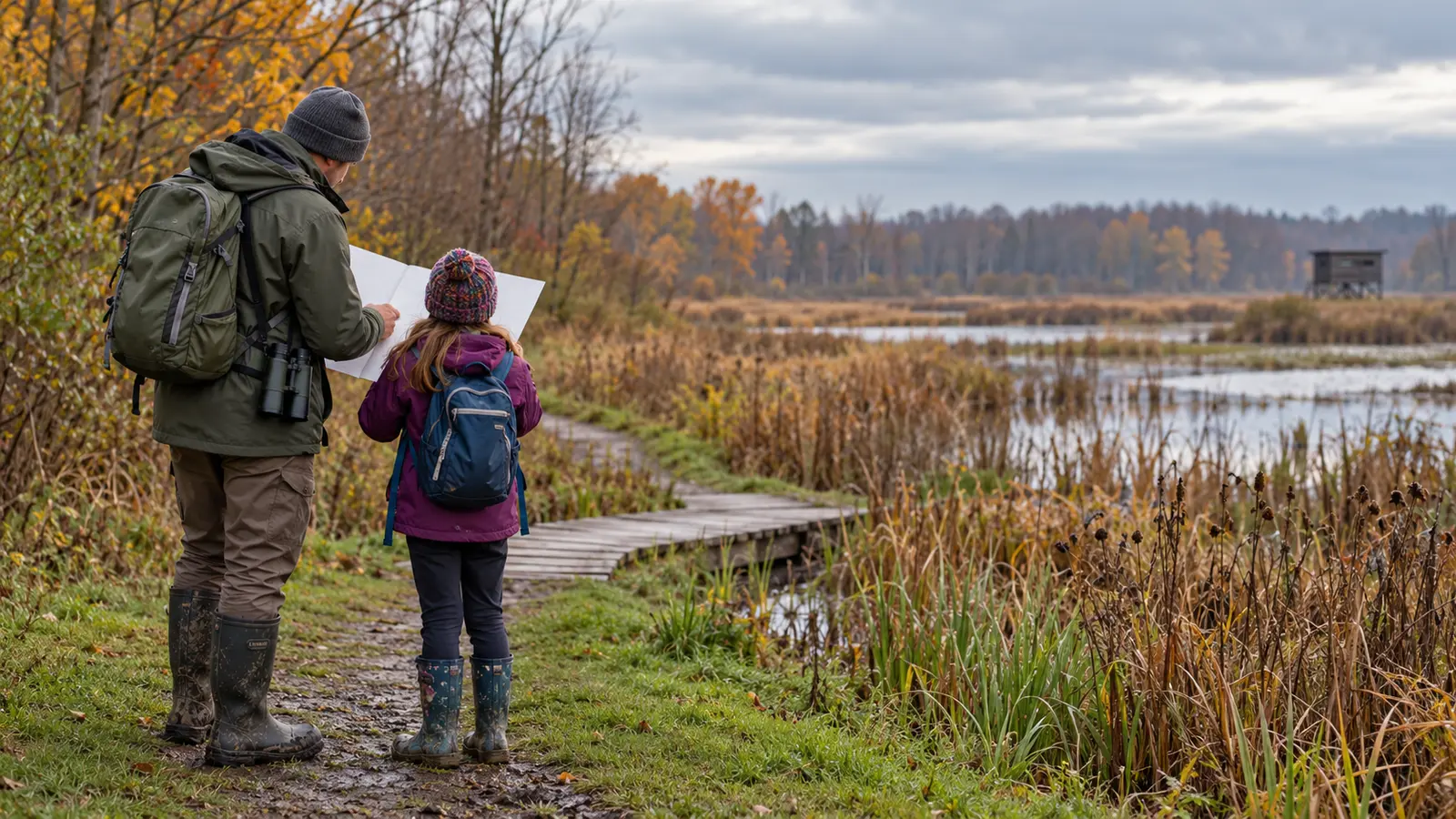
Great Swamp Conservancy in Canastota is a useful family outing when the goal is a quiet wetland walk, not a playground, petting zoo or guaranteed wildlife show. The organization protects restored wetland habitat and provides trails, a rookery and a bird blind. Birds choose whether to appear. Mud, water and seasonal vegetation change the feel of the route. Build the day around observation and a clean turnaround, not a species checklist.
This plan is for school-age kids who can follow a stop-and-listen rule near wildlife. It is not an accessibility promise or a claim that every trail is dry, stroller-ready or open. For another low-pressure nature day, compare the Beaver Lake one-loop plan. For a larger migration-focused destination, use the Montezuma family plan. The Central New York trail picker helps when surface, distance or facilities matter more than the destination name.
The Conservancy says leashed dogs are welcome on trails and owners must clean up, but dogs are not permitted inside the Bird Blind. A leash rule is the floor, not a guarantee that every child, dog or wildlife encounter will be comfortable. Keep the dog controlled, yield space and leave if barking or pulling disrupts wildlife or visitors. Never use a child as the handler when the dog can overpower them.
Do not feed, chase, call, corner or approach wildlife. The goal is to see natural behavior from a respectful distance. If an animal changes direction, freezes, alarms or focuses on the family, increase distance. The wildlife-distance plan gives kids a repeatable stop-back-away script.
Bring water, a simple paper or downloaded route reference, weather layers, a small first-aid kit managed by an adult, and footwear matched to the forecast and verified trail condition. Pack a towel and a bag for wet footwear in the vehicle. Do not buy new gear for a first short visit. Familiar shoes with adequate grip can be better than stiff boots that have never been walked in.
Wetland weather can feel colder than the car forecast. Check the current National Weather Service forecast and radar immediately before departure. Thunder, high wind, flooding, rapidly changing water, poor visibility or an official closure ends the plan. Do not shelter under isolated trees. Leave early enough that the family is not navigating an unfamiliar trail in darkness.
Carry a contained snack for after the walk and pack out all waste. Do not plan a picnic in a sensitive area or assume indoor seating. The official contact page lists weekday business hours, but those hours do not promise that exhibits, restrooms or staff will be available for a particular visit. Call ahead when facilities are necessary.
Trail surfaces and wetland conditions can change. A general statement that trails are easy is not a wheelchair, stroller or mobility guarantee. Ask the Conservancy about the exact route, grade, width, surface, barriers, rest points and current conditions. If the answer is uncertain, choose a destination with a documented paved route rather than improvising on arrival.
Bad weather: do not force the wetland. Use the 20-minute neighborhood sound map from a sheltered location or postpone. Low energy: set a 15-minute outward timer, make one quiet stop, then return. No wildlife visible: compare water, sky and plant textures without inventing an animal sighting. Meltdown: return to the car, change wet footwear and end the trip without bargaining for one more loop.
Give each child one folded card with three prompts: “I heard,” “I noticed near the water,” and “I wonder.” They can write, draw or dictate. Do not ask for a species name unless someone can verify it with a reliable field reference. “Small brown bird” is more honest than a confident wrong identification. Compare observations after leaving the quiet area, not while other visitors are listening.
Photographs are optional. Keep people out of frame without permission, never use flash or a device sound near the blind, and do not publish precise locations of nests or vulnerable wildlife. The card is successful when it preserves attention, even if the family never names an animal.
Skip or postpone when current conditions are flooded, icy or stormy; darkness will arrive before the planned return; a necessary restroom or accessible surface is unconfirmed; a child cannot stay with the adult near water and wildlife; or the family needs guaranteed indoor entertainment. Families wanting scheduled interpretation should call about current programs instead of assuming a self-guided trail visit includes one.
Reviewed October 25, 2026 by Mr Adventure Dad Editorial Desk using Great Swamp Conservancy’s official trail rules and hours, habitat description, contact and facility information, and directions. The five-gate route card is original editorial planning, not an official map or condition report. No affiliate links are attached. Report corrections through About.
MAKE THE WEEK COUNT
Build the plan your family can finish well, then leave enough energy for the next part of the day.
More family plans