Blue: water
Mark where an adult can observe the main water shutoff and any required tool. Do not turn it for the lesson. Note the plumber or building contact and the safest route that avoids standing water.
AT HOME · NO-SPEND · EXPLORATION
Kids learn where to go and who to tell. Adults identify the controls. Nobody practices on gas, live electrical equipment or damaged utilities.
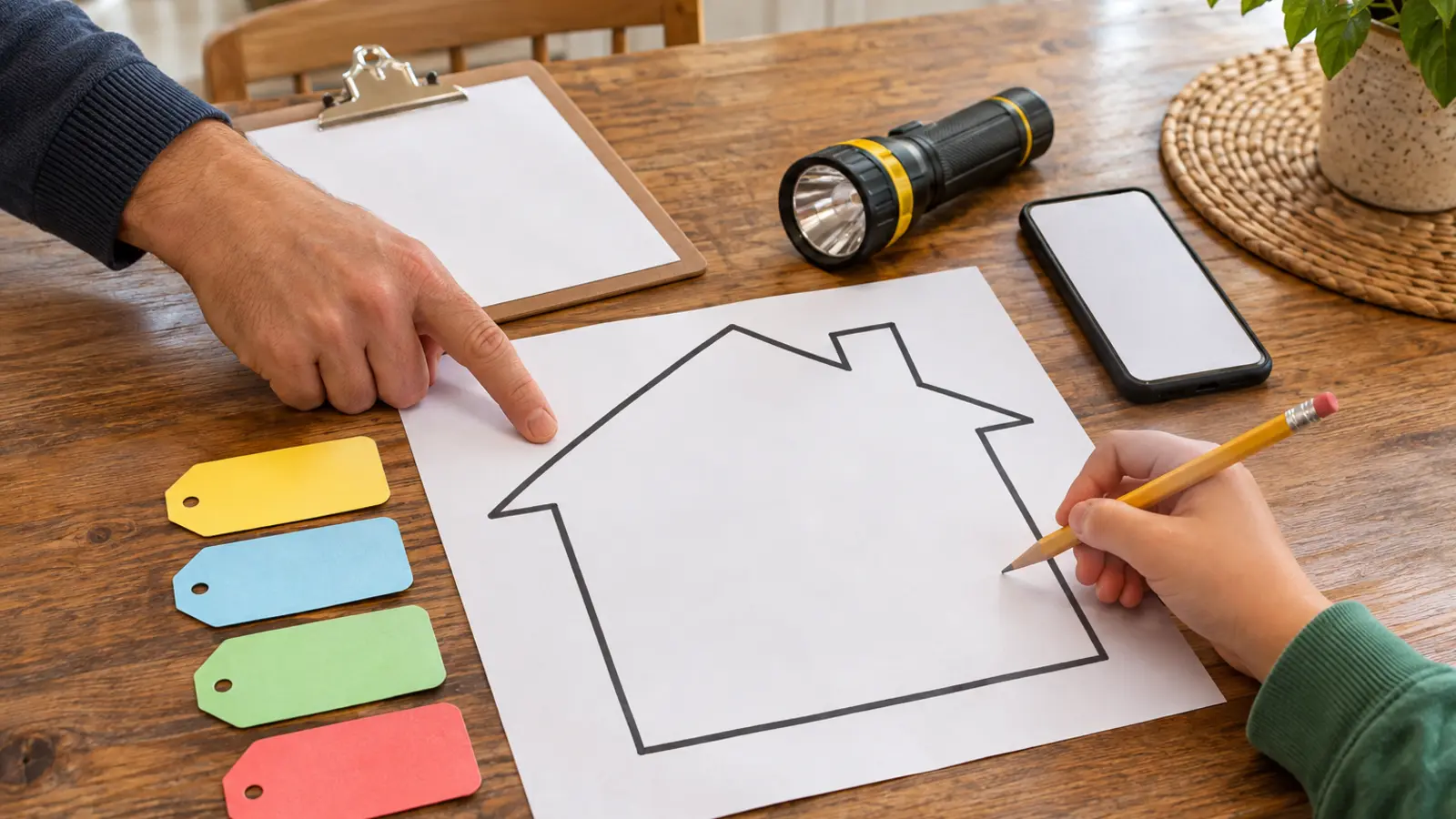
Families often know where the flashlight is and still cannot answer the useful questions: Which exit avoids the utility room? Where is the water shutoff? What number is on the electric bill? Which adult is allowed to touch what? Fix that on one sheet of paper without turning anything off.
This takes 20 minutes, costs nothing and exposes no address online. Draw a rough home outline, mark safe observation points and write the contacts adults need. Store one copy near the family emergency information and one secure digital copy if that fits the household. Do not photograph account numbers, meter numbers, keys or access codes for a public post.
Write this at the top: Kids point. Adults decide. Utilities or qualified professionals restore. FEMA preparedness guidance says household members should know how and when utilities may be turned off, but the home, utility and equipment instructions matter. The American Red Cross warns that gas should be turned off only when a leak is suspected or authorities instruct it and that a professional must turn it back on.
That distinction prevents a planning activity from becoming amateur electrical or gas work. Renters should use the landlord or building emergency process. Families with solar, batteries, generators, wells, septic pumps, medical equipment or automatic transfer equipment need the specific manufacturer, utility and qualified-technician plan—not a generic internet sequence.
If there is a gas odor, hissing, visible damage or suspected leak, do not hunt for the meter. Do not operate lights, appliances, phones, garage doors or vehicles in the area. Move everyone to a safe place and follow the utility’s emergency instructions. The family map should show the meeting place and phone number, not teach a child to use a wrench.
For propane, heating oil or other fuel, use the supplier’s written emergency guidance. Do not transfer generic natural-gas instructions to a different system.
The map may mark the panel’s location. It does not authorize opening covers, removing dead fronts, identifying conductors or touching damaged equipment. If there is water near the panel, buzzing, arcing, heat, smoke or a burning smell, stay away and call for help. Keep the access path clear without storing toys, paper or household chemicals in the work space.
Pair the location map with the family fire-escape drill, which handles exit behavior, and the power-outage drill, which handles lights, food, phones and carbon-monoxide boundaries. Those are separate skills.
Adults can identify the main valve and note whether a special tool or building staff is required. Do not force a stuck valve, operate an unlabeled control or enter a flooded area. A plumber can label the correct valve, check its condition and explain the home-specific process. Children only need to know: move away from water near electricity and tell an adult.
Households using refrigerated medicine, powered medical equipment, lifts or accessibility devices need a written provider and power-outage plan. Add the provider, utility medical-notification program and backup contacts if applicable. Do not publish diagnoses or account details on the visible family map. Use the family medicine plan for the go-bag side and the emergency contact-card drill for the child’s information.
The five-minute version marks only two exits, the meeting place, the flashlight and the building emergency number. That is enough for a tired school night. Renters should map the apartment exits, meeting place, panel location only if safely accessible, and the landlord or superintendent contact. Never enter a locked mechanical room or defeat a building restriction.
If a child gets anxious, stop the utility tour. Switch to the ordinary contact-card exercise or let the child draw only the outdoor meeting place. Do not stage darkness, alarms, gas smells or scary scenarios. Competence grows from a calm, repeatable script: leave, meet, tell.
Skip any utility area that is wet, damaged, hot, sparking, cramped, locked, under construction or otherwise unsafe. Skip the whole activity during an actual emergency. Families who cannot safely reach or identify controls should ask the landlord, utility or qualified professional to document the home-specific plan.
Verified November 2, 2026 against FEMA’s Are You Ready? preparedness guide and the American Red Cross’s utility safety guidance. This family activity deliberately stops before any operation. Current utility, fire-department, building and equipment instructions control.
MAKE THE WEEK COUNT
Build the plan your family can finish well, then leave enough energy for the next part of the day.
More family plans