BUILD THE BED FROM THE GROUND UP
The Family Camping Sleep System: Pads, Bags and a Better Night
Warm ground, dry sleep clothes and a familiar routine matter before the premium sleeping bag does.
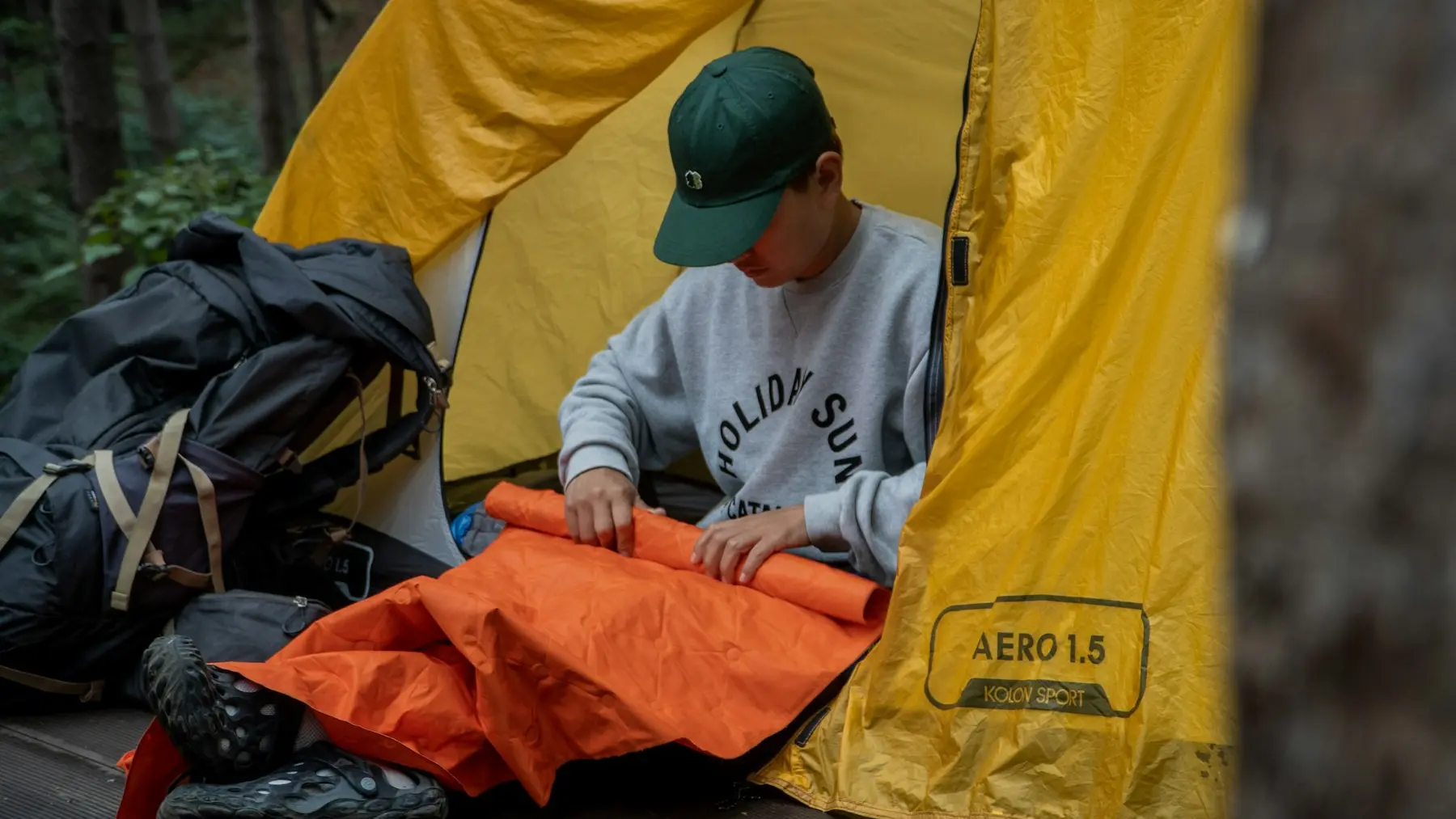
The sleep system has five layers
1. The site and tent floor
Use a legal, durable campsite and follow the campground’s setup rules. Clear only loose items as permitted; do not damage vegetation or excavate a mattress-shaped trench. Keep sleeping gear away from wet tent walls, muddy shoes and anything sharp. A footprint can protect the floor when it fits correctly, but fabric extending beyond the tent can collect rainwater underneath.
2. The sleeping pad
The National Park Service notes that sleeping pads provide cushioning and help manage moisture and heat loss to the ground. Foam pads are simple, quick and difficult to deflate, but bulky. Air pads can be more compact and comfortable, but they add valves, inflation and puncture risk. Self-inflating or hybrid designs split the difference. Choose for the conditions and the actual camper, not the smallest packed photo.
3. The sleeping bag or quilt
Match the sleep insulation to expected conditions, the sleeper and the full system. Temperature labels need context; comfort varies, and rating standards and terms are not identical across every product. Check the manufacturer’s test standard, sizing, hood and zipper design, care instructions and what pad and clothing assumptions sit behind the claim.
4. Dry sleep clothing
Reserve a dry base layer and socks for bed. Do not crawl into the bag wearing damp hiking clothes and expect insulation to erase the moisture. Avoid overdressing to the point of sweating. Keep the next morning’s layer reachable so the tent does not become a dark-yard-sale at dawn.
5. The bedtime routine
Use the bathroom, drink appropriately, brush teeth, switch into dry clothes, put shoes and a headlamp in fixed locations, and settle before the adults are exhausted. A familiar book or small comfort item can do more for a child than another technical accessory.
Build by camper, not by matching set
Different sleepers can need different pad widths, firmness, bag shapes and temperature margins. Test each setup on the living-room floor, then on one close-to-home night with an easy exit. Have every capable family member inflate, enter, zip, unzip and pack their own system. The midnight test is whether they can get out without waking or climbing over everybody.
Be careful with “grow into it” logic for children. Excess empty space can affect warmth, and a huge adult mummy bag may be hard for a child to operate. Follow the manufacturer’s age, size and safety instructions. Infants require separate, age-specific safe-sleep guidance; this general camping gear article is not an infant sleep guide.
Foam, air or camp mattress?
Closed-cell foam
Best when durability, speed and low consequence matter more than compact storage. It can also serve as a sitting pad. Test whether the thickness is genuinely comfortable for the sleeper.
Insulated air pad
Best when packed space, adjustable firmness and measured insulation matter. Learn the valve, carry the appropriate repair method and test it before the trip. Do not assume every air pad is insulated for cool ground.
Large car-camping mattress
Best when the campsite is beside the car and the tent floor, vehicle space and inflation plan support it. Watch for edge gaps, nighttime deflation and the fact that a large uninsulated air volume can still feel cold. One leak can affect multiple sleepers.
The no-buy first camp
Borrow or rent the big pieces when possible. Camp one night close to home in mild weather with a clear bailout. Use compatible pads and sleeping insulation already owned, following their instructions and current conditions. Record only three failures: cold, pressure discomfort and routine/logistics. Those answers tell you whether the next dollar belongs in insulation, pad shape, tent layout or nowhere.
What not to buy
- A bag based only on the lowest temperature printed on the product page.
- An uninsulated air mattress for cool conditions without understanding the ground layer.
- A double-wide system before confirming both sleepers like the same firmness and bedtime.
- A child bag with confusing cords, zippers or sizing that the child cannot operate safely.
- A pad that technically fits the tent only when it blocks the door or overlaps every neighbor.
- A tiny backpacking system for car camping if setup effort and comfort are the family’s actual problems.
The morning reset
- Air out damp bags and pads as conditions allow.
- Open tent ventilation and keep condensation away from sleep insulation.
- Inspect pads for slow leaks, valve trouble and debris before rolling them.
- Dry everything fully at home according to manufacturer instructions.
- Store sleeping bags and pads in the recommended state, not automatically compressed.
- Return repair items, pump and headlamps to the same camp bin.
A buying framework that keeps the commission out of the decision
Conditions: expected nighttime low, moisture and ground? Sleeper: size, position and comfort needs? Insulation: what does the pad contribute? Space: does the complete layout fit the tent? Operation: can the camper use it in the dark? Reset: can it be dried, repaired and stored correctly?
The shopping links below compare broad categories. We have not claimed hands-on testing or a universal best system. Check current manufacturer ratings, test standards, dimensions, materials, warranties and care directions.
Official sources
General guidance was checked August 27, 2026. Weather, elevation, site rules and individual needs can change the system.
- National Park Service: What to Bring Camping
- Rocky Mountain National Park: Planning Checklist
- National Park Service: The Ten Essentials
Make the whole night easier
Use the one-night family camping plan for the trip itself, assign every after-dark light with the family lighting guide, and keep the forecast from surprising bedtime with the rain-gear guide.
THE USEFUL STUFF
Compare the whole bed, not one rating.
Test borrowed or existing gear first. Spend on the layer that actually failed.
Paid links: As an Amazon Associate I earn from qualifying purchases. You pay no additional cost.
Insulated sleeping pads
Compare insulation, width, valve design, repairability and actual packed size.
See current options → COMPARE ON AMAZONCamping sleeping bags
Check comfort information, sizing, zipper operation, materials and care.
See current options → COMPARE ON AMAZONPad repair supplies
Use the repair method compatible with the exact pad and manufacturer instructions.
See current options →